Towards optimal wetland performance for wastewater treatment: trials in construction materials and methods

29 May 2024
Since commissioning in late 2019, the RISE demonstration site, which includes sanitation infrastructure using a pressure sewer and wastewater treatment wetland, has been operational and achieving the performance standards anticipated from the original design.
It has also, on occasion, provided the opportunity to trial minor design enhancements and new materials aimed at further refining the long-term system sustainability.
Batua has provided many opportunities to learn and adapt. We have conducted extensive water quality monitoring, including nutrient analysis and regular mosquito larvae surveys, since soon after the system’s initial commissioning. This data has helped us better understand system performance and informed design changes that have been applied to the
five sites currently under construction.
Innovations and environmental benefits
A pivotal aspect of some recent works in Batua was the transition of the surface flow wetland to a fully subsurface wetland system. This design change eliminates any exposed surface water, which has the potential to become a habitat for mosquito breeding. RISE Architect and Community Facilitator, Adrianto Hidayat, who spearheaded this activity, highlighted the primary objective of this transformation:
"The main objective of this rectification is the transformation of the final wetland cell from a surface flow system to a subsurface flow system. In addition, the use of expanded clay balls as a planting media is an innovative idea to reduce the use of washed river gravel."
The use of clay balls, a more environmentally friendly alternative to traditional materials, is an innovative approach that align with broader conservation efforts.
Overall, the RISE activities at Batua have increased community awareness of environmental care. Senior Site Engineer, Ikram, a key contributor to the wetland rectification project, noted, “Residents are very grateful to the RISE program, for all the efforts and development that have been carried out so that residents feel the real and positive impact on their environment past and present… There is also a change in mindset and awareness among residents regarding environmental health, from initially being indifferent to gradually realising the importance of environmental health, which affects the health of their families and themselves personally.”
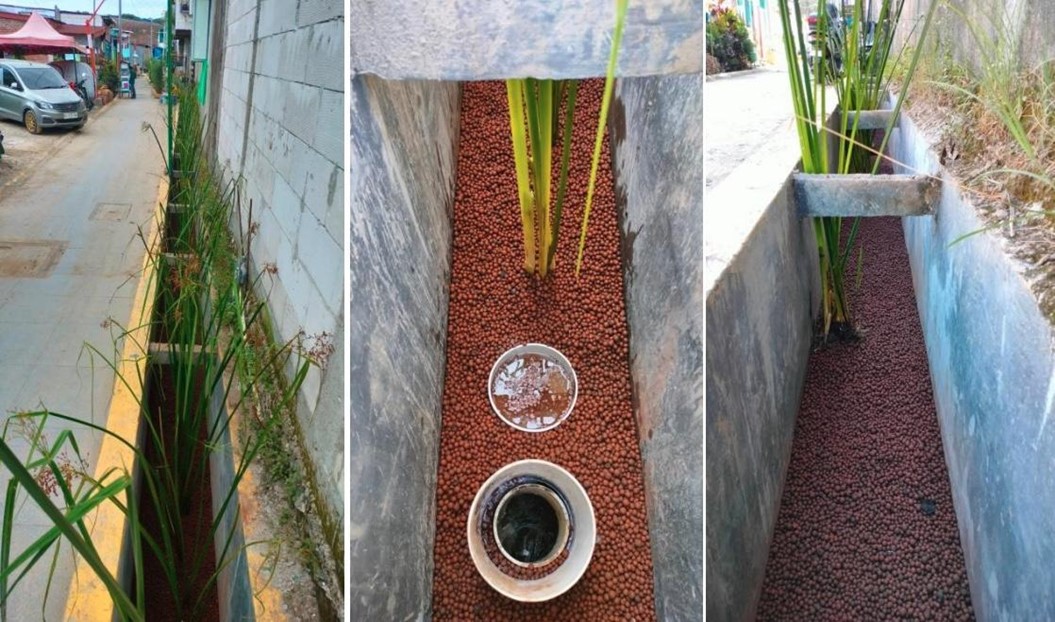
Planting in new subsurface wetland - clay balls pictured.
Community impact
The Batua wetland project has not only transformed the local environment but also had a profound impact on the community. For example, residents have been more easily able to undertake renovation works on their homes thanks to the raised access road alongside the wetland, provided as part of the overall RISE infrastructure works. Some of these household renovations include:
- Adding new toilets
- Expanding and raising their homes
- Upgrading household infrastructure
RISE and the Batua community have been deeply engaged in the project from its inception, covering the initial design and construction through to the operation, usage, and maintenance stages. Many community members are highly knowledgeable about the entire RISE system, allowing them to contribute suggestions during any troubleshooting or rectification works. The team have also ensured that residents have numerous opportunities to voice their opinions, as the RISE infrastructure/system is integral to their daily lives.
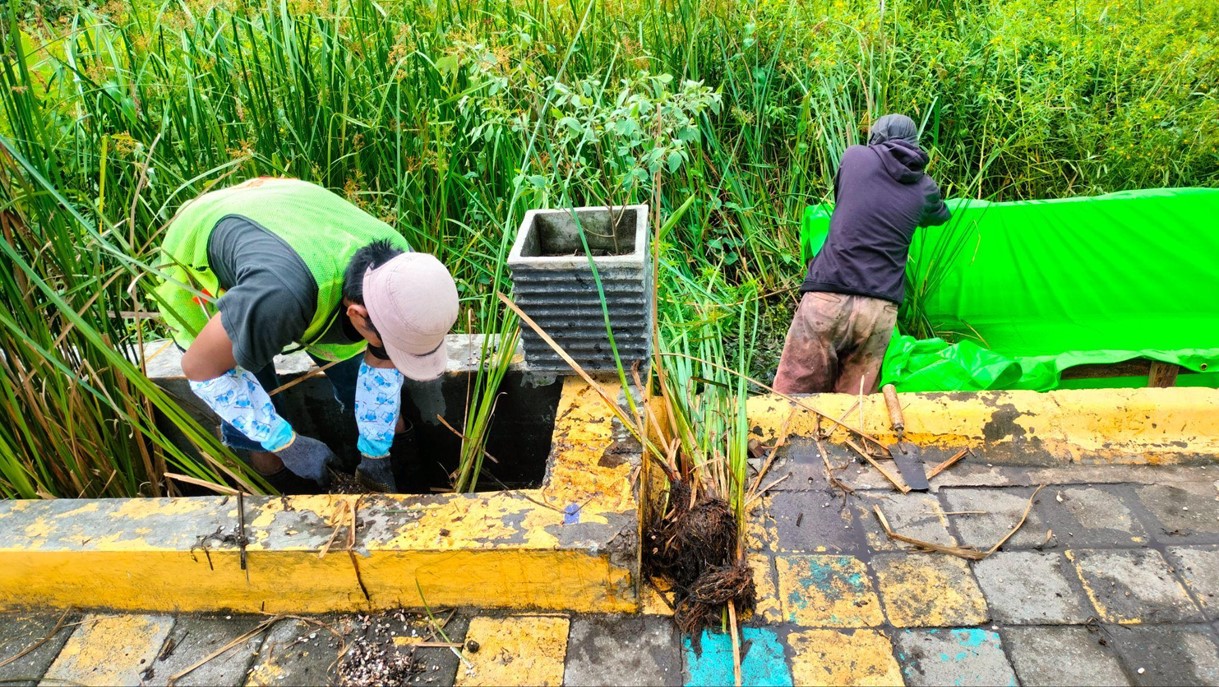 Replanting of the Batua wetland.
Batua as a learning platform
The Batua wetland rectification project serves as a critical learning platform. Hidayat expressed the broader vision:
"It is hoped that all activities at this demonstration site serve as a learning platform to achieve an ideal system for water-sensitive infrastructure in these settings."
By showcasing the provision of safely managed sanitation using on-site wetland treatment technologies, the project aims to educate and inspire the adoption of similar approaches elsewhere; providing a decentralised technology to help improve the challenge of delivering urban services (including sanitation) in ever-growing informal settlements across the globe.
The Batua wetland rectification project exemplifies best practice environmental stewardship and community development. Through continuous improvements, innovative practices, and community engagement, the project not only enhances the local ecosystem but also serves as a model for sustainable safely managed sanitation using local-scale constructed wetlands. As communities continue to grow and evolve, the lessons learned from Batua will be invaluable in guiding future environmental projects and fostering a harmonious relationship between development and nature.
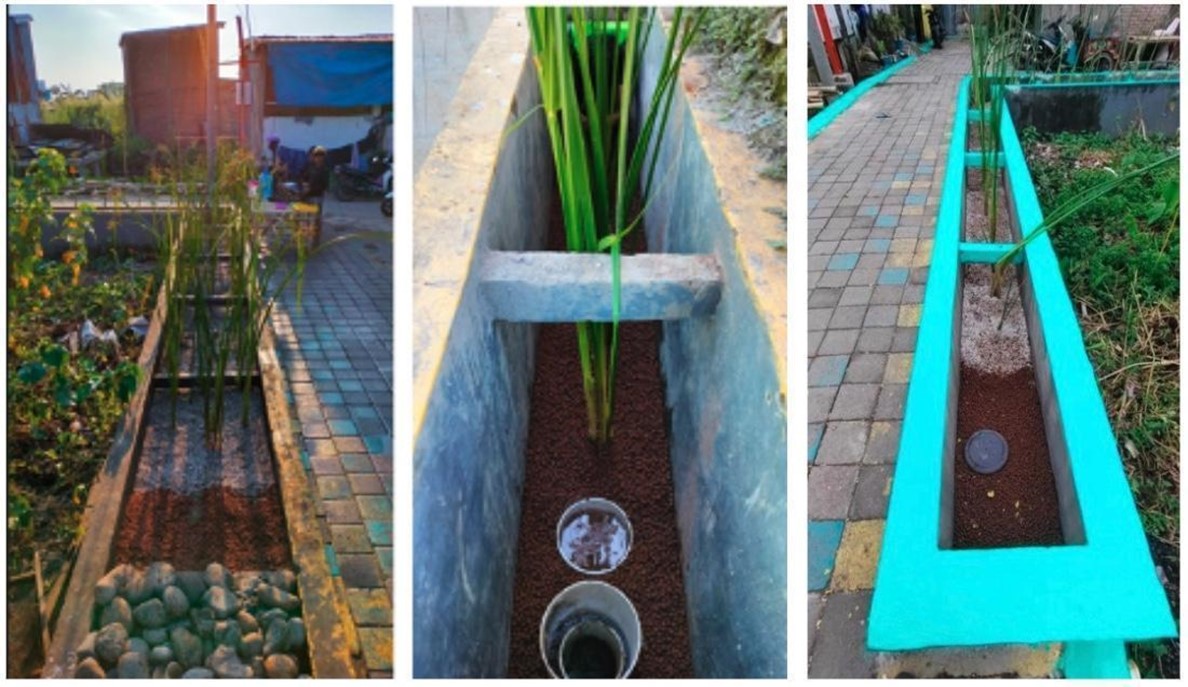
Cover image: Expanded clay balls installed in the final wetlands section as an alternative to washed river gravel.