An organizing framework to break down Western-centric views of knowledge in North–South research
Read the paper: Turner, H., Rogers, B., Kneebone, S. et al. 2024, Sustainability Science

Summary
By Hannah Turner
As more scholars from multiple disciplines and geographies focus on interdisciplinary research, often aiming to address global challenges and inequalities. When researchers from different fields and places should consider how research is conducted and knowledge is produced. The way studies are conducted has the power to shape, reproduce, or control the forms of knowledge generated—whether intentional or unintentional. Our research introduces a framework to help researchers navigate, understand, and engage with diverse forms of knowledge - a challenge particularly relevant in addressing complex global challenges such as climate change.
This framework emerges as a critical tool against the backdrop of a predominantly Western-centric perspectives in sustainability science and related studies, which often marginalises or overlooks global knowledge systems. By proposing a structured approach that encapsulates three contextual levels of influence, alongside nine guiding principles and a comprehensive set of 51 practical actions, our framework aims to change the way interdisciplinary research is approached and assessed.
Our research emphasises embracing multiple worldviews for sustainable and inclusive global solutions, challenging Western-centric paradigms. The core issue addressed is the systemic undervaluation of diverse knowledge systems in sustainability science and North-South research. Our framework aims to provide a pathway for critical evaluation and enhanced engagement with various knowledge systems.
The potential applications of our framework extend beyond academic research, reshaping governance, policymaking, education, and community initiatives. In governance, the framework can guide institutions and policymakers to incorporate diverse perspectives, leading to culturally-sensitive policies. In education, it can help develop curricula that value multiple knowledge systems, fostering a globally aware and culturally competent workforce.
For community projects, the framework can facilitate more meaningful engagement by recognising local knowledge in addressing community-specific challenges.
Moving forward, we hope the framework will be tested and refined in different contexts. This iterative process will not only enhance the framework's applicability and effectiveness but also contribute to a broader shift towards more inclusive and collaborative approaches to global challenges.
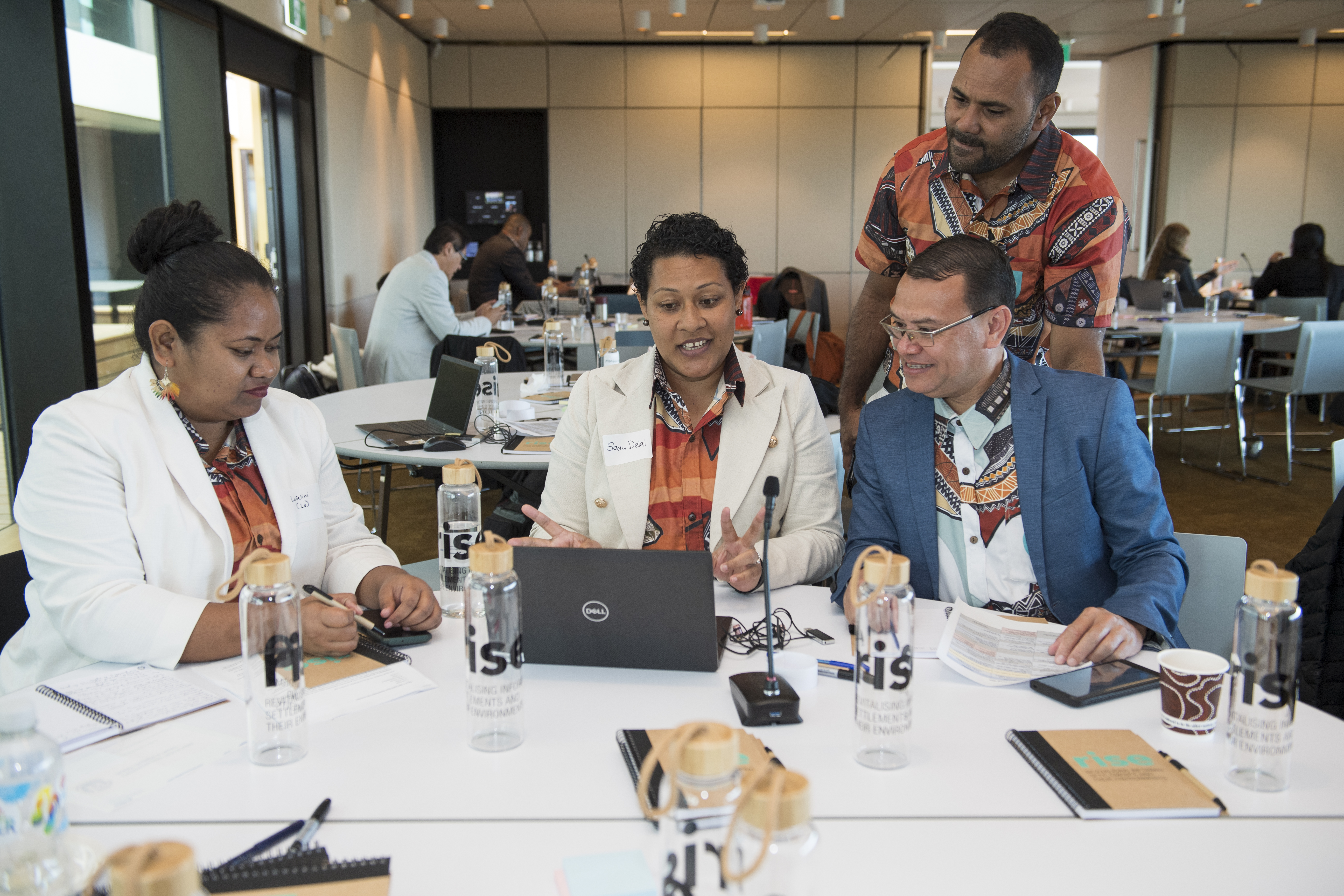
RISE staff, Losalini Malumu, Savu Nofoimuli, Autiko Tela and Alexander Wilson
at our 2022 RISE Annual Workshop in Melbourne, Australia.