Co-producing nature-based solutions: integrating knowledge interfaces in informal settlements in Indonesia
Read the paper: Moschonas, D., French, M., Ramirez-Lovering, D., et al. 2025, . Environment & Urbanization

Summary
By Dasha Moschonas
This research is focusing on the RISE programme in informal settlements (kampungs) in Makassar, Indonesia. It investigates a promising but complex solution: co-producing nature-based solutions (NbS) for decentralised water infrastructure. This paper moves beyond purely technical engineering fixes, offering empirical insight into how sustainable urban development can be achieved through genuine, context-sensitive collaboration between global researchers, practitioners, and local communities. We analysed the design of a 'treatment train', a hybrid system combining NbS components like constructed wetlands and biofiltration gardens with conventional (grey) and smart (IoT) infrastructure, across six diverse kampungs.
The core finding is that the success of the intervention hinged not on the technical design alone, but on its ability to integrate with the social and spatial realities of residents' everyday lives and future aspirations. Through the participatory Panrita process (PerencanaAN RI kampungTA, meaning 'planning in your kampung'), the treatment train was iteratively adapted to local conditions. This process involved a complex interplay of factors, including navigating private land ownership, resolving access disputes, respecting kinship ties for pressure tank clustering, and accommodating local beliefs like pamali.
The Panrita process, through culturally sensitive methods like intimate one-on-one curhat (confiding) sessions, prototyping, and community dance, effectively translated the rigid technical concept into a dynamic socio-technical interface. This approach, rooted in Southern urbanism, empowered communities to shape their urban environments, transforming the process from one of simple technology transfer to sensitive and meaningful collaboration.
This research offers a robust framework for implementing socially and environmentally just NbS in informal settlements globally, emphasising that flexible, ethnographic, and collaborative spatial practices are critical for bridging technical demands and local realities.
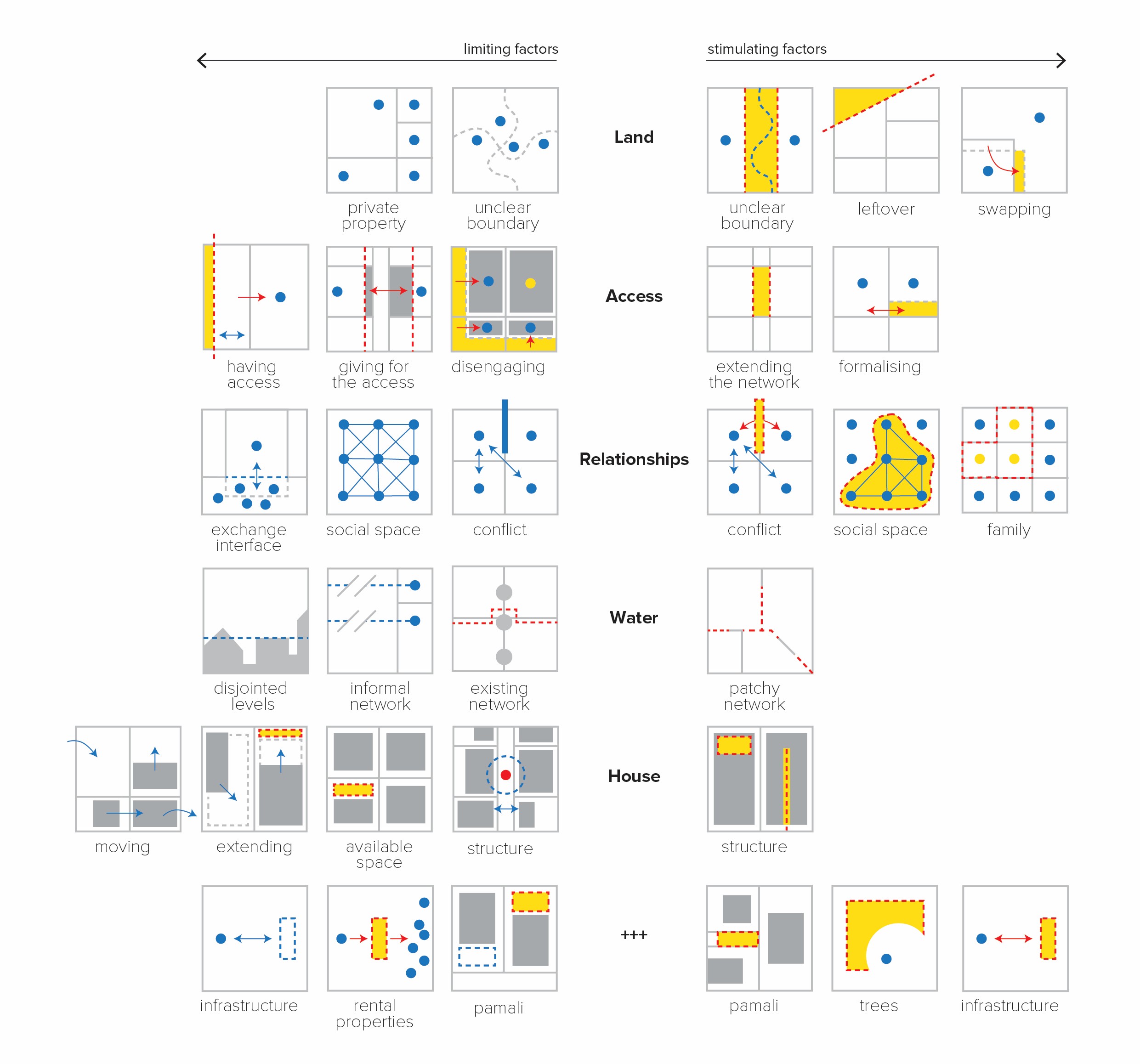
Overview of the most influential factors for the infrastructure design in kampungs