
Sensitivity of insect-eating bats to urbanisation, and implications for sustainable development
Read the paper: Fleming, G., Ramsay, E., et al. 2024, Global Ecology and Conservation

Summary
By Genie Fleming
The island of Sulawesi in Indonesia is considered a global biodiversity hotspot hosting an incredible array of mammal species. This includes bats, which provide essential ecosystem services ranging from fruit pollination to insect control.
Over the past two decades, urban areas have dramatically expanded around Sulawesi’s most populous city, Makassar, and growth is expected to continue. Rapid urban expansion is often associated with an increase in informal settlements bordering undeveloped land, and could pose a threat to Sulawesi’s unique wildlife. Yet we do not know enough about how Indonesian bats respond to urbanisation to help us plan adequate conservation strategies.
Our paper examines foraging activity of different kinds of insect-eating bats around informal settlements in Makassar. We looked at whether the amount of urban foraging activity of different types of bats varied based on where and how the bats typically search for food, as well as in response to particular features of the urbanised landscape.
Similar to other parts of the world, we found bats that typically forage among tree canopies within forests generally had much lower foraging activity in the more densely built-up part of the city compared to bats that forage in open air or along the edges of forests. Nonetheless, even these ‘urban-sensitive’ bats were still able to use urban habitat, depending on a combination of landscape- and local-scale features, such as the extent of permanent waterways and abundance of trees.
Our findings suggest nature-based upgrading of informal settlements incorporating diverse green and blue spaces has the potential to aid bat conservation, particularly where settlements exist along wildlife movement corridors and planning is coordinated across a broad area. Such development practices could satisfy the dual aspirations of planetary health by improving living conditions for vulnerable urban dwellers, while also contributing to nature preservation.
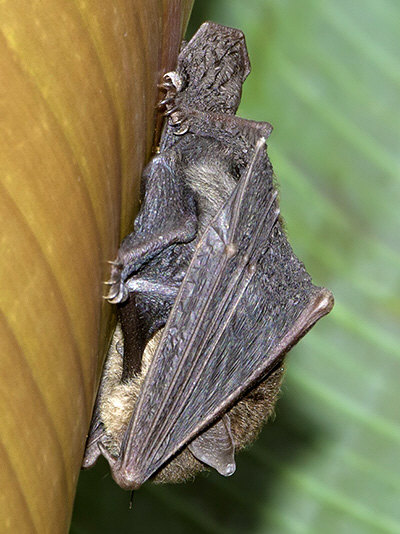
A Whiskered Myotis bat roosts in rolled up banana leaves. Source: EcologyAsia.com