
Smarter decision-making in faecal contamination detection in informal settlements
Read the paper: Palacios, Yussi M., Saifuddaolah, M., et al. 2025, Water Research

Summary
By Yussi M. Palacios Delgado
Accurate quantification of faecal indicator organism (FIO) in water sources is essential for water quality monitoring, but laboratories around the world face challenges in selecting the most suitable detection method. Our research compares two commonly used methods - IDEXX Colilert and TECTA™ - to determine their effectiveness across different water sources and contamination levels for both comprehensive surveillance and performance compliance studies.
In this study, we tested both methods across a broad range of contamination levels, from drinking water to heavily polluted greywater and septic tank samples. We found that at lower contamination levels, IDEXX Colilert and TECTA™ produced highly similar results. However, in highly-contaminated samples, their results did not correlate, highlighting potential limitations in extreme conditions.
Beyond FIO results, our research also considered practical constraints. IDEXX Colilert is more cost-effective and suitable for processing large sample batches, making it ideal for laboratories with budget constraints. In contrast, TECTA™ provides automated and potentially faster results, which is beneficial for time-sensitive monitoring.
To help laboratories and policy-makers make informed choices, we developed a decision analysis framework that guides users in selecting the most appropriate detection method based on their specific needs.
By providing this critical comparison, our study fills an important knowledge gap in water quality monitoring. Future research should focus on refining detection methods for highly contaminated samples, further improving the reliability of water safety assessments worldwide.

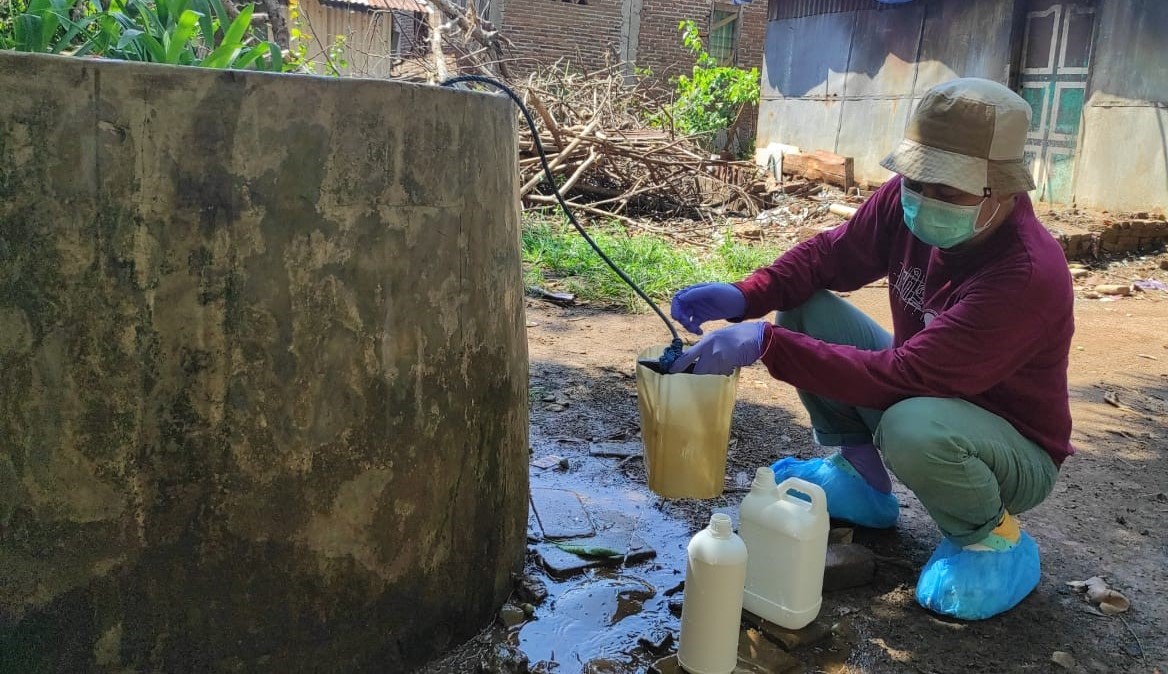
RISE Community Fieldworker Abdul Rajab collects water samples from a well in an informal settlement in Makassar, Indonesia.