
Tracking human faecal pollution in informal settlement environments
Read the paper: Barrett, L., Beasy, P., Palacios Delgado, Y. M., et al. 2025, Critical Reviews in Environmental Science and Technology

Summary
By Leah Barrett
Human faecal pollution poses a significant global health risk, contributing to approximately 1.2 million deaths annually. Diarrheal diseases, primarily caused by enteric pathogens, spread through the faecal-oral route. In many cases, these pathogens are transmitted from contaminated water, soil, and food, leading to illness. Environmental pollution plays a crucial role in this transmission, facilitating the movement of pathogens from faecal sources to people.
Microbial Source Tracking (MST) methods, particularly human-specific faecal markers, are increasingly used to identify environmental faecal contamination sources. However, variations in gut microbiomes across populations and geographic regions raise concerns about the universal applicability of these markers.
The key finding of this systematic review is that no single human-specific MST marker consistently achieves high sensitivity and specificity (>80%) across all regions and climates. Despite widespread reliance on certain markers, such as Bacteroides HF183, performance varied significantly based on climate, geography, and socioeconomic status. Notably, most validation studies have been conducted in High-Income Countries (HICs), leaving a significant data gap in Low- and Middle-Income Countries (LMICs).
This study addresses the limited marker validation outside HICs, which challenges the accuracy and reliability of MST methods in diverse settings. To bridge this gap, a decision tree and matrix were developed, guiding researchers in selecting appropriate human-specific MST markers for regionally specific studies.
The findings highlight the need for region-specific validation of MST markers in diverse geographic contexts, as no universal marker currently exists. Additionally, standardising MST methodologies—regardless of marker choice—will ensure replicable studies that support public health interventions. Library-independent MST was chosen for this study due to its lower cost and reduced resource and time requirements, making it more accessible in low-resource settings. However, future research may require combining more costly library-dependent MST with molecular approaches to improve accuracy and assess health risks from viable pathogens. Advances in AI and machine learning could enhance MST applications, making them more accessible across different development contexts.
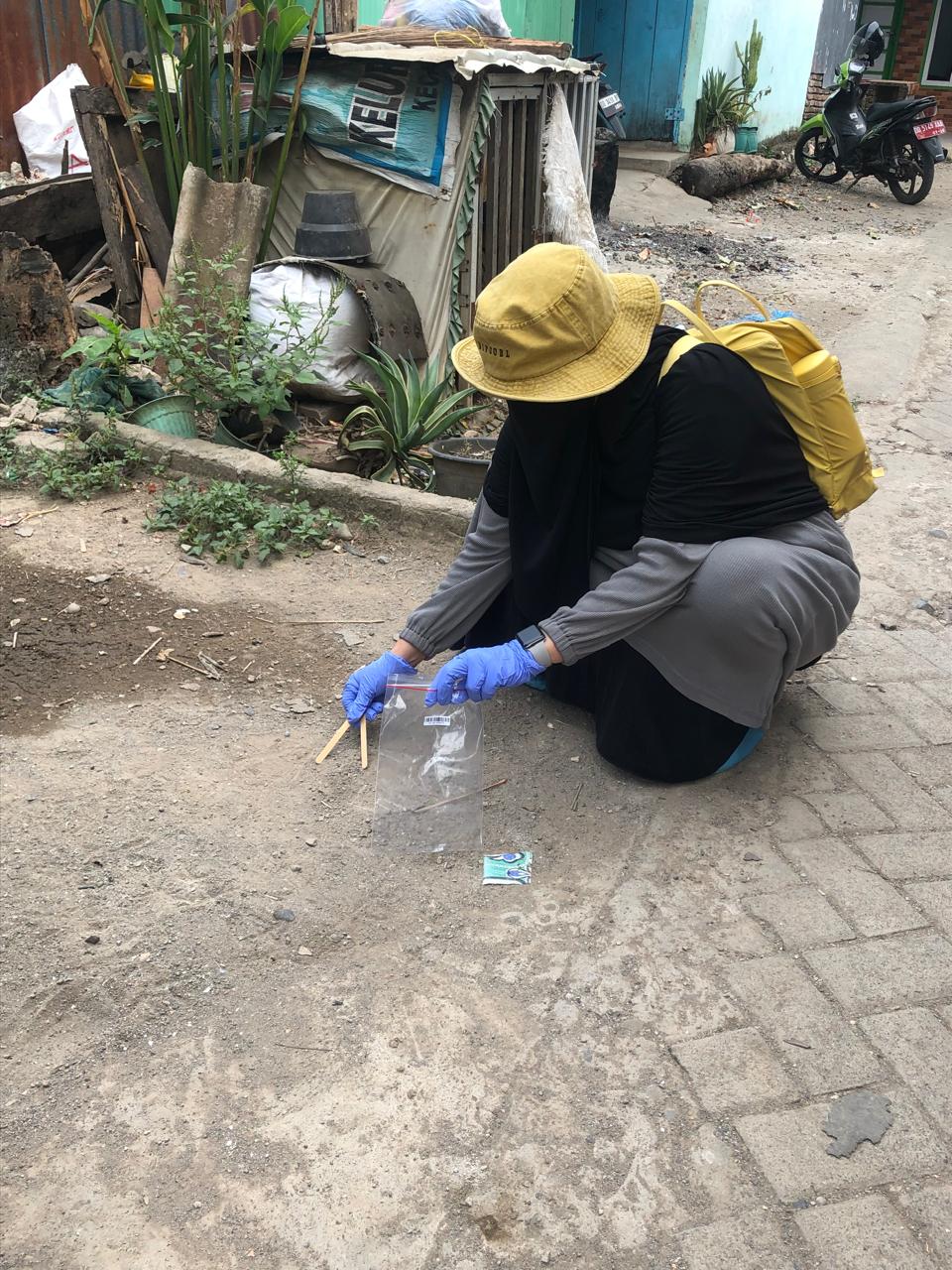
RISE fieldworker collecting faecal samples.