Denton Lab research
Collaborations | Student research projects | Publications
About Professor Kate Denton
Kate is an NHMRC Principal Research Fellow, who has been working in the Department of Physiology since 1997. The overarching aim of Kate’s research is to understand the mechanisms that underpin extracellular fluid volume homeostasis and thus blood pressure regulation. Her research program is focused on the role of the kidney in the control of arterial pressure. Currently research is directed at three main streams of enquiry - the physiological mechanisms regulating glomerular capillary pressure; how distinct populations of nerves selectively influence different tasks of the kidney; the linkages between chronic hypertension in pregnancy and cardiovascular risk in adult offspring.
In addition to her research, Kate is an Associate Editor for the Journals - Sex Differences in Biology and Experimental Physiology and an Editorial Board member for Hypertension and Am J Physiol Renal Physiol and on the Selection Board for APS Select. Kate also regularly sits on NHMRC grant review panels.
Awards
- American Heart Association Goldblatt Award 2003 - recognizing a new independent investigator working in hypertension or cardiovascular research who has significantly contributed to our understanding of the causes of hypertension and related cardiovascular disease.
- American Heart Association Harriet Dustan Award 2017 - recognizing female investigators who have made outstanding contributions in the field of hypertension.
- International Society of Hypertension Excellence Award for Research in Cardiovascular Disease in Women 2018. This inaugural award recognised the significant body of work performed by Prof Denton in the area of sex-differences in cardiovascular disease.
Our research
Current projects
- Our work examines the efficacy and safety of renal artery denervation, an emerging treatment for hypertension. Current work focuses on factors that modulate nerve regrowth and prolong the efficacy of renal denervation.
- Women prior to menopause are protected against hypertension and cardiovascular disease. Ongoing research focuses on understanding sex-difference in the regulation of blood pressure. Novel treatments to prevent post-menopausal hypertension are being examined.
- The path to hypertension and cardiovascular disease has its origins in early life. Current work is directed at identifying prognostic indicators of disease and developing intervention strategies in the very young to prevent the development of hypertension in adulthood.
Visit Professor Denton's Monash research profile to see a full listing of current projects.
Research activities
Regulation of kidney function and blood pressure
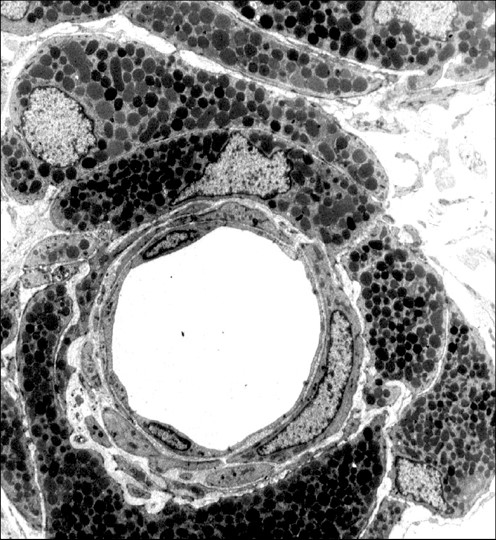
The kidney, under the influence of both the renin angiotensin aldosterone system (RAAS) and the sympathetic nerves, plays a dominant role in the long-term control of extracellular fluid volume and blood pressure. Dysregulation of these systems contribute to the development of hypertension and cardiovascular disease.
Our work in this area has shown that:
- the hormone angiotensin II preferentially constricts the efferent arterioles, to modulate glomerular pressure and kidney function;
- sympathetic outflow can selectively increase or decrease glomerular capillary pressure and, hence glomerular filtration rate, by differentially activating distinct populations of renal nerves;
- catheter-based ablation of the renal nerves restores normal blood pressure and improves renal function in a model of hypertensive chronic kidney disease. However, at the same time removal of the renal nerves compromised the ability to respond to blood loss.
Work in this area currently focuses on examining the safety and efficacy of renal denervation as a treatment for hypertension and chronic kidney disease; examining factors that influence sympathetic nerve regrowth.
Sex-differences in blood pressure
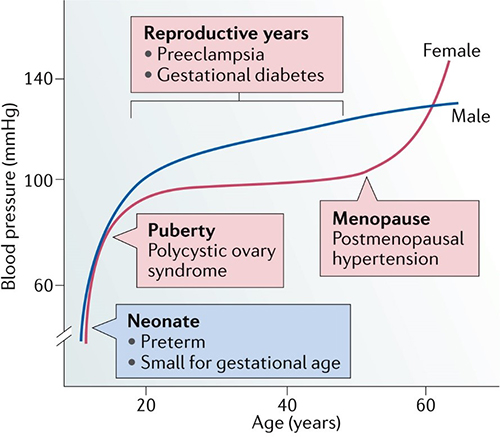
There are marked differences in blood pressure between men and women. Overall, females have lower blood pressure before menopause and higher blood pressure after menopause than males. The mechanisms responsible for these differences are poorly understood. There is strong clinical and experimental evidence for sex-differences in renal function. We have demonstrated that vasodepressor RAAS pathways are enhanced in females, showing that these protective pathways:
- contribute to the lower blood pressure observed in women compared to men;
- play important roles in regulating blood pressure and inflammatory responses during pregnancy;
- are impaired with age.
Work in this area continues, examining the role of other components of the RAAS and the influence of sex-hormones (oestrogen, testosterone and relaxin). Overall, these studies will define the integrated physiological responses and the cellular signalling pathways involved in the activation of the alternate RAAS pathways and demonstrate their therapeutic potential for the treatment of CVD in men and women.
Developmental origins of cardiovascular disease
Once it was thought a fetus was conceived with a "template" for development based on their parents' genes. As long as the growing fetus received the right nutrients and avoided harmful substances, this template would develop into a healthy baby. This view has been completely overturned. At each stage of development, the organism uses cues from its environment to decide how best to construct itself within the framework of its genes. Indeed, a growing body of evidence links adverse conditions during pregnancy to increased risk of renal and cardiovascular disease in adult offspring.
Our work examines the consequences of adverse in utero environments (maternal hypertension, alcohol consumption, nutrient restriction, placental insufficiency and a reduced renal mass) on offspring kidney structure and function and blood pressure regulation showing that:
- hypertension, not of genetic origin, can be passed from mother to child;
- short prenatal exposure to elevated maternal glucocorticoids (a model of maternal stress) results in reduced nephron endowment and elevated adult arterial pressure;
- loss of a kidney during fetal life, causes renal and cardiac dysfunction in association with hypertension.
Work in this area seeks to determine how altered renal development leads to hypertension in adulthood. A major ongoing international project seeks to identify pivotal mechanisms causing impairment of renal function following congenital renal mass reduction. These targets may improve prognosis and treatment for children born with a solitary functioning kidney.
Techniques/expertise
- Renal micropuncture
- In vivo measurement of renal function (transdermal decay method, 24 hour urine collection) and arterial pressure via radiotelemetry
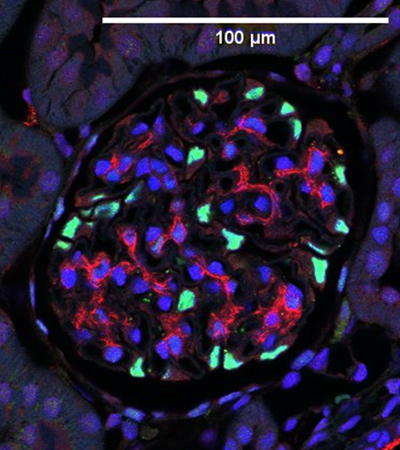
- Tissue analysis (histopathology, immunohistochemistry, qRT-PCR, Westerns).
Disease models
- Hypertension
- Hypertensive chronic kidney disease
- Pregnancy induced hypertension
- Adverse maternal environments during pregnancy
- Ageing.
Collaborations
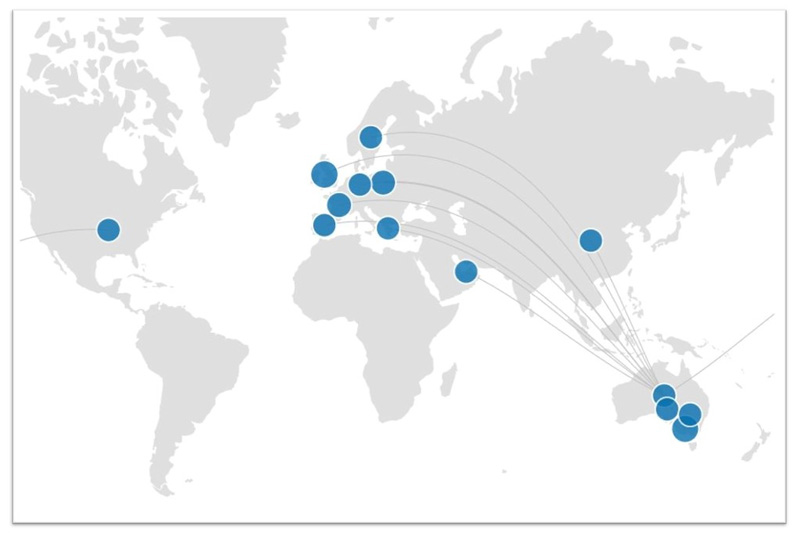
We collaborate with many scientists and research organisations around the world. Click on the map to see the details for each of these collaborators (dive into specific publications and outputs by clicking on the dots).
Student research projects
The Denton Lab offers a variety of Honours, Masters and PhD projects for students interested in joining our group. There are also a number of short term research opportunities available.
Please visit Supervisor Connect to explore the projects currently available in our Lab.