Lahoud Lab research
Collaborations | Student research projects | Publications
About Associate Professor Mireille Lahoud
Associate Professor Mireille Lahoud heads a research group focused on Dendritic Cell Receptors, their role in pattern recognition and their application for immune modulation.
Assoc. Prof. Lahoud completed her PhD and her early postdoctoral training at Monash University, where she focused on identification of novel DNA binding proteins. She then applied her molecular expertise to the molecular analysis of dendritic cell (DC) subsets in Professor Shortman's team at The Walter and Eliza Hall Institute. Assoc. Prof. Lahoud's research focused on the identification of DC-surface molecules that underpin DC function in mouse and human, and as DC targets for immune modulation. In 2012, she established a research team to focus on Dendritic Cell Receptors and their therapeutic application.
Assoc. Prof. Lahoud has discovered several novel DC receptors and demonstrated their function in DC. A key example is her discovery of Clec9A, a “danger” recognition receptor, which has been critical in aligning DC subsets across species. Assoc. Prof Lahoud identified the dead cell ligand recognised by Clec9A and has a focus on determining how DC handle material acquired from dead cells, in order to induce appropriate immune responses. With National and International collaborators, Assoc. Prof. Lahoud has demonstrated the potential of using such molecules as targets for inducing potent immune responses. A major focus is now the application of this approach for improving vaccines and immunotherapies.
Assoc. Prof. Lahoud has also identified receptors that dampen immune responses, and a major focus of her team is to determine the patterns recognised by such receptors, and to apply this for reducing inflammatory diseases such as inflammatory bowel disease.
Our research
Our research focus is understanding how the sentinels of the immune system, the dendritic cells (DC), sense and respond to “danger” in their environment, and to use this knowledge for improving vaccines and immunotherapies. DC have an array of receptors designed to detect pathogen-associated and damage-associated molecular patterns. These receptors enable DC to sense invading pathogens or other danger (eg. damaged or dead cells) and to direct the type of protective immune response required. Importantly, there are multiple DC subsets which are tailored for different functions. DC subsets can recognise different pathogens and damage signals, and respond accordingly. Our focus is to determine the receptors that enable the DC to sense and respond to such signals, and their role in inducing or regulating immune responses.
Current projects
1. The dendritic cell receptor Clec9A: dead cell recognition and immune modulation
2. Molecular mechanisms that underpin dendritic cell cross-presentation
3. The regulatory receptor Clec12A and its control of inflammatory diseases
Visit Associate Professor Lahoud's Monash research profile to see a full listing of current projects.
Research activities
DC receptors that enhance immune responses.
The primary role of Dendritic Cells (DC) is to sample material from their environment, determine whether it may be harmful and instruct the T cells how to respond. Our research aims to identify the receptors on DC that recognise danger and cellular damage (eg. infected cells or dying tumour cells), and how this recognition influences antigen handling and T cell responses (Figure 1).
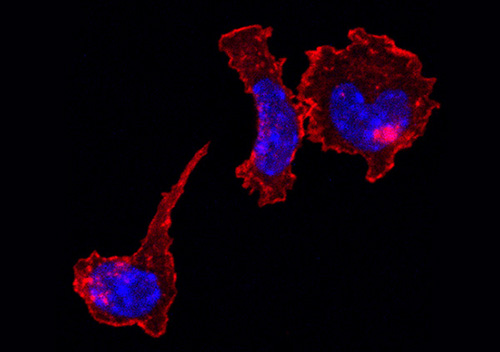
Figure 1
Improving vaccines and immunotherapies.
Our research aims to build on our discoveries of DC receptor biology to develop new DC-targeted vaccine approaches for cancer and infectious diseases (Figure 2).
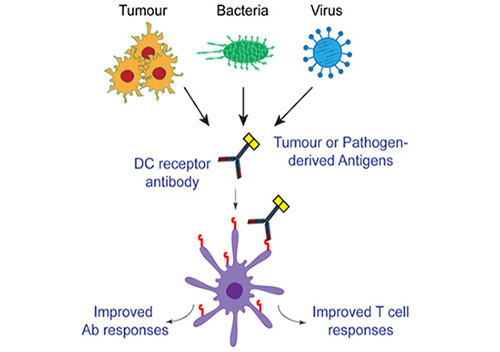
Figure 2
DC receptors that reduce immune responses.
DC must induce a tightly regulated immune response in order to eliminate infected cells, but minimise harm to the body. Our research addresses how DC recognise signs of inflammation, to deliver a tightly regulated appropriate immune response (Figure 3).
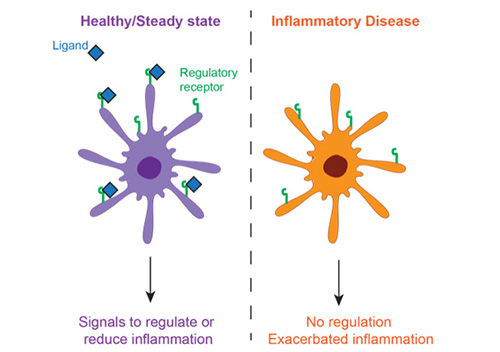
Figure 3
Regulating inflammatory disease.
In some circumstances, the immune system can respond inappropriately to non-threatening factors (eg. self cells or commensal bacteria that are naturally present within the body) resulting in auto-inflammatory diseases. Identification of the proteins recognised by DC regulatory receptors, and understanding how they reduce inflammation, enables the development of novel therapeutics to control auto-inflammatory diseases (Figure 4).
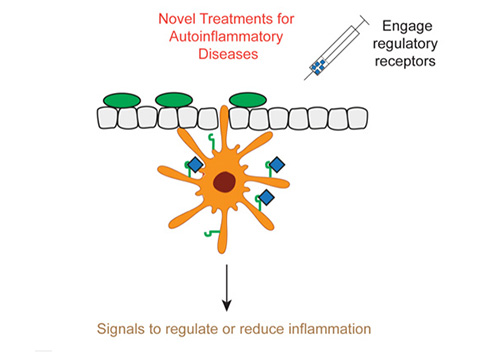 Figure 4
Key research areas
Dendritic Cell Function
Receptor-Ligand Interactions
Receptor Fate and Ubiquitination
Antigen Delivery Approaches
Enhancing Immune Responses
Modulating Inflammation
Collaborations
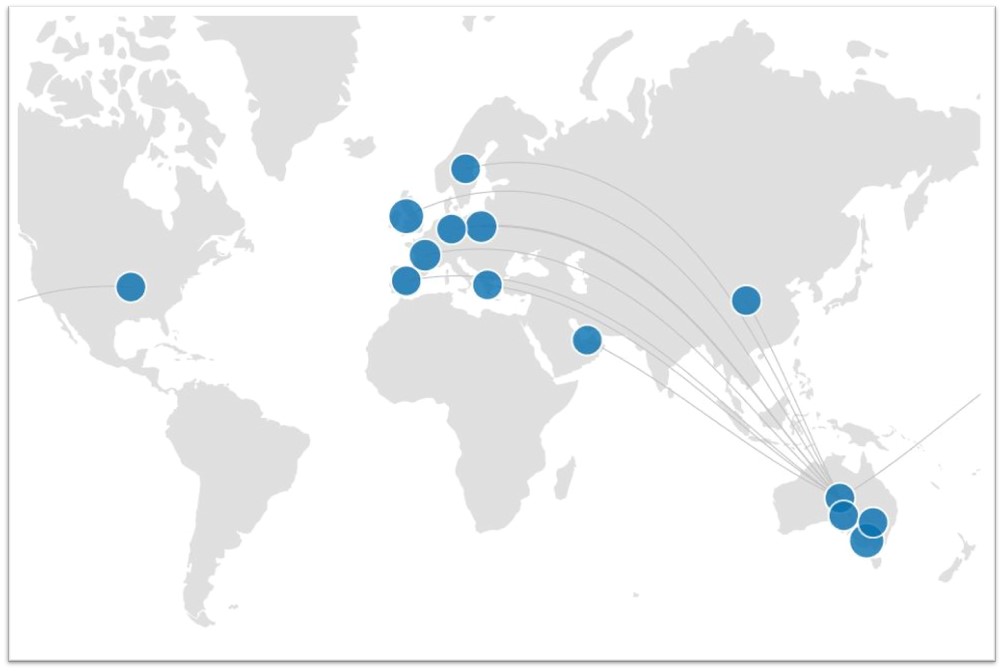
We collaborate with many scientists and research organisations around the world. Some of our more significant national and international collaborators are listed below. Click on the map below to see the details for each of these collaborators (dive into specific publications and outputs by clicking on the dots).
Student research projects
The Lahoud Lab offers a variety of Honours, Masters and PhD projects for students interested in joining our group. There are also a number of short term research opportunities available.
Please visit Supervisor Connect to explore the projects currently available in the Lahoud Lab.