Lawrence Group research
Collaborations | Student research projects | Publications
About Dr Mitchell Lawrence
Mitchell’s goal is to improve the lives of patients with prostate cancer. He aims to reduce the lag between discoveries in the laboratory and changes in clinical practice. To do this, he uses patient-derived models to study prostate cancer biology and test new treatments to inform the design of clinical trial.
Mitchell joined Monash University in 2010 to work with Prof Gail Risbridger and A/Prof Renea Taylor in the Prostate Cancer Research Group. He has received several awards for the impact of his research, including the Mid-Career Research Award from the Endocrine Society of Australia (ESA), Science Communication and Community Engagement Award (BDI), a Clinical Engagement and Research Translation Award (BDI), and an Early Career Researcher Publication Prize (Faculty MNHS).
To contribute to the culture of research, Mitchell participates in peer review for national and international funding agencies and scholarly journals. He chairs the Melbourne Urological Research Alliance Prostate Access Committee, and is a member of the kConFab Biospecimen subcommittee, BDI Mid-Career Researcher Committee, and BDI Organoid Program Steering Committee. He is also the co-chair of the Endocrine Society of Australia Program Organising Committee (2021-2023).
Mitchell is enthusiastic about training the next generation of scientists. He has trained undergraduate students, Cancer Council Victoria summer scholars and Honours candidates. His PhD students have gained prestigious awards (e.g. ESA Novartis Junior Scientist; Joseph Sambrook Award; ASMR Best talk; BDI Graduate Symposium Best talk).
To engage with the community, Mitchell gives talks to Prostate Cancer Foundation of Australia support groups, Rotary clubs and other volunteer organisations. He also runs laboratory open days for patients and their families to see prostate cancer research first-hand.
Our research
Current projects
- Identifying new combination therapies targeting DNA damage repair in prostate cancer
- Studying the response of prostate cancer to bipolar androgen therapy
- Developing 3D assays for high-content screening of candidate drugs with prostate cancer organoids
- Investigating the importance of pathological subtypes of prostate cancer and their association with patient prognosis
- Profiling the features of the prostate cancer tumour microenvironment, including cancer-associated fibroblasts
Visit Dr Mitchell Lawrence's Monash research profile to see a full listing of current projects.
Research activities
Prostate cancer is the most common malignancy in Australia. Many patients have curable tumours, but some develop life-threatening disease, leading to approximately 3,200 deaths in Australia each year.
Patients with aggressive prostate cancer usually receive drugs that block hormones (e.g. testosterone). These treatments are initially effective, but patients eventually develop drug-resistant tumours that become increasingly difficult to treat. The current drugs can also be expensive and produce side-effects that reduce quality of life.
To address these challenges, our goal is to develop a safe, effective and inexpensive new treatments for prostate cancer. We do this in partnership with local, national and international collaborators. In particular, we collaborate with urologists, oncologists, pathologists, clinical co-ordinators and patient advocates to identify treatments that will improve patient outcomes.
Techniques/expertise
Our research begins with patients. Hundreds of patients undergoing surgery for prostate cancer have generously donate excess tissue to the Prostate Cancer Research Group. We turn these potentially life-threatening tumours into new tools for prostate cancer research. These patient-derived models form the Melbourne Urological Research Alliance (MURAL) cohort.
Every patient’s tumour is unique. The MURAL cohort allows us to study patient-to-patient difference and the diversity of prostate cancer.
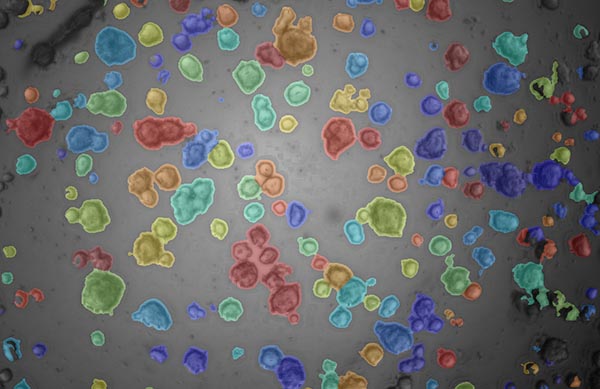
To maximise the scope of studies with patient-derived models, we are developing new ways to grow them as 3D clusters of cells, known as organoids. This is enables us to screen hundreds of candidate drugs and combinations of different drugs.
Disease models
1. Using hormones to treat prostate cancer
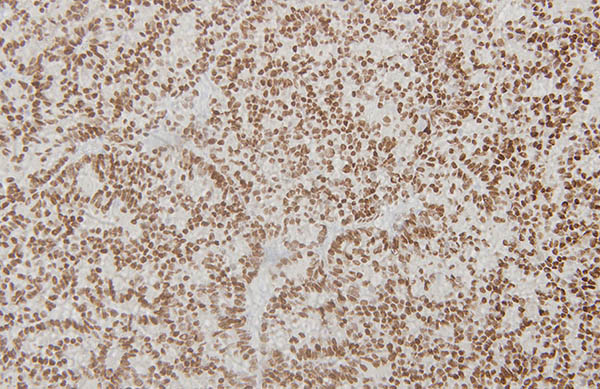
2. Identifying combination therapies for prostate cancer
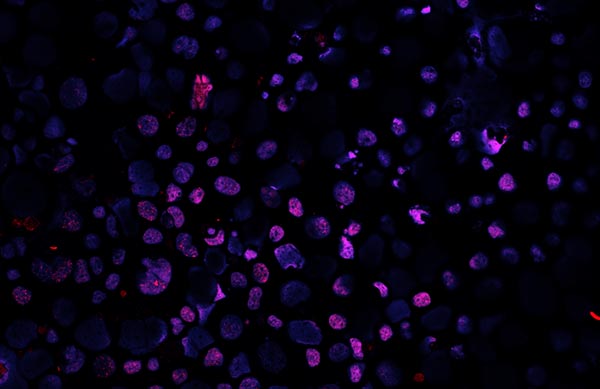
3. High-throughput testing with organoids
Collaborations
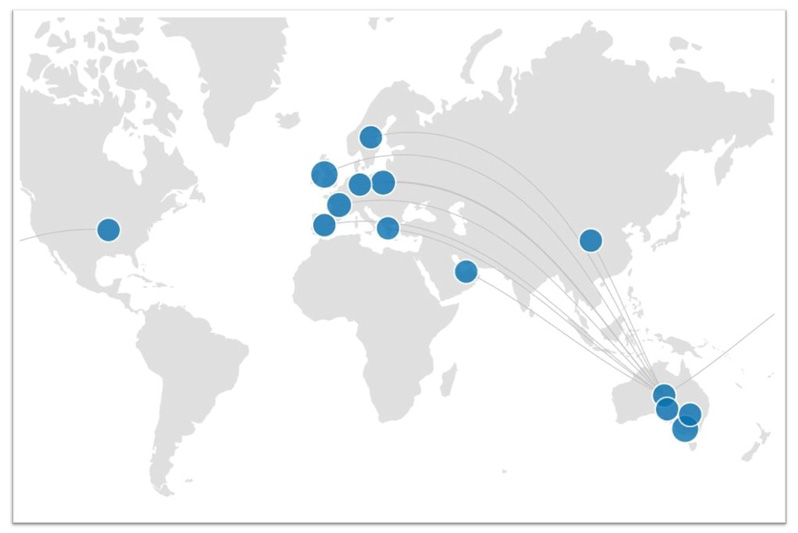
We collaborate with many scientists and research organisations around the world. Some of our more significant national and international collaborators are listed below. Click on the map to see the details for each of these collaborators (dive into specific publications and outputs by clicking on the dots).
Student research projects
The Lawrence Group offers a variety of Honours, Masters and PhD projects for students interested in joining our group. There are also a number of short term research opportunities available.
Please visit Supervisor Connect to explore the projects currently available in our Lab.
NOTE: When there is no Supervisor Connect link provided, use the ‘No supervisor connect - amend.docx’ text on the Research content page instead of the usual image and link to Supervisor Connect. Still keep the bookmark ‘Student research projects’ at the top of the Research page.
The Lawrence Group offers a variety of Honours, Masters and PhD projects for students interested in joining our group. There are also a number of short-term research opportunities available. You are encouraged to contact Dr Lawrence regarding potential projects that align with the presented research themes.