Patil Group research
Collaborations | Student research projects | Publications
About Dr Patil
Nitin completed his master’s degree in pharmacy from NMIMS University in India. Following this, he pursued his professional endeavours in the pharmaceutical industry with Piramal Life Sciences, focusing on developing small molecule drug candidates for the treatment of cancer. However, driven by his curiosity, he decided to further his education and obtained a PhD in Chemistry from the esteemed University of Melbourne in Australia. During his doctoral studies, he developed a keen interest in solid phase synthesis and bioorthogonal conjugation of complex biomolecules. In 2018, he joined Monash University at the Biomedicine Discovery Institute and was awarded the Monash Bridging Postdoctoral Fellowship, where he commenced his research program aimed at advancing the development of peptide and oligonucleotide therapeutics. In 2019, he was awarded the highly regarded National Health and Medical Research Council's Peter Doherty Fellowship. Currently, as a leader of a dynamic and innovative team in the Department of Microbiology at Monash University, Dr. Patil continues to pursue novel avenues of scientific exploration.
Our research
Current projects
Visit Dr Patil's Monash research profile to see a full listing of current projects.
Research activities
We focus on utilising these unique properties to design and develop cutting-edge therapeutics, biosensors, and biochemical tools. By exploiting the molecular recognition and self-assembly properties of nucleic acids, we can generate functional architectures that enable us to study and manipulate cellular processes.
We're particularly interested in exploring how we can use both synthetic and natural oligonucleotides in combination with other biomolecules to create new tools for various applications. These applications include detecting diseases, developing new and innovative treatments, reviving existing therapeutics and studying fundamental biological processes at the molecular level.
By combining oligonucleotides with other biomolecules, we can create novel architectures and systems that can detect and respond to specific targets with high sensitivity and precision. These new tools and techniques have the potential to revolutionize the way we study and treat diseases and advance our understanding of the fundamental workings of biology.
Focus areas:
1) Peptide Nucleic Acids (PNAs) as antisense antibiotics

2) Backbone-modified antisense oligonucleotides
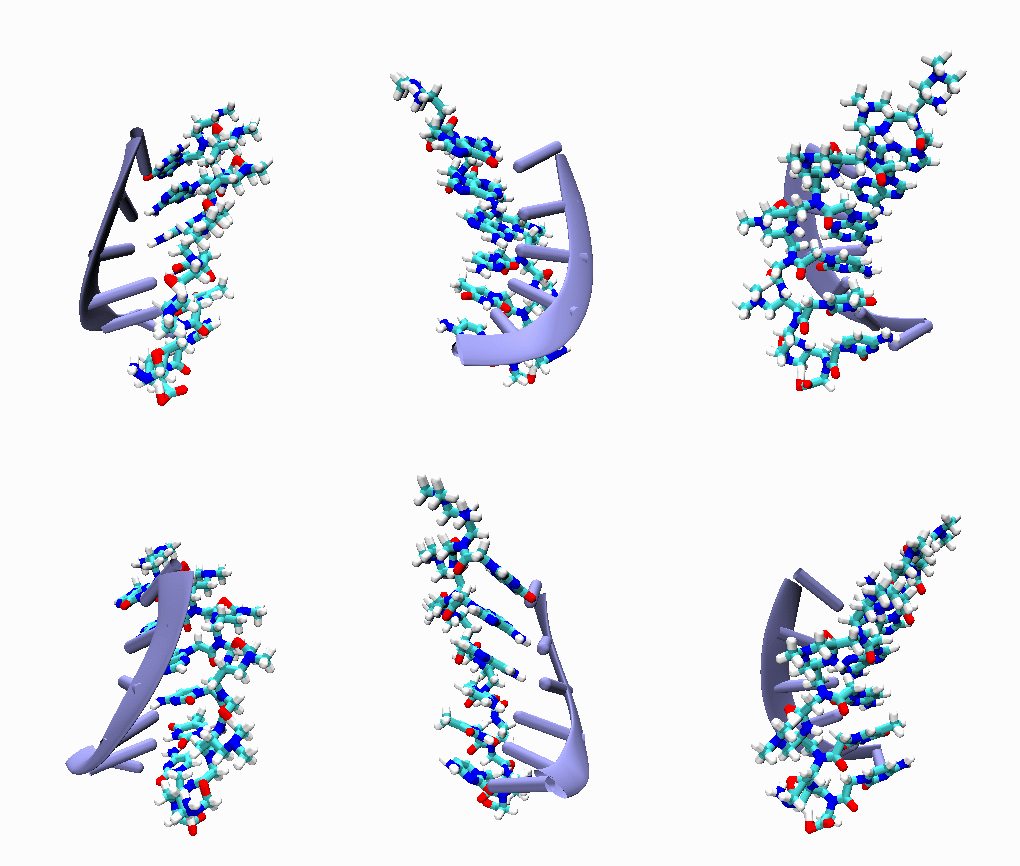
3) Lipopeptide-based antibiotic drug development
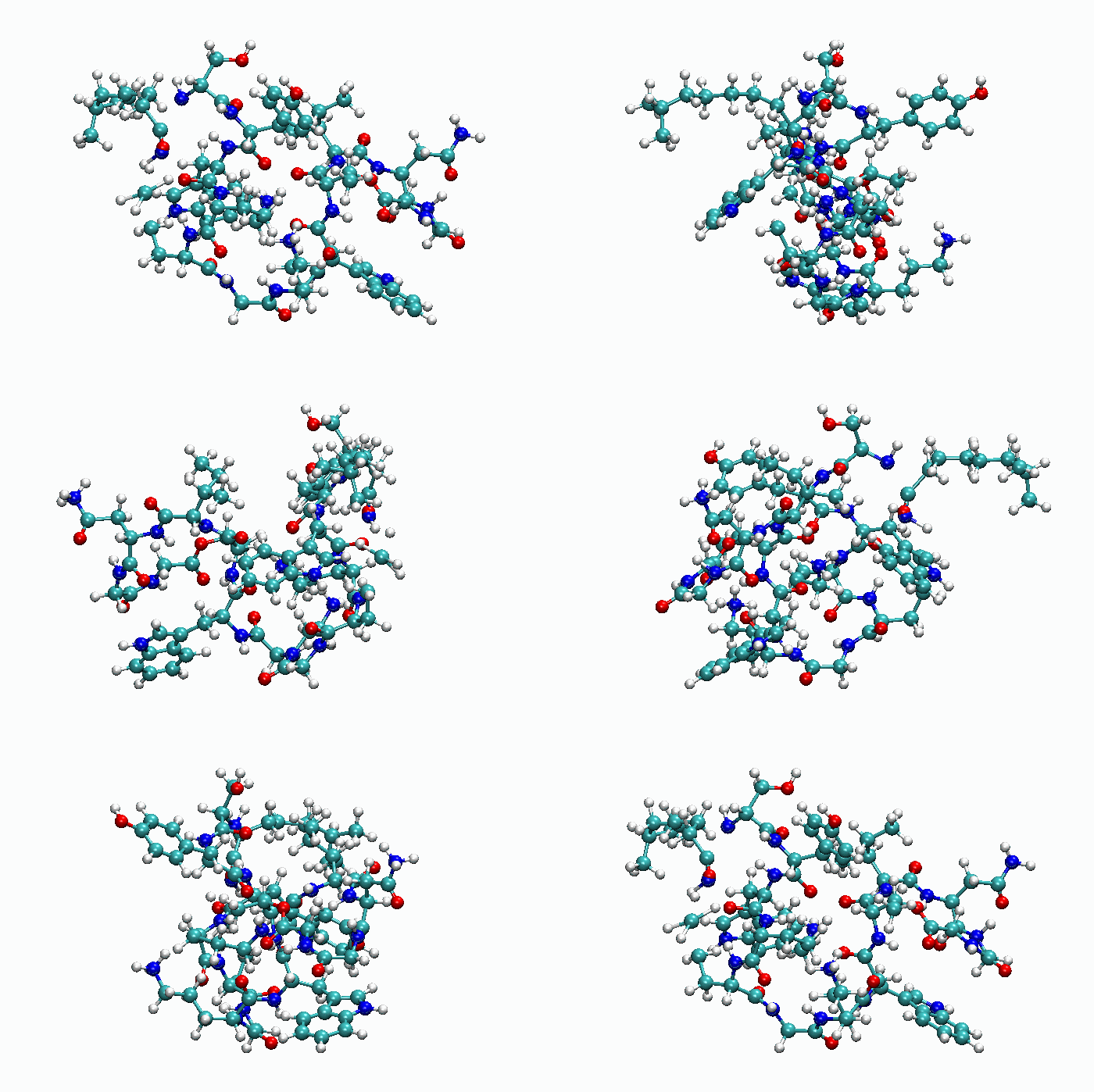
4) Bioorthogonal conjugation approaches for effective drug delivery
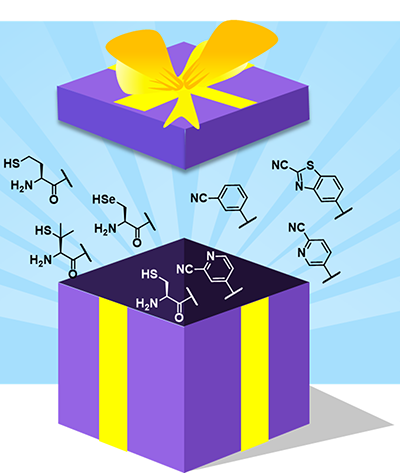
Techniques/expertise
We utilise a combination of chemical synthesis (eg solid-phase peptide/ nucleic acid synthesis, and solution-phase organic chemistry), structural characterisation (eg high-resolution mass spectroscopy, nuclear magnetic resonance spectroscopy) and biophysical techniques.
Disease models
Microbiological (Gram-negative bacterial pathogens) activity assay and in vivo infection models.
Collaborations
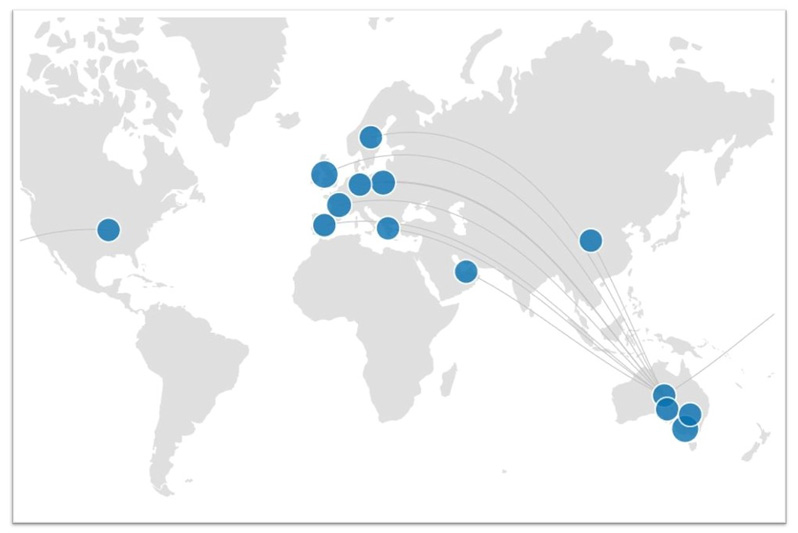
We collaborate with many scientists and research organisations around the world. Click on the map to see the details for each of these collaborators (dive into specific publications and outputs by clicking on the dots).
Student research projects
The Patil Group offers a variety of Honours, Masters and PhD projects for students interested in joining our group. There are also a number of short term research opportunities available.
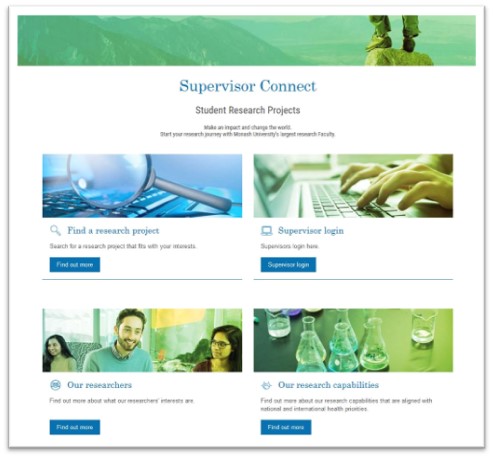
Please visit Supervisor Connect to explore the projects currently available in our Lab.
The Patil Group offers a variety of Honours, Masters and PhD projects for students interested in joining our group. There are also a number of short-term research opportunities available. You are encouraged to contact Dr Patil regarding potential projects that align with the presented research themes.