Robert Lab research
Collaborations | Student research projects | Publications
About Associate Professor Remy Robert
Associate Professor Remy Robert is a research fellow in the Department of Molecular Biology and Biochemistry (Monash University). Remy is specialized in therapeutic antibody development and antibody engineering. During his PhD in Bordeaux, he developed new techniques to isolate antibodies in in vivo disease model using phage display technology. In 2007, CSIRO offered him a Postdoctoral Fellowship in the area of protein and antibody engineering. During those 3 years in Professor Pete Hudson laboratory, he mastered all the different aspects of his discipline by learning new antibody techniques. In 2011, Remy joined the laboratory of Professor Charles Mackay in Monash University as a research fellow. Remy's goal is to move academic science into translation in the form of new antibody therapies using cutting-edge protein engineering techniques and human receptor knock-in mice.
Our research
Current projects
- Development of therapeutic antibodies against difficult targets such as GPCRs
- Optimization of monoclonal antibodies using humanization; Fc engineering and affinity maturation technologies
- Development of bispecific antibodies for the treatment of autoimmune diseases
- Therapeutic assessment of monoclonal antibodies using human knock-in mouse disease models
Visit Remy’s Monash research profile to see a full listing of current projects.
Research activities
Over the past decades, advances in our understanding of the immune system have led to the development of more effective, specific and safe approaches for the management of inflammatory associated disorders. In this context, monoclonal antibodies (mAbs) offer unprecedented opportunities to drug development because of their ability to target almost any cell surface or secreted molecule with remarkable specificity and safety. Our objective is to develop new classes of therapeutic mAbs against G protein-coupled receptors (GPCRs) using cutting edge technologies in mAbs development, engineering and pre-clinical validation. We have demonstrated that targeting specific GPCRs was an innovative approach for the treatment of various inflammatory and autoimmune disorders. Our goal is to move academic science into translation. We are currently involved in commercially oriented projects in collaboration with pharmaceutical companies, including Pfizer, Corvus Pharma, and Novo-Nordisk.
1-Development and characterization of therapeutic antibodies against difficult targets
GPCRs are one of the most important classes of targets for small molecule drug discovery, but many current GPCRs of interest are proving intractable to small molecule discovery and may be better approached with bio-therapeutics. However, raising antibodies to GPCRs has been difficult due to the high homology between species and problems in obtaining suitable antigen. Our group has established innovative approaches to develop mAbs that involves optimised transfectants, immunisation of KO mice for the targeted receptors; tricks for cell fusion, high throughput approaches and careful screening. Our lab has a proven history of generating unique mAbs against those targets.

2- Antibody engineering for optimization of therapeutic antibodies
Antibody-based drug development requires technologies that allow not only for the initial discovery of antibodies, but also high technological capabilities such as antibody humanisation; affinity maturation and bispecific antibody generation. At present, these optimisation steps are performed by biotech/pharma companies and are time-consuming and extremely costly, with uncertain outcomes. However, our laboratory is one of the few academic labs that can compete with industry in this area of drug development. We have established a powerful antibody engineering platform allowing us to routinely humanise therapeutic antibodies. Moreover we have recently developed an innovative approach for the rapid affinity maturation of mAbs by mimicking in vitro B cell-driven somatic hypermutation (SHM), a process that normally occurs in vivo. We have also capabilities to generated various forms of bispecific antibodies

3-In vivo validation of therapeutic antibodies
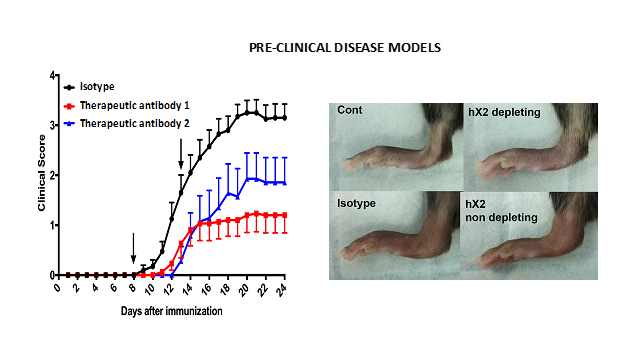
We have established various animal disease models of inflammatory and autoimmune diseases for assessment of drugs. Our plan is to investigate the therapeutic potential of our humanised lead candidate and compare their efficacy to already approved therapies.
Techniques/expertise
- Hybridoma technology
- Protein production and purification
- Antibody engineering (humanization; affinity maturation; Fc engineering)
- Flow cytometry
- Animal models
Collaborations
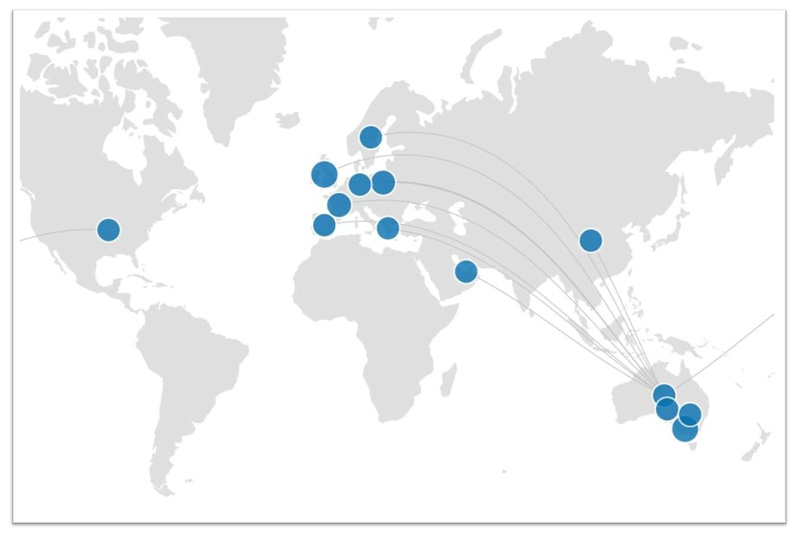
We collaborate with many scientists and research organisations around the world. Click on the map to see the details for each of these collaborators (dive into specific publications and outputs by clicking on the dots).
Student research projects
The Robert Lab offers a variety of Honours, Masters and PhD projects for students interested in joining our group. There are also a number of short term research opportunities available.
Please visit Supervisor Connect to explore the projects currently available in our Lab.