Short Lab research
Collaborations | Student research projects | Publications
About Dr Francesca Short
Dr Francesca Short is a teaching and research academic at Monash University, Australia. She completed her PhD in molecular microbiology at the University of Cambridge, and was then awarded a Sir Henry Wellcome postdoctoral fellowship in bacterial functional genomics at the Wellcome Sanger Institute, Cambridge, UK. She relocated to Australia for a postdoctoral position at Macquarie University and moved to Monash University as an ARC DECRA fellow. She began her teaching and research position in 2023.
Dr Short has made key contributions in the use of functional genomics to understand bacterial behaviour and survival, including the first genome-scale definition of a virulence regulation network in a bacterial pathogen, and the discovery that common disinfectants can interfere with antibiotics.
Her current research combines genomics, functional genomics and molecular microbiology to understand questions of regulation, adaptation and environmental survival in Gram negative opportunistic pathogens such as Klebsiella pneumoniae and Acinetobacter baumannii.
Our research
Current projects
- Defining behaviour regulation networks using functional genomics
- Understanding mechanisms of pathogen environmental survival
- Disinfectant mechanisms and consequences
Visit Dr Short's Monash research profile to see a full listing of current projects.
Research activities
Defining behaviour regulation networks using functional genomics
Bacteria encounter many different environments within and beyond the host, and being able to rapidly tune their gene expression to suit their conditions is essential for survival. Studying these complex regulation networks that control these decisions is challenging and traditionally relied on low-throughput molecular biology techniques that cannot scale to the numerous regulators present in each bacterium. We develop cutting-edge functional genomics techniques to define regulatory networks in hypervirulent Klebsiella pneumoniae and Acinetobacter baumannii, and use these to understand control of critical bacterial virulence factors. This work will deepen our knowledge of bacterial pathogenesis, and could improve our ability to predict and control bacterial behaviour.
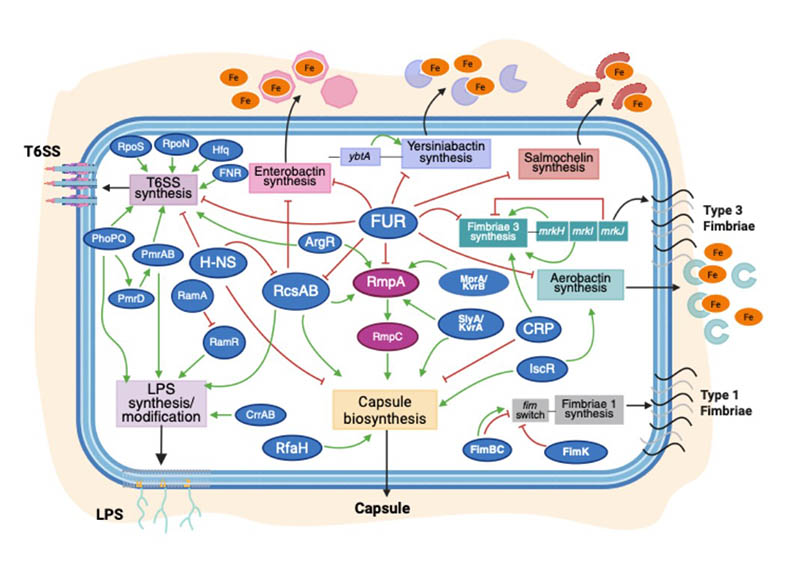
Image 1. Regulation network controlling virulence factor production in Klebsiella pneumoniae. The Short lab develops and applies cutting-edge methods to identify regulators of important processes in bacteria.
Understanding mechanisms of pathogen environmental survival
Many devastating pathogens are in fact widespread generalists that can thrive in diverse environments. Waterways and soils are two locations where pathogen survival is particularly important, as these provide a means for transmission, and contribute to bacterial evolution. However, we know much less about how bacteria survive outside the human host than inside it. We study the molecular mechanisms pathogens use to survive in natural environments using a combination of functional genomics and molecular approaches, and then link these findings to activities in natural complex communities.
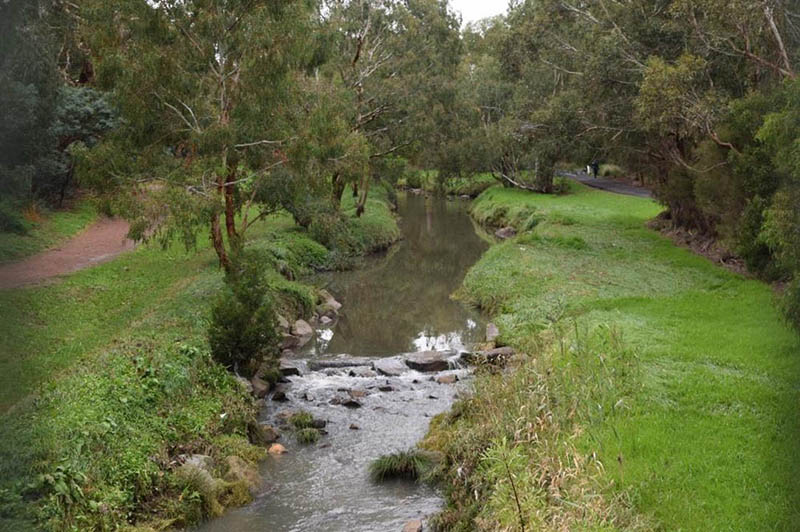
Image 2. Dandenong Creek, Victoria. This is an example of a complex urban water environment studied in the group to determine pathogen survival mechanisms.
Disinfectant mechanisms and consequences
Antimicrobial biocides have been used for decades as disinfectants, antiseptics and preservatives to protect from harmful microbes. However, unlike other antimicrobial agents such as antibiotics, monitoring of biocide usage, efficacy or resistance rates is not required, and large knowledge gaps remain about the mechanisms and long-term effects of these biocides. We previously showed that biocides can act on specific targets in the cell, and can prevent antibiotics from working by altering bacterial metabolism. We are now working to define biocide mechanisms of action in key pathogens and to elucidate the short- and long-term effects of biocide exposure, and leveraging this knowledge to develop improved biocides. In addition, we are active in advocating for biocide regulation and stewardship in Australia.
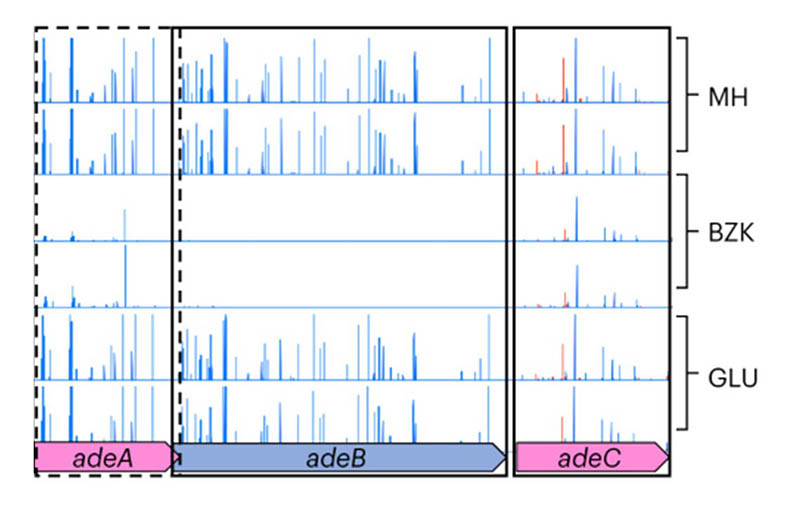
Image 3. Output from a transposon insertion sequencing experiment investigating disinfectant survival in Acinetobacter baumannii.
Techniques/expertise
Tn-seq, transcriptomics, genomics, molecular microbiology.
Disease models
Galleria mellonella, murine models.
Collaborations
We collaborate with many scientists and research organisations around the world. Click on the map to see the details for each of these collaborators (and you'll be able to dive into specific publications and outputs).
Student research projects
The Short Lab offers a variety of Honours, Masters and PhD projects for students interested in joining our group. There are also a number of short term research opportunities available.
Please visit Supervisor Connect to explore the projects currently available in our Lab.