ADHD is vastly overrepresented in Australia’s carceral system compared to the general population. Estimates suggest that compared to the general population at 3%, somewhere between 17-40% of those in the prison system have undiagnosed and untreated ADHD. Often misconceived as just a hyperactive child, the impact of ADHD can be far more profound, including difficulties with academia, social relationships, emotional regulation, self-esteem, finances, accident and injury, substance abuse and interactions with the criminal justice system. This project proposes a transition centre principally aimed at providing opportunity to those with ADHD who’ve experienced a lifetime of systemic disadvantage.
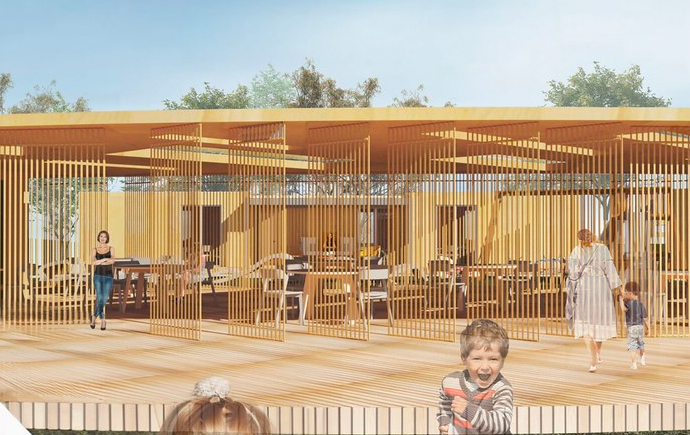
George Street Elevation
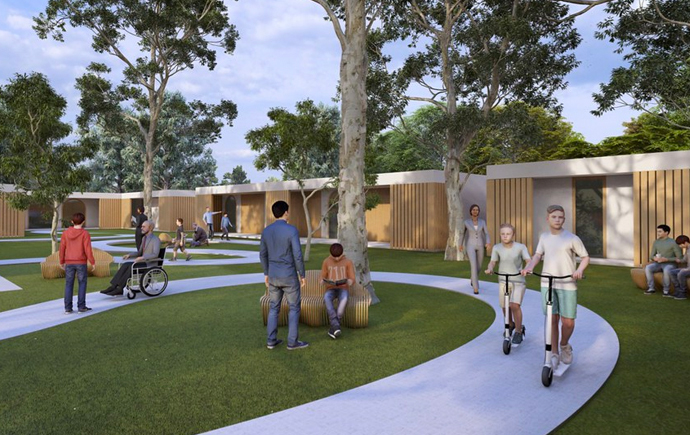
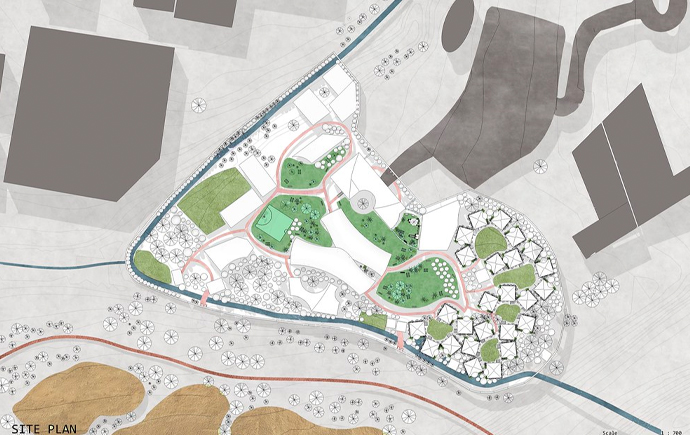
Located at the intersection of Victoria Parade and George Street in Fitzroy, this location offers residents a safe and supported base from which to engage with the broader urban community. The site itself provides refuge from the more dynamic urban context, while aspects through the various structures foster visual connection between the residents and the wider urban realm. The decision to fragment the built form into various isolated buildings across the site enables distinct identities to form around each of the buildings and their associated program, enhancing clarity of purpose and sense of place within the broader site context.
Proposed Design Objectives
Research throughout the semester was distilled into 6x key diagrams, which subsequently formed a framework around design objectives for the residents of the transition facility. Reviewing the range of submissions to the 2023 Senate inquiry into ‘Assessment and support services for people with ADHD’, it became clear that self-efficacy and confidence were the most important of these design objectives.
Ground Floor Plan
The traditional educational system is often incredibly challenging for individuals with ADHD, and this can have profound effects on social acceptance and future employability. This transition centre proposes the interweaving of vocational skill building through textile manufacturing into the residential facility. While this introduces a potential avenue of future employment, it also elevates self-efficacy through building a practical skill that can be used privately – making and repairing clothes. The visible functions of the textile manufacturing facility, dispersed across the site, also provide structure to the day, which can be challenging for those individuals with ADHD.
Observable Activity
“Time is slippery” was noted in one of the submissions to the ‘Assessment and support services for people with ADHD’ 2023 senate inquiry. Observable, consistent, routine activity occurring around the site provides a basis from which to structure ones own day, and increases accountability for the broader group of residents.
Dispersed Form & Function
The series of smaller buildings and rooms dispersed across the site allow for the curation of distinct conditions inside, based on the preferences for the individuals using them. Distractions can be particularly difficult to manage for individuals with ADHD, so these spaces assist with managing and regulating these.
Individual Units
Each resident has an individual unit, with their own front door, offering a sense of individual identity and control over their own space, and organizational methods that might suit their individual preferences. Units are planned in a sequential order, working to prompt the individual as they move throughout their day.
In the spirit of reconciliation Monash University acknowledges the Traditional Custodians of country throughout Australia and their connections to land, sea and community. We pay our respect to their elders past and present and extend that respect to all Aboriginal and Torres Strait Islander peoples today.