Monash University logo

Monash Art, Design and Architecture Graduate Exhibition 2023

I have always been passionate about lifelong learning which propels my growth as a designer. My education has been helping me sharpen my design skills. I aspire to contribute to the evolving field of design, transforming human interaction while enhancing functionality, aesthetics and sustainability.

In my project, I'm creating a safety shawl for elderly individuals who prefer such attire. It incorporates PPG sensors on the collarbone for continuous heart rate monitoring, with real-time data sent to a dedicated app for immediate alerts on heart rate fluctuations, and a base-mounted pulse oximeter for enhanced precision in critical heart rate assessment.

Shawl that incorporates PPG sensors and Pulse Oximeter

PPG sensors on the collarbone measure heart rate by emitting light into the skin and detecting changes in blood volume associated with each heartbeat. They analyse the pulsatile signal created by these changes and use signal processing to filter out motion artefacts. This enables them to accurately calculate the wearer's heart rate, even during physical activities. In the context of attaching a sensor to a shawl, PPG sensors are cost-effective, lightweight, and have wireless connectivity, making them suitable for consumer applications.

PPG Sensors

PPG sensors utilize a light source, typically an LED, to illuminate the skin, and a photodetector (PD) to gauge the light that is reflected. Variations in blood volume influence the reflected light, generating a rhythmic pattern known as the PPG waveform. This waveform is examined to track important indicators such as heart rate and oxygen saturation. PPG sensors find widespread application in health and fitness gadgets.

Product in use

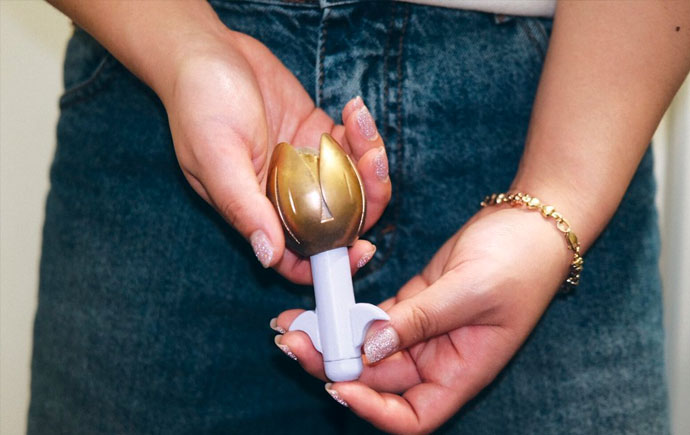
Pulse oximeter attatched to the bottom of the shawl

A pulse oximeter is a medical device that measures the oxygen saturation (SpO2) in a person's blood. It can provide important insights into your cardiovascular health, especially when used after an increase in heart rate. Monitoring your oxygen saturation with a pulse oximeter in such situations can help detect potential health issues. After physical activity, both heart rate and oxygen saturation levels should return to their normal baseline levels. The pulse oximeter is conveniently attached to the end of a shawl and can be used when heart rate is elevated or decreased.

Magnetic Charger to Charge the PPG Sensors

The charging cable has a standard USB plug on one end and a magnetic connector on the other. The magnetic connector, which attaches to the device, includes magnets and electrical contacts that align with the device's contacts to create an electrical connection. It is Convenient as we don't need to remove the sensors from the Scarf. Other advantages include Protection, Safety and Versatility

Heart rate can be read via the App

PPG (Photoplethysmography) readings of the heart are collected by sensors which emit and measure light to monitor changes in blood volume, which are directly related to heartbeats. The collected data is processed to calculate heart rate in real-time and can be transmitted via Bluetooth to a paired smartphone app. The app displays heart rate data, allows users to monitor it continously, set alerts, and integrate this information into their health and fitness profiles for tracking and analysis. The primary goal is real-time heart rate monitoring and health tracking.

Explore more

View all

Back to top