Monash Art, Design and Architecture Graduate Exhibition 2024
Monash Art, Design and Architecture Graduate Exhibition 2024
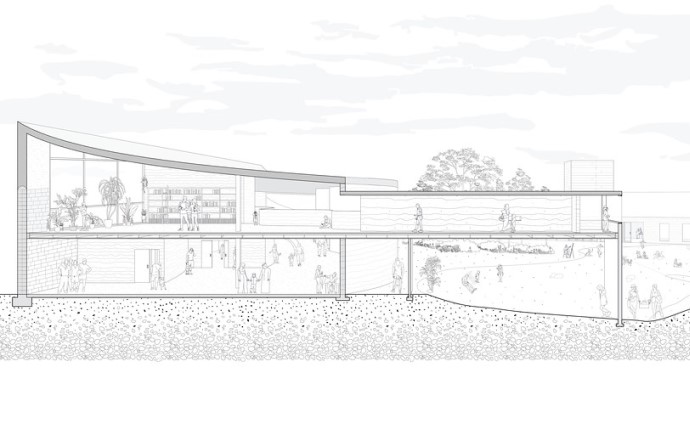
Dark Heritage interrogates how architectural projects can address sites of historic incarceration, colonialism, and violence, by examining the redeveloped site of Pentridge Prison. Examining how such histories are currently narrated within the sites' memorialisations and reuse, this studio asks: what would a more honest treatment of such realities entail spatially, whilst also leaving room for new future uses and narratives?
Through unpacking historical narratives of the site, positioning these in relation to key literature, and conducting our own site readings of the former prisons present day condition, architectural propositions were used to interpret and represent critical framing around carceral colonial heritage in the city.
Working at the intersection of memorialisation and speculation, students developed a proposal for a memory architecture, which can act as a museum for the site and communicate an unaddressed narrative informed by their research.
To do this, the practice of hybrid drawing was interrogated as a vehicle for iterative development of spatial narratives and the communication of architectural propositions. Additionally, physical models acted as key tools over the semester to generate concepts, test ideas, translate information from drawings into other mediums, and explain architectural propositions.
Through these processes, students developed architectural projects which used critical propositions to function as both critique and to suggest ways to communicate and spatialise readings of the site through architectural representation and speculative design.
Studio Leaders: Mark Romei
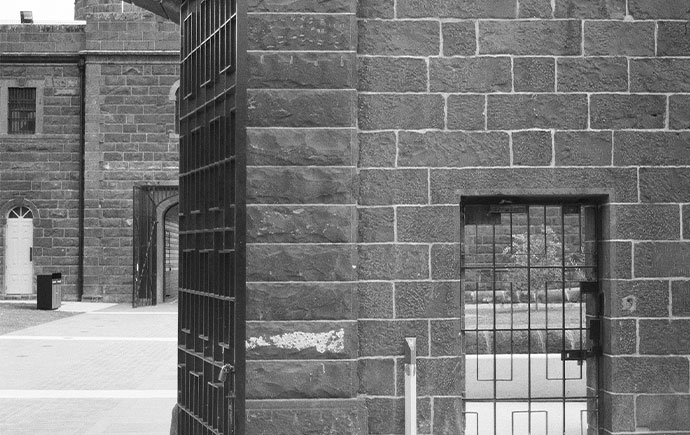
Image: Bluestone walls of Pentridge Prison - Mark Romei,