My passion for industrial design comes from its capacity to bring together practicality and creativity. Figuring out how things work – especially mechanically – excites me and I strive to incorporate functional mechanisms into my work. Throughout my degree I’ve picked up the hard skills and software required to produce refined design outcomes, as well as building a strong foundation in the research and discovery aspect of the field, expanding my understanding of problem spaces through critical ethnography. These skills and interests have all culminated in Elevate, an assistive product developed for physiotherapists to aid in the lifting of legs of patients in higher body mass percentiles.
Outstanding Project: Health and Wellbeing
Elevate
Taking the load off physiotherapists. Elevate relocates the power required to lift a patient’s lax leg from the physio’s upper body to their lower, utilising leverage and locking mechanisms to improve the ergonomics in physiotherapy practice.
Problem Space
Physiotherapists are 2x more likely to develop a work related musculoskeletal disorder (MSD) than the average person. Physiotherapists in the lower body mass percentiles treating people in the 90th percentile can struggle with treating patients’ legs as they are often required to be lifted in a lax state. This manual handling of heavy loads is also a large contributor to the onset of MSD. With these struggles, they sometimes have to avoid those treatments all together.
Prototyping Process
Through iterative ideation and prototyping I explored different ways of approaching the problem. The concepts took two directions, one focused on designing an alternate approach to physically straining treatments and the other looked at assisting in the physical lifting of patients’ legs for treatment.
Concept testing
Prototyping to scale to test the feasibility of the chosen concept and workshop issues that arose in user testing.
Elevate
Once the patient’s leg is on the device, the physio can push down on the foot pedal, using leverage to elevate the leg. It then locks into place and the physio is able to take hold of the patient’s leg in the correct position, taking the time to ensure their posture is correct.
Mechanisms
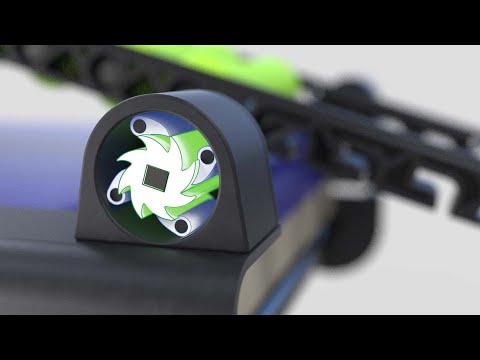
Elevate features a ratchet mechanism in the clamps that allow it to stay in place once the physio’s have taken their foot off its pedal. It also features a tension cable running over the top of the frame to limit the motion of the supporting front end in relation to the angle of the main body. This is tightened with a dial on the end of the frame which allows the angle and therefore height to be adjusted.
In the spirit of reconciliation Monash University acknowledges the Traditional Custodians of country throughout Australia and their connections to land, sea and community. We pay our respect to their elders past and present and extend that respect to all Aboriginal and Torres Strait Islander peoples today.