Monash University logo

Monash Art, Design and Architecture Graduate Exhibition 2025

As an industrial designer and mechanical engineer, I enjoy the challenge of combining form and function to create engaging designs that invoke meaningful change in the world.

Athletes are at a much higher risk of suffering from serious knee and ankle injuries when rotational traction between footwear and the playing surface is either too high or too low. Although torsional grip is affected by many variables, it is mainly linked to the length of studs on the bottom of each boot. By working in conjunction with modular football boots that are already available to buy, the Stud Bud addresses this issue by translating rotational data directly into stud length recommendations.

DIA Elivio Bonollo AM Best Industrial Design Model Award

Awarded in honour of Elivio Bonollo AM, the founder of the Monash Centre for Industrial Design to acknowledge the best industrial design model created by a Bachelor of Industrial Design graduating student.

Rendering of the Stud Bud on the Field

While the Stud Bud was initially designed with Ultimate Frisbee players in mind, it is able to help non-professional athletes from a wide range of sports to make informed footwear decisions. The device’s compact design and lightweight construction make it easy for any user to stow in the bag that they take to training and games.

Stud Bud components

The Stud Bud has 5 main components. First is the outer case, which includes a textured finish that helps the user to maintain grip while rotating, a viewing window for the dial, and grooves for locking in position. This pushes down onto the compression spring, which regulates the downward pressure applied. The slider has three channels around its outer face which transfer torque exerted on the outer case into the elastics. These elastics form the torsion spring system, which hook onto the slider and baseplate to provide rotational resistance. Finally, the baseplate transfers torque into the ground using six uniform studs, with the dial reading shown on the top surface of this component.

How to use the Stud Bud

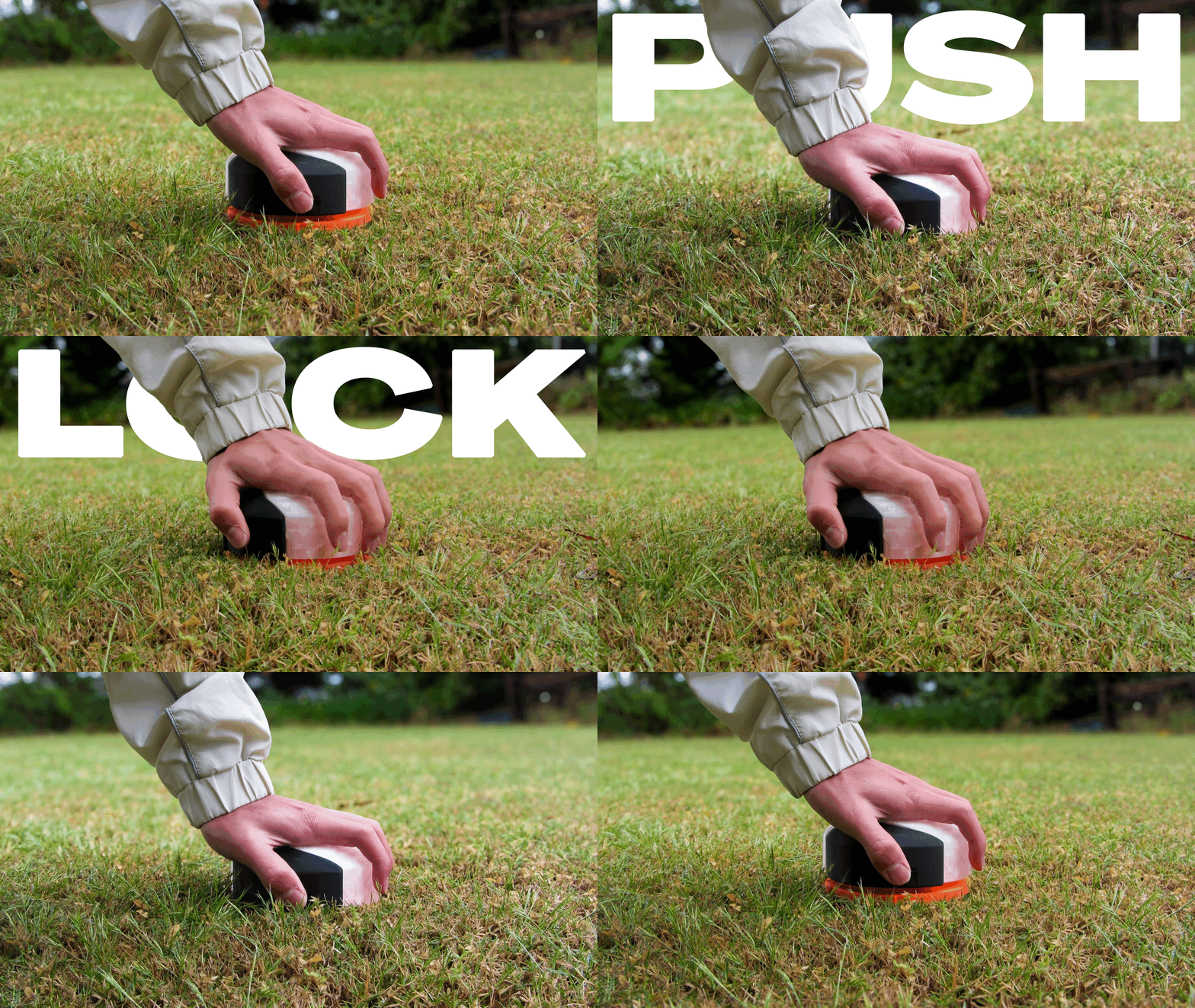
TEST: A maximal rotational traction value is obtained by pressing the Stud Bud into the ground, then twisting until the baseplate starts moving which indicates that the playing surface has given way. The device is then released to lock it into position.
READ: The user can now pick up the device to view the recommended stud length for this surface. The device is then reset, and multiple samples taken for more accurate results.
ADJUST: Based on the shortest stud length recommended by the Stud Bud, the user can now swap their studs to the desired length for optimal safety.
PLAY: The user can now enjoy their game or training with confidence that their footwear will provide the perfect traction.

Stud Bud’s Testing Mechanism

The testing phase consists of three simple steps. The Stud Bud is first pushed into the ground to engage the turning motion. Torque is applied to the device until it begins to slip in the playing surface, where it can then be released to lock in place. This process was refined through testing with many different users, with subtle details such as the spiral design and textured components intended to make this as intuitive as possible. Regardless, use error is avoided thanks to the guiding grooves on the inside of the outer case.

Prototyping the Stud Bud

A plethora of prototypes were made throughout the course of the Stud Bud’s development. These were used to test and validate various aspects of the device, from mechanical performance, to ergonomics, to aesthetics. This image shows a large portion of the physical models made during the semester but only represents a fraction of the digital mock-ups made and experiments conducted.

Stud Bud Final Animation

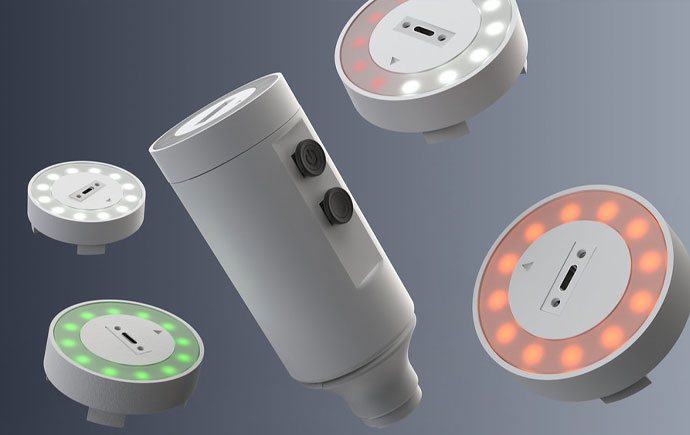
This animation showcases the various features of the Stud Bud. Boots studs are generally produced in three categories: short (5-7mm), medium (8-10mm), long (11-13mm). By measuring the rotational traction provided by the playing surface, the device provides athletes with professional-level performance data that assists them in determining which stud length option will provide the best balance between safety and performance.

[View full video here]

Explore more


View all


Back to top