Monash University logo

Monash Art, Design and Architecture Graduate Exhibition 2025

I’m a multidisciplinary designer driven by curiosity and a desire to create work that connects people and ideas in meaningful ways. My background spans industrial and collaborative design, which allows me to move fluidly between physical and digital mediums such as 3D printing, service design, visual storytelling, and user experience. I’m especially interested in how design can bridge culture, communication, and care, shaping experiences that feel both personal and purposeful. Collaboration is at the heart of my practice, and I see design as an ongoing process of learning, empathy, and growth.

Mark Wilken Industrial Design Highest Achievement Award

The Mark Wilken Design Award celebrates the lasting legacy of Mark Wilken, an influential educator, mentor and designer. A key member of the academic staff from the earliest days of the Industrial Design program at Monash University. Mark’s dedication to nurturing creative talent, combined with his commitment to advancing industrial design, has shaped generations of young designers and set a high standard of excellence. This award recognizes a student whose work embodies Mark's spirit of innovation, resilience, and vision in Industrial Design.

Lamat Chai - A gathering table where tea, stories, and games meet.

Lamat Chai is more than a table; it is a space for gathering where tea, stories, and play come together. Inspired by Arab traditions of hospitality, it reimagines the tea ritual as an interactive coffee table that connects immigrant families across generations. Each tile and pattern turns the surface into a living landscape of connection. At its heart is tea, a familiar rhythm that invites people to slow down, share, and rediscover one another through the simple act of gathering.

The Accessible Stay Book

A portable, sensory-friendly travel planner empowering people with hidden disabilities to navigate new environments safely, confidently, and independently.

Guideline

Guideline is a multi-sensory wayfinding system that reimagines how people navigate train stations. Developed collaboratively with Travellers Aid, it responds sensitively to the experiences of blind and low-vision commuters while improving accessibility for everyone. Through colour-coded wall and floor indicators and LED-enhanced platform tactiles, Guideline creates a more intuitive, inclusive, and visually dynamic environment that allows passengers to move more safely, confidently, and independently through busy public transport spaces.

Enzima

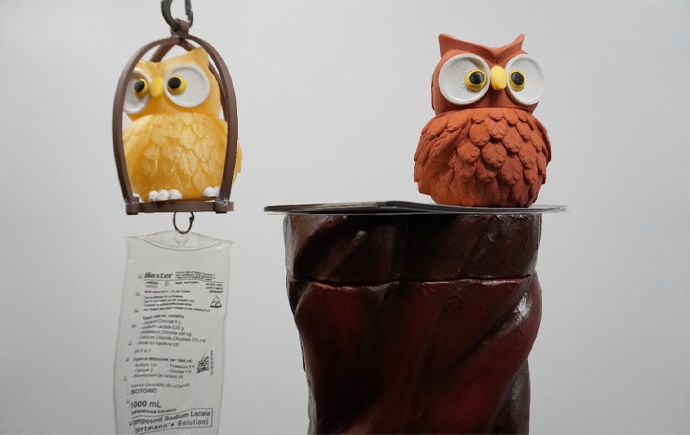
This collaborative project, based in Singapore and Malaysia, focused on designing a sustainable healthcare building by addressing the environmental impact of polypropylene (PP) waste from sterile wraps. Involving a wide range of stakeholders, the project introduced a chemical recycling solution to create a circular system that breaks down plastic into its original components.
This approach aimed to reduce waste and promote continuous reuse, tackling the significant PP waste burden in healthcare facilities.

[View full video here]

Transit Trees

Transit Trees reimagines public transport as a catalyst for urban regeneration. Developed through the Monash Innovation Guarantee in collaboration with Co-Labs and team Urban Regeneration, the project integrates green infrastructure into transit networks to create cooler, healthier, and more connected cities. By merging nature with mobility, Transit Trees transforms bus stops and transport hubs into living, community-centred spaces. The concept was even envisioned for the Monash Clayton bus loop, showcasing how design can reshape everyday commutes into moments of rest, connection, and environmental care.

Lamat Chai (This is the capstone project so I just wanted to add another file :)

Lamat Chai is a modular tea table crafted at a 1:3 scale from birch plywood and acrylic, exploring how materiality can support play, language, and cultural connection. The tabletop is composed of Arabesque-patterned tiles, 48 of which hold laser-engraved Kufic letters, allowing them to be lifted, traced, and rearranged. The foldable legs enable floor seating, creating intimate, communal settings, while the tabletop itself can detach to function as a serving platter. Through making, the project balances warmth and precision, tradition and modernity, inviting hands-on interaction.

[View full video here]

Explore more


View all


Back to top