Braun Group research
Collaborations | Student research projects | Publications
About Dr Asolina Braun
Asolina Braun leads the Skin Immunology Group in the Department of Biochemistry and Molecular Biology at Monash University. She obtained a PhD in Infection Biology by establishing a novel intralymphatic injection technique to track how immune cells migrate from the periphery to the draining lymph nodes. During postdoctoral studies, she developed a keen interest in skin-resident CD8+ memory T cells (TRM) and immunopeptidomics. Now, Dr. Braun’s group combines mass spectrometry-based antigen discovery approaches with TRM biology research to gain a better understanding of the antigen-specific mechanisms that shape tolerance, with a focus on skin immunity.
Our research
Current projects
If you want to contribute to new discoveries that will change lives, and wish to work with us, partner with us, or donate to support our research, please contact Dr. Braun.
Our major research interests are:
- Antigen triggers in psoriasis
- Microbial triggers of autoimmunity
- Influence of maternal nutrition on the development of the neonatal immune system
- Antigen-specific principles of Immune Tolerance
- Autoimmunity and T cell responses
- Dermatological immune-related adverse events
- Inflammatory skin diseases
- Lichen planus
Psoriasis
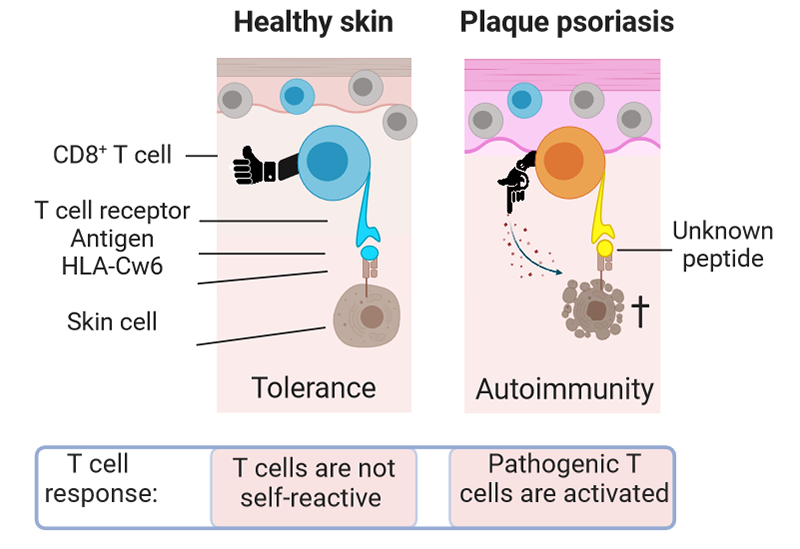
Psoriasis is a skin autoimmune disease that affects 2-3% of the global population. Around half of the patients carry the major risk gene for developing the disease: Human Leukocyte Antigen-C*06:02 (HLA-Cw6). The function of HLA molecules is to present little protein snippets (peptide antigens) to immune cells. The immune cells, in turn, decide whether the presented antigen is harmless and can be ignored or poses a danger and needs dealing with. Our group aims to understand which exact antigens trigger the recurring appearance of skin lesions in psoriasis and what regulates antigen expression levels.
-
-
Microbial triggers of autoimmunity
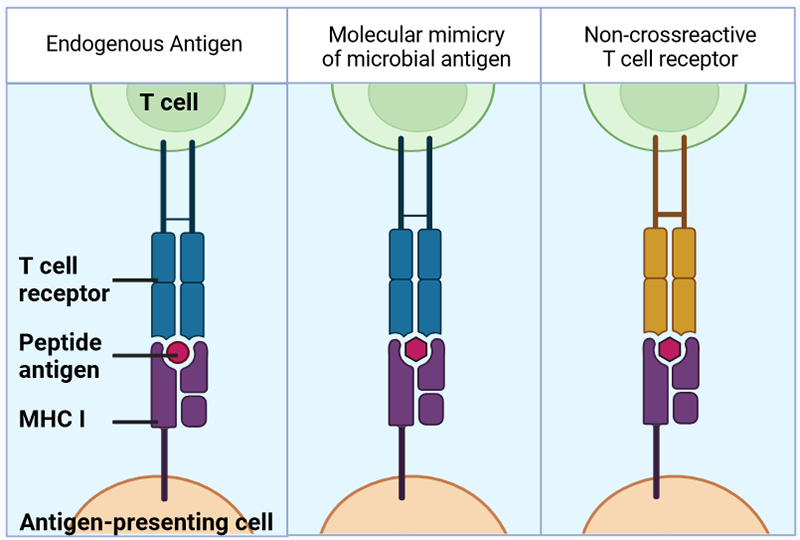
The first occurrence of psoriasis is often associated with Streptococcus pyogenes-induced pharyngitis, commonly known as Strep Throat. Similarly, patients who already suffer from psoriasis often experience a worsening of their symptoms upon Strep Throat infection. It is often thought that immune cell recognition of pathogenic antigens under inflammatory conditions can break tolerance to otherwise harmless, similarly structured human peptides (molecular mimicry). Our group investigates the molecular connection between S. pyogenes antigens and human skin antigens to explain the association of Strep Throat with psoriasis.
-
Influence of maternal nutrition on the development of the immune system in neonates
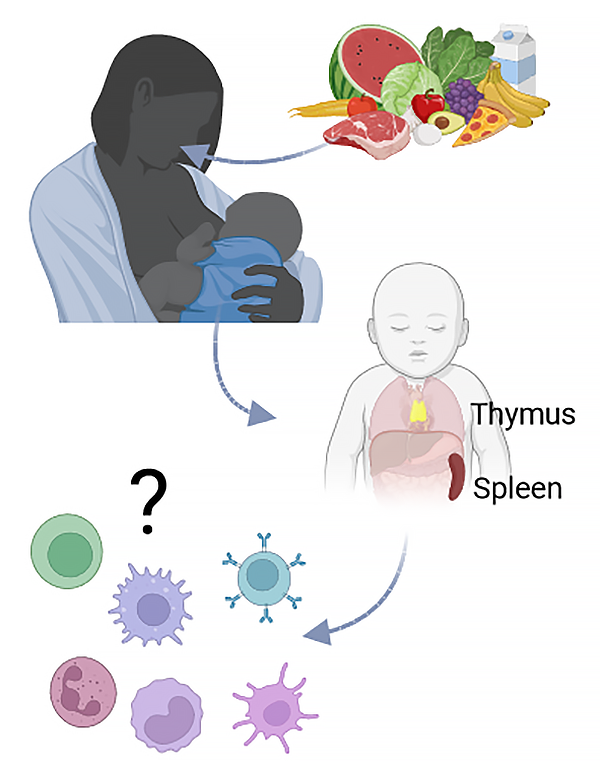
Nutrients, microbial and environmental antigens together shape the developing immune system in neonates, impacting immune responses to allergens and tolerance to ingested antigens. It is hence important to understand the optimal composition of the maternal diet in the gestational and post-partum phase that would promote a healthy immune system in newborns. The nutritional intake of the mother during gestation and while breastfeeding has far-reaching consequences for the development of the child and their immune system. While overnutrition can lead to high levels of pro-inflammatory mediators, the lack of essential micronutrients can lead to impaired immune responses during infection. We utilise a multi-diet geometric framework of nutrition (GFN) with a series of diets systematically varying in macronutrient balance and caloric density to determine the individual and interactive effects of different macronutrients and caloric intake on development and health. The murine 20-diet GFN allows to identify thus far overlooked patterns in the link between maternal nutritional intake and offspring immune system development. A better understanding of the ideal nutritional intake during early neonatal immune system development will allows to optimise maternal nutrition to steer the immune system towards optimal infection and cancer control while avoiding autoimmune downsides of an overactive immunity.
-
Antigen-specific principles of Immune Tolerance
Autoimmune diseases affect one in ten individuals, yet the treatment of autoimmune diseases is not far advanced and currently mostly relies on targeting downstream players of inflammatory signalling. Our long-term goal is to develop novel therapeutic approaches that would allow us to modulate and re-educate the immune system away from attacking its own body and towards re-establishing tolerance towards self.
Visit Dr Asolina Braun's Monash research profile to see a full listing of current projects.
Techniques/expertise
- In vivo models of disease
- Immunopeptidomics
- Processing and analysis of skin
- Analysis of tissue-resident memory T cells
- Single cell analysis of paired αβ TCRs
- Spatial transcriptomics
- Flow cytometry and sorting
- T cell activation and proliferation assays
Collaborations
We collaborate with many scientists and research organisations around the world. Some of our more significant national and international, past and current collaborators are listed below. Click on the map to see the details for each of these collaborators (dive into specific publications and outputs by clicking on the dots).
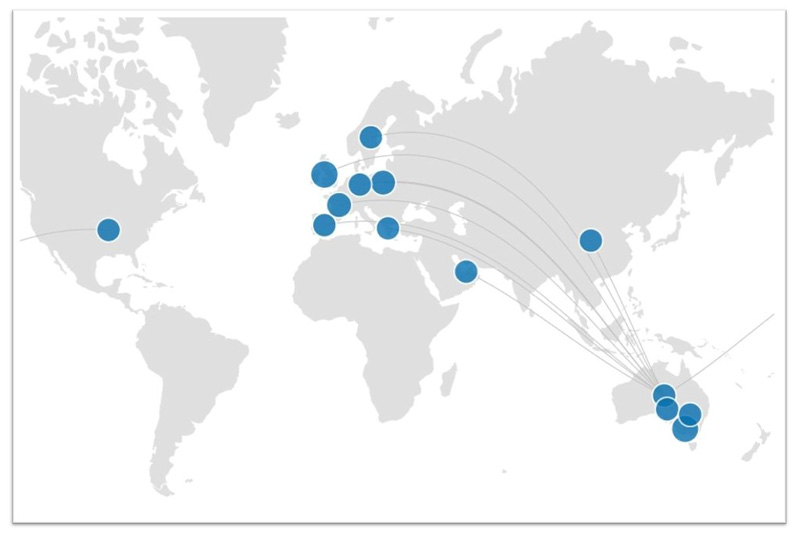
- Prof Tony Purcell - Monash University, Melbourne, Australia
- Prof Johannes Kern - Alfred Hospital, Melbourne, Australia
- A/Prof Beatrice Dyring-Andersen – Zealand University Hospital, University of Copenhagen, Copenhagen, Denmark
- Prof Ranjeny Thomas - University of Queensland, Brisbane, Australia
- Professor Andrew Cope – King’s College, London, UK
- Prof Jamie Rossjohn - Monash University, Melbourne, Australia
- Dr Danika Hill - Walter and Eliza Hall Institute, Melbourne, Australia
- Joshua Osowicki - Murdoch Children's Research Institute, Melbourne, Australia
- Prof Katherine Kedzierska - University of Melbourne, Australia
- Janssen Pharmaceuticals - Spring House, PA, USA
- Evaxion Biotech - Hørsholm, Denmark
- Grey Wolf Therapeutics - Oxford, UK
Student research projects
The Braun Group offers a variety of Honours, Masters and PhD projects for students interested in joining our group. There are also a number of short term research opportunities available.
Please visit Supervisor Connect to explore the projects currently available in our Group.