Chopin Lab research
Research activities | Collaborations | Student research projects | Publications
About Dr Michael Chopin
Trained as a molecular and cellular immunologist, Dr Chopin performed his PhD training in the laboratory of Professor Jessberger at the Max Planck Institute for Cell Biology and Genetics (Dresden, Germany), focusing on the ontogeny of B-lymphocytes and their terminal differentiation into antibody secreting cells.
Following his doctoral studies, Dr Chopin joined Professor Stephen Nutt at the Walter and Eliza Hall Institute (Melbourne, Australia) to work on the remarkable properties of dendritic cells and specialised in studying their biology. There, he pioneered the use of state-of-the-art genomics technologies that led to uncover novel molecular mechanisms controlling immune cell development and function. His work led to the generation of unique genetic models, genomics tools, and novel cellular differentiation models for dendritic cells; key innovations in the study of this fragile cell type.
Dr Chopin’s lab aims to uncover the molecular mechanisms underpinning the differentiation of dendritic cells, key immune sentinels that orchestrate protective immune responses against pathogens or cancers. The lab aims to unleash the full therapeutical benefit of dendritic cells by focusing on the understanding of their origins, development pathways and their unique functional attributes. Overall, the lab aims to exploit this gain of knowledge to canvas fit for purpose dendritic cells and therefore bring forward the next-generation of dendritic cell-based vaccines to bolster cancer immunotherapy.
Our research
Dendritic cells are immune sentinels that play an essential role in mounting an immune response against pathogens or cancers. To face the variety of challenges, DCs have evolved into phenotypically and functionally distinct subsets. Our program of research aims to identify key regulators of DC homeostasis and to exploit their unique functional attributes to boost immune responses to conventional vaccines and cancer treatments.
Current projects
Theme 1 - Transcriptional Control of Dendritic cells
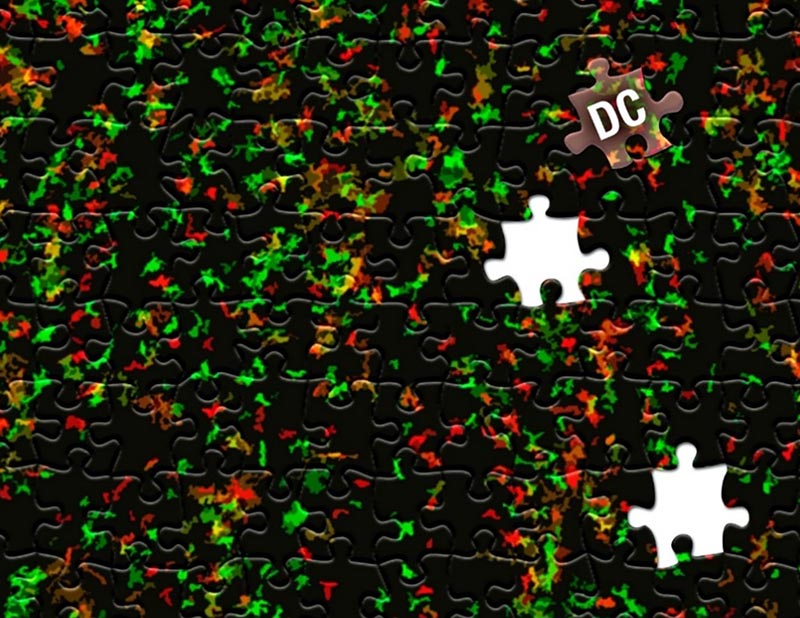
Dendritic cells (DCs) can be broadly divided into conventional (cDC) and plasmacytoid (pDC) subsets. Despite the importance of this lineage diversity, its genetic basis is not fully understood. Our lab uses state of the arts technologies (e.g. ATAC-seq, ChIP-seq, Cut&Run) to decipher the molecular mechanism underpinning DC lineage specification with the ultimate goal to define innovative strategies to expand dendritic cells for therapeutic purposes (Chopin et al Immunity 2019, Zhan et al Science Immunology 2021, Zhang et al Science Immunology 2021).
Currently we have several projects that focus either on specific genes or the development of genome-wide platform to interrogate the role of the regulatory network controlling DC lineage specification and function.
Theme 2 - Harnessing DC function to bolster anti tumoral immunity
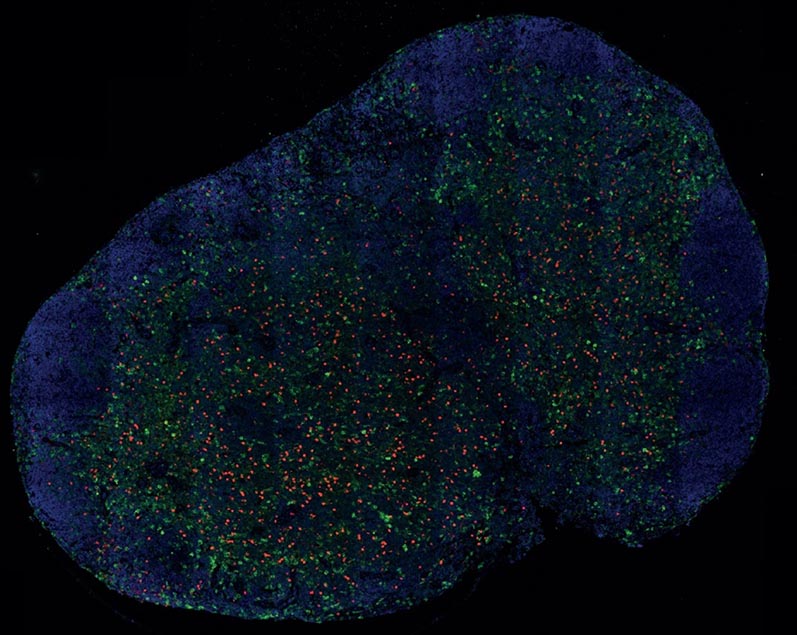
Immune checkpoint inhibitors (ICIs) have improved treatment in many cancer types. However, the ratio of responders versus non-responders remains very low for most tumours. A major reason for this initial resistance to ICIs is the exclusion of infiltrating immune cells such as T cells and NK cells and their diminished anti-tumour function, leading to so-called “cold tumours”.
We hypothesise that the conversion of a cold into a hot tumour will require prior combination of therapies to induce innate immune cell infiltration in combination with different immune checkpoint modulators to remove immunological breaks (Sathe et al Nat Communications 2014; Jacquelot et al Nature Immunology 2021, Zhang et al Trends in Immunology 2021).
In this project we aim to develop innovative new therapeutic strategies that aim to heighten tumor immunogenicity, and thus bolster the immune response to these otherwise treatment resistant tumours.
Theme 3 - Using Polychromatic mice to decipher DC origin and heterogeneity
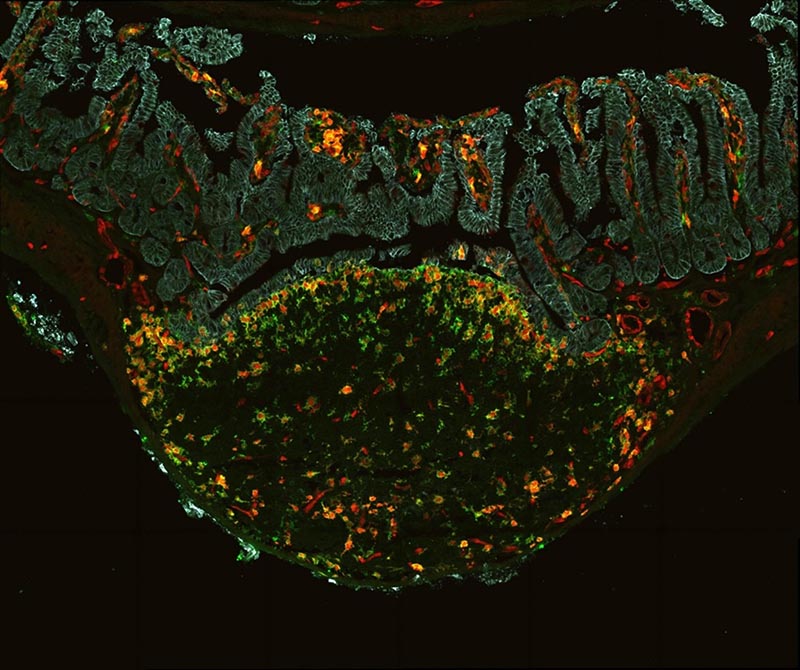
Our conceptualization of DC development is currently in a state of flux, driven in large part by the development of new technologies such as lineage-tracing and single-cell transcriptomics. These approaches have revealed diversity in the developmental trajectories of DC progenitors and led to a reassessment of relationships within the DC family (Nutt and Chopin, Immunity 2020). Defining the regulatory interactions that control gene expression remains key to understanding the generation and maintenance of the DC network. Much recent progress has also been made in this field, identifying a core group of transcription factors whose expression and function defines the various DC lineages in mouse models and in human disease settings. Our lab has developed several mouse strains empowering us with the capacity to trace at a single cell level the development and functional diversification of the DC lineages in healthy and diseased tissue (e.g. cancer) (Chopin et al. JEM 2013, Chopin et al. Cell Reports 2016, Chopin et al Immunity 2019, Zhang et al. Science Immunology 2021).
Visit Dr Michael Chopin's Monash research profile to see a full listing of current projects.
Research activities
1. Define transcriptional pathway controlling dendritic cell lineage specification
A small number of transcription factors are known to be required for the specification of DCs from hematopoietic progenitors. Because none of these factors are DC-specific, it is likely that it is their combinatorial activity with FLT3L signaling that promotes the unique DC fate. Our lab applies state of the art technologies to draw a more comprehensive picture of the key regulatory inputs that promote the development and functional diversification of the DC lineages. (Nutt and Chopin, Immunity 2020)
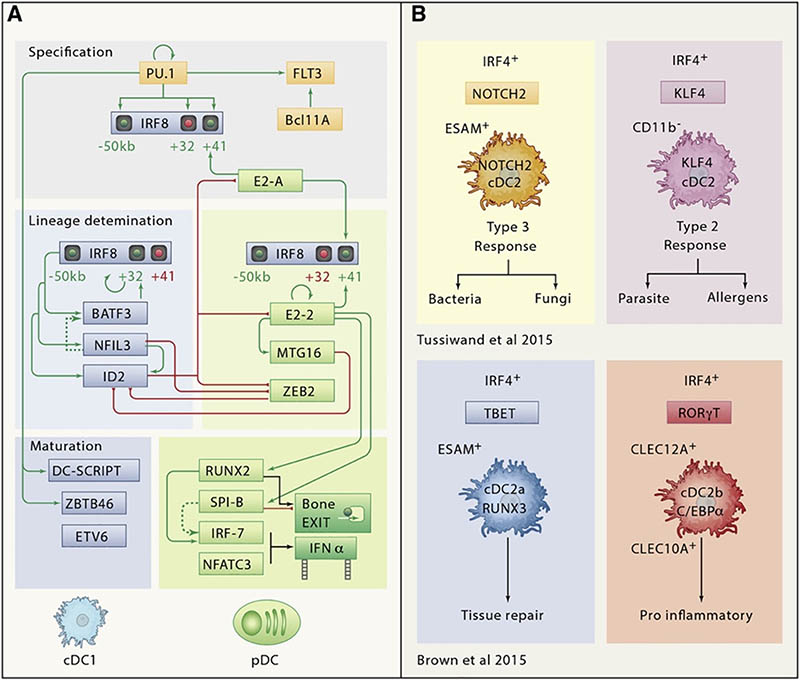
Figure legend (from Nutt and Chopin Immunity 2020):
(A) Gene regulatory interactions governing the initial specification, lineage determination, and maturation of type 1 conventional DC (cDC1) and plasmacytoid (p)DCs. (B) The gene regulatory program governing cDC2 differentiation is much more poorly defined. Recent evidence supports the existence of at least two subsets of cDC2 in human and mouse that show some functional specialization.
2. Manufacturing fit for purpose dendritic cells
3. Development of mouse models to study dendritic cell ontogeny and function
Our lab has a long-standing interest in creating innovative tools to accurately define the expression of transcription factor in vivo and their function (Chopin et al. JEM 2013, Chopin et al. Immunity 2019, Zhang et al Science Immunology 2021). Using these tools, we hope to better define the role of ill studied transcription factor in the formation of immune system.
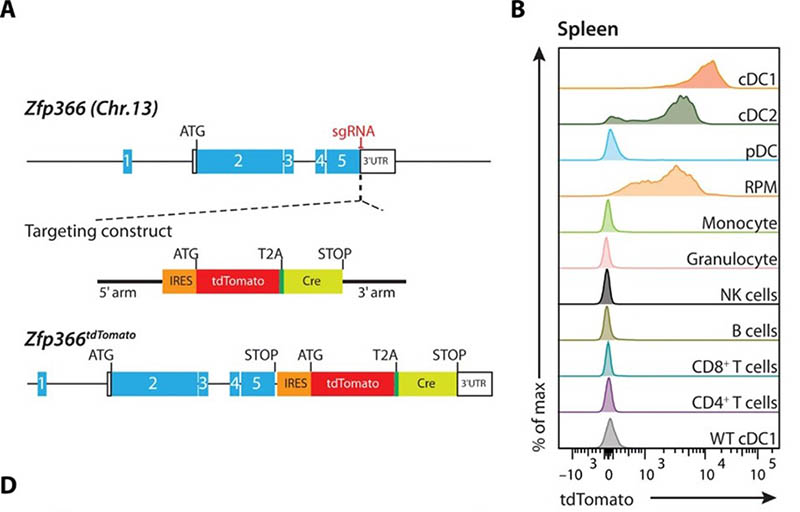
Figure legend (from Zhang et al Science Immunology 2021):
(A) Schematic representation of the Zfp366tdTomato reporter strain (not to scale). An IRES tandem dimeric (td)Tomato-T2A-Cre recombinase-targeting construct was inserted at the 3′ end of the Zfp366 gene. The Zfp366 exons were indicated as blue boxes and the introns as black lines. 3′UTR, 3′ untranslated region. (B) DC-SCRIPT expression levels in Zfp366tdTomato/+ splenocytes.
4. CRISPR mediated perturbation of gene expression in dendritic cells
5. Mechanisms underpinning DC recruitment and function in the tumour microenvironment
Given their natural adjuvant properties, and their unique attributes in promoting T cell priming and recruitment into solid tumors, dendritic cells (DCs) have long been a focal point of cancer immunotherapies. Recent studies have shed light on the critical importance of type-1 conventional DCs (cDC1s) in controlling tumour immune response and the therapeutic outcome of immune checkpoint inhibitors. The maturation status of cDC1s, and therefore their anti-tumour function, is closely correlated with the makeup of the surrounding immune and tumour cells, however the mechanism behind this phenomenon and the microenvironment where cDC1s are active is not fully understood. In addition to the presence of cytotoxic CD8 T cells, increased numbers of cDC1s in the tumour micro-environment (TME) correlates with high numbers of Natural Killer (NK) cell infiltrates and an overall better survival outcome for melanoma patients.
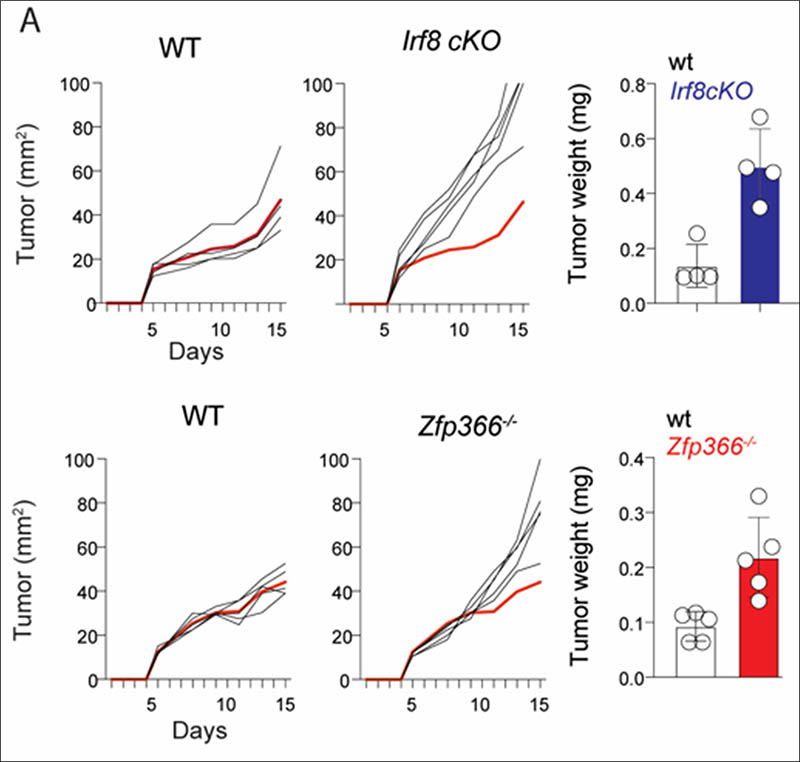
Figure legend: cDC1 are essential for anti-tumour immunity. A. B16F10 melanoma growth in mice of the indicated genotype (red line: wt mean; black line individual mice.
Techniques/expertise
We use a broad range of cellular (flow cytometry, antigen presentation, in vitro culture) and molecular immunology tools (RNAseq, ChIPseq, ATACseq) to interrogate the nature of the DC network.
The lab also generates genetic tools that enables the functional characterisation of gene of interest in the myeloid compartment (loss/gain of function, reporter mouse, lineage tracing mouse).
Disease models
- Cancer cell lines
- Viral infections of mice (Flu, LCMV)
Collaborations
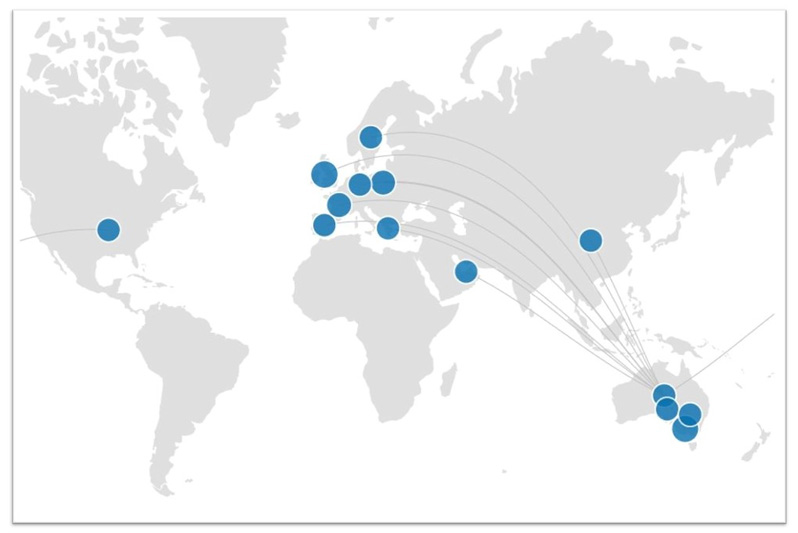
We collaborate with many scientists and research organisations around the world. Some of our more significant national and international collaborators are listed below. Click on the map to see the details for each of these collaborators (dive into specific publications and outputs by clicking on the dots).
Student research projects
The Chopin Lab offers a variety of Honours, Masters and PhD projects for students interested in joining our group. There are also a number of short term research opportunities available.
Please visit Supervisor Connect to explore the projects currently available in our Lab.
The Chopin Lab offers a variety of Honours, Masters and PhD projects for students interested in joining our group. There are also a number of short-term research opportunities available. You are encouraged to contact Dr Michael Chopin regarding potential projects that align with the presented research themes.