Leon Smyth Lab research
Collaborations | Student research projects | Publications
About Dr Leon Smyth
Leon is a lab head and ARC Future Fellow at the Monash University Biomedicine discovery institute. His work is focused on the complex relationship between the brain and immune system. Leon was recruited to the BDI in 2025 after completing his postdoc with Professor Jonathan Kipnis at Washington University in St. Louis, focused on the role of the meninges in mediating neuroimmune communication and brain waste clearance.
Our research
Current projects
- The role of meningeal stroma in regulating immune surveillance. The arachnoid barrier sits between the immune rich dura mater, but its function is not clear. We think it enables macrophages to scavenge antigens before they reach antigen presenting cells in the dura mater. We have developed models to inducibly open the arachnoid barrier to test this.
- The meninges in brain injury and stroke. Fibroblasts from the meninges expand and create a large scar in the brain following brain injuries such as trauma and stroke. We want to understand how these fibroblasts are shaping the immune
- The meninges in brain cancer. Brain tumours are highly immunosuppressed, but despite this, we have found strong immune responses in the meninges in mouse models of brain tumours and meningeal fibroblasts engrafting brain tumours. We want to understand the significance of these to tumour growth, and how we can manipulate them.
Visit Dr Leon Smyth's Monash research profile to see a full listing of current projects.
Research activities
Why should we study neuroimmune communication? This is such a fascinating field because the relationship between the immune system and the brain is unlike any other organ.
In the 1950s, Nobel Laureate Sir Peter Medawar found that the brain tolerated foreign grafts, a property he termed immune privilege. For decades this was thought to be because the immune system was blind to the brain because of the lack of drainage pathways, immune diversity, and presence of barrier tissues. However, the past decade has transformed this view. We now know that the brain is in constant dialogue with the immune system - not within the neural tissue itself, but at its borders. Among these border regions, the meninges, the three-layered membrane surrounding the brain, have emerged as a critical neuroimmune interface.
The meninges contain all the components necessary to mount immune responses: permissive vasculature and stroma, diverse immune cells, and lymphatic vessels. Importantly, they also receive molecular cues and antigens from the brain via cerebrospinal fluid, allowing them to sense and respond to changes in brain state.
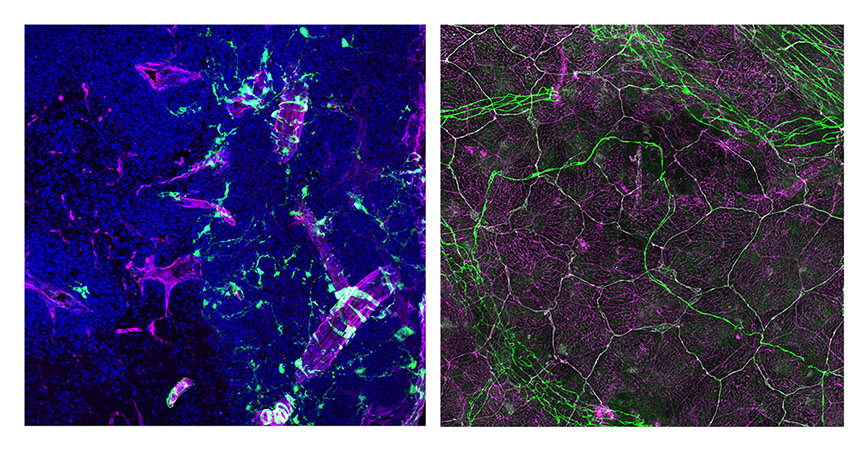
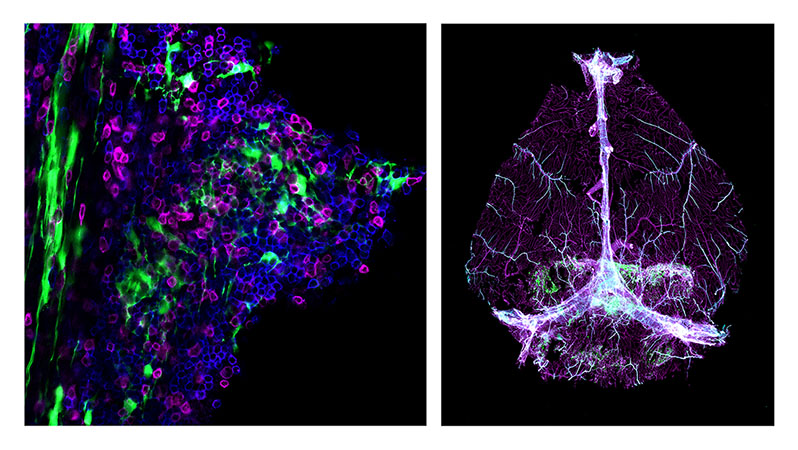
Our lab has contributed to redefining this field. We discovered how the meninges detect brain changes through specialized anatomical structures called ACE points (Smyth et al., Nature 2024), and how these structures are disrupted in Alzheimer’s disease (Smyth et al., Journal of Experimental Medicine 2025). We have also shown that immune cells in the skull can sense cerebrospinal fluid to supply the meninges and protect the brain during injury or infection (Mazzitelli and Smyth et al., Nature Neuroscience 2022).
Our ongoing work is examining how the meninges regulate physiological processes such as barrier function, immune surveillance, and brain waste clearance. We are also investigating how the meninges aid in brain repair following stroke and contribute to brain cancer.
Techniques/expertise
- Tissue clearing
- Intravital imaging
- Single cell RNA-seq
- Spatial proteomics
- Spatial transcriptomics
- Confocal imaging
- Spectral flow cytometry
- Mouse genetics
Disease models
- Spontaneous brain tumour models: NesNPPL (Nes-CreERT2:: Nf1fl/+::p53fl/fl::Ptenfl/+::Luciferase), Nes-CreERT2:: Krasfl/fl::Ptenfl/fl::Luciferase) NesKPL.
- Orthotopic syngeneic brain tumour models: CT-2a, GEMMs derived from TPP (Tlx-CreERT2::p53fl/fl::Ptenfl/fl), NesNPPL, NesKPL.
- Middle cerebral artery occlusion stroke
- Closed-skull traumatic brain injury
- Experimental autoimmune encephalomyelitis
Collaborations
We collaborate with many scientists and research organisations around the world. Some of our more significant national and international collaborators are listed below. Click on the map to see the details for each of these collaborators (and you'll be able to dive into specific publications and outputs).
- Professor Jonathan Kipnis - WUSTL
- Dr Sarah Best (Brain Cancer Research Lab) - WEHI
- Professor Misty Jenkins - WEHI
- A/Professor Bradley Broughton - Monash University
Student research projects
The Leon Smyth Lab offers a variety of Honours, Masters and PhD projects for students interested in joining our group. There are also a number of short term research opportunities available.
Please visit Supervisor Connect to explore the projects currently available in our Lab.