Rose Lab research
Collaborations | Student research projects | Publications
About Associate Professor Adam Rose
Associate Professor Adam Rose studied Exercise Science at Griffith University. He went on to complete an Honours degree and PhD at Deakin University with Professor Mark Hargreaves studying exercise metabolism, biochemistry and skeletal muscle signalling. He conducted his junior post-doctoral training with Prof. Erik Richter at Copenhagen University continuing on studies of skeletal muscle signalling, adaptation and metabolism. He then joined Professor Stephan Herzig at the German Cancer Research Center as a Senior Scientist and subsequent Sub-Group Leader studying liver metabolic-hormonal signalling and systemic metabolic control in health and disease. He joined Monash University in August 2017 as a Senior Research Fellow and Head of the Nutrient Metabolism and Signalling Laboratory within the Department of Biochemistry and Molecular Biology as part of the Biomedicine Discovery Institute Metabolism, Diabetes and Obesity Program.
Our research
Current projects
1. Nutrient-hormonal-signalling nodes controlling metabolic homeostasis.
By using “omics” technologies combined with in vivo loss- and gain-of function studies we aim to uncover new signalling pathways connecting nutrient supply driven phenotypes.
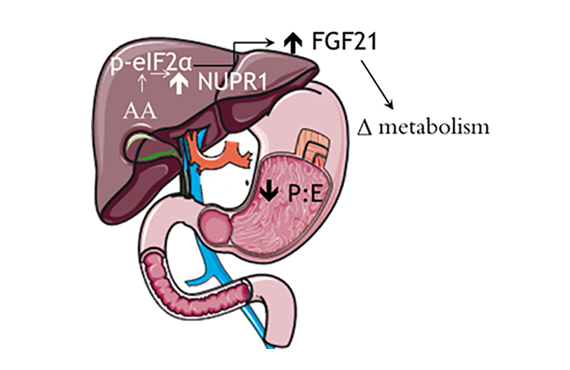
We aim to uncover how dietary nutrient balance affects hormones and how such hormones affect their target tissues to achieve metabolic adaptations.
2. Stress-signalling pathways in adaptive metabolic control.
Certain stressors such as exercise and nutrient restrictions activate stress signalling pathways. We aim to uncover such stress-induced pro-adaptive pathways with the hope to mimic these to treat metabolic disease and related complications.
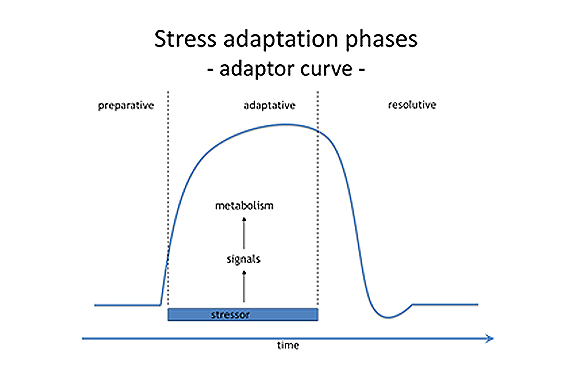
We aim to uncover novel signalling pathways connecting metabolism and stress adaptation.
3. Inter-organ metabolic cross-talk in health and disease.
Each tissue has a certain metabolic ‘repertoire’ which suits its function. In addition, each tissue supports other tissues in order to maintain metabolic homeostasis. We aim to further elucidate such tissue metabolic crosstalk and uncover how it is relevant under normal and pathological conditions.
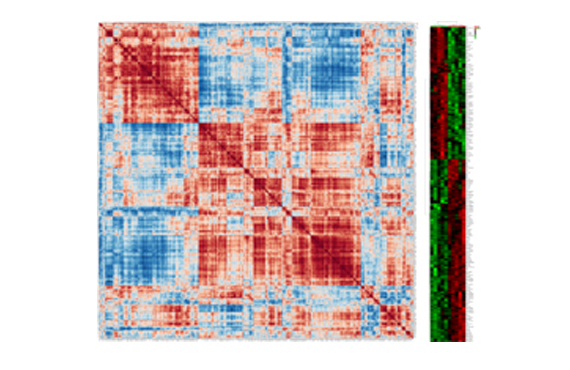
Hepatic portal vein untargeted metabolomics comparison between two different diets. Shown are correlation and heatmap data visualisations.
Techniques/expertise
- Dietary manipulations to study nutrient-phenotype interactions
- In vivo metabolism (glucose, lipid, amino acid tracing, targeted and untargeted metabolomics, indirect calorimetry)
- In vivo viral genetic manipulation: Adeno-associated viruses
- Ex vivo metabolism using precision-cut tissue slices
Disease models
- Type 2 Diabetes and Obesity models – genetic, dietary, and inducible
- Human tissue analyses for discovery of relevant nutrient signalling pathways
Collaborations
We collaborate with many scientists and research organisations around the world. Some of our more significant national and international collaborators are listed below. Click on the map to see the details for each of these collaborators (dive into specific publications and outputs by clicking on the dots).
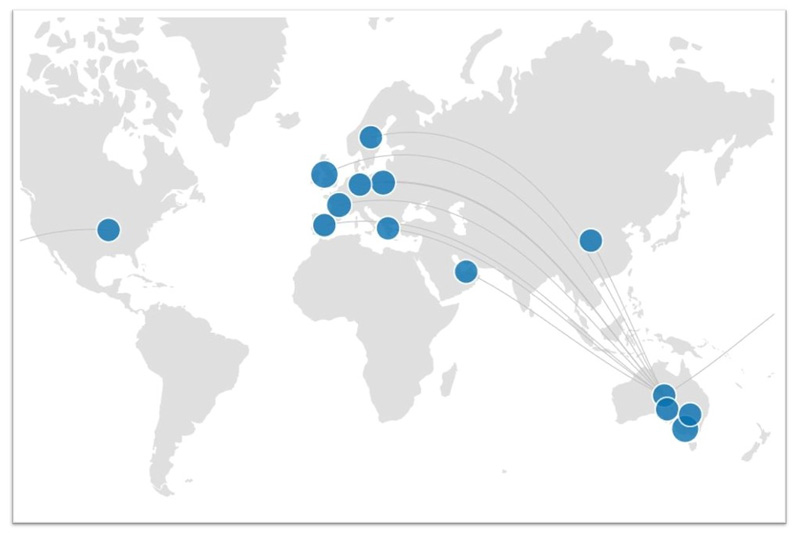
- Matthew Piper (Monash University): Nutrition and metabolism
- Stefan Broer (Australian National University): Amino acid transport and metabolism
- Stephen Simpson and Samantha Solon-Biet (University of Sydney): Protein/amino acid nutrition and metabolism
- Juegen Okun (Heidelberg, Germany): Inborn errors of metabolism, amino acid metabolism
- Oliver Mueller (Kiel, Germany): novel AAV tools
- Matthias Heikenwalder (Heidelberg, Germany): Diet, fatty liver disease, and liver cancer
- Bente Kiens & Erik Richter (Copenhagen University): Exercise and Nutrition studies in humans
- Gerald Shulman and Richard Kibbey (Yale University): In vivo/ex vivo metabolic tracing
- Matthias Blueher (Leipzig University): Human obesity and liver metabolic dysfunction
Student research projects
The Rose Lab offers a variety of Honours, Masters and PhD projects for students interested in joining our group. There are also a number of short term research opportunities available.
Please visit Supervisor Connect to explore the projects currently available in our Lab.