Shi Lab research
Collaborations | Student research projects | Publications
About Professor Shi
Professor Wei Shi is Head of the Bioinformatics and Transcriptomics Laboratory in the Department of Biochemistry and Molecular Biology at the Monash Biomedicine Discovery Institute, and Scientific Director of the Monash Genomics and Bioinformatics Platform, Monash University. His research program focuses on developing and applying advanced bioinformatics methods for analysing next-generation RNA sequencing (RNA-seq) data, with major contributions in the conceptualisation, design, and development of methods for mapping and counting RNA-seq reads.
He pioneered the seed-and-vote read mapping paradigm, implemented in the Subread software, and introduced a novel read assignment strategy for gene-level quantification, implemented in the featureCounts program, which is faster, more accurate, and simpler than previous methods. The tools developed through his program, including featureCounts, Subread, Rsubread and cellCounts, have fundamentally reshaped RNA-seq expression analysis, with over 400,000 downloads across 100+ countries and over 28,000 citations. These tools have transformed the analysis of RNA-seq and other omics data; for example, featureCounts was used in a landmark pancreatic cancer study that identified four molecular subtypes with potential diagnostic and therapeutic value, and they have been applied to reanalyse TCGA datasets to strengthen correlations between gene expression and cancer phenotypes. Beyond cancer research, these tools are widely used in immunology, microbiology, genetics, biotechnology, and botany, making lasting impacts across the life sciences.
Our research
Current projects
We are currently working on the following research projects:
- Develop a new algorithm for mapping long-read sequencing data to a reference genome.
- Detect alternative splicing events in bulk and single-cell RNA sequencing data.
- Improve quantification of sequencing-based spatial transcriptomics data.
- Develop a novel AI-based method to improve cell segmentation in spatial transcriptomics data.
Visit Professor Shi's Monash research profile to see a full listing of current projects.
Research activities
We are extending the seed-and-vote paradigm (Figure 1), developed in our lab, to map reads generated by long-read sequencing technologies such as PacBio and Nanopore to a reference genome. This includes mapping both long DNA and RNA reads. We are also leveraging read mapping data to detect and report various alternative splicing events in bulk and single-cell RNA-seq data, including exon skipping, mutually exclusive exons, alternative 5′ splice sites, alternative 3′ splice sites, and intron retention. In addition, we are adapting our read mapping and assignment approaches for the quantification of sequencing-based spatial transcriptomics data. Cell segmentation is a fundamental task for accurate analysis of spatial transcriptomics, and we are exploring the use of diffusion models to develop an improved cell segmentation algorithm.
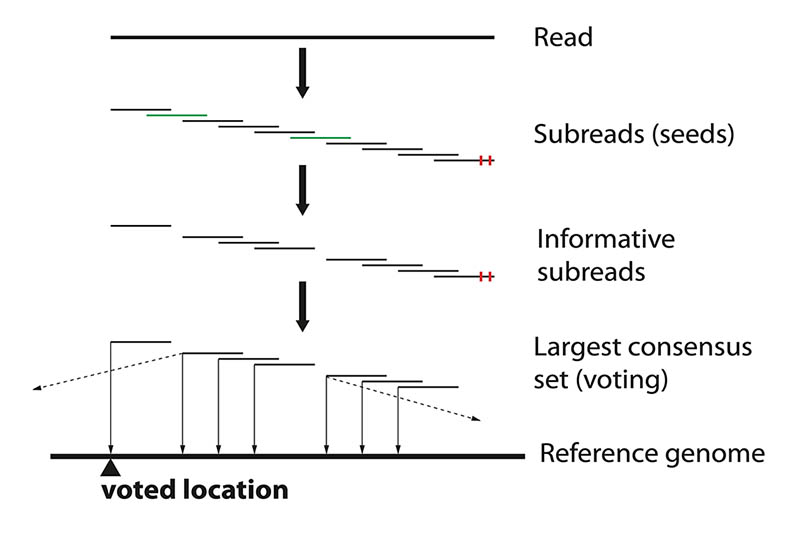
Figure 1: Seed-and-vote read mapping paradigm.
Collaborations
We collaborate with many scientists and research organisations around the world. Click on the map to see the details for each of these collaborators (dive into specific publications and outputs by clicking on the dots).
Student research projects
The Shi Lab offers a variety of Honours, Masters and PhD projects for students interested in joining our group. There are also a number of short term research opportunities available.
Please visit Supervisor Connect to explore the projects currently available in our Lab.
The Shi Lab offers a variety of Honours, Masters and PhD projects for students interested in joining our group. There are also a number of short-term research opportunities available. You are encouraged to contact Professor Shi regarding potential projects that align with the presented research themes.