Smyth Lab research
Collaborations | Student research projects | Publications
About Professor Ian Smyth
Professor Smyth is an NHMRC Senior Research Fellow, Co-Head of the Development and Stem Cell Program of the Monash Biomedicine Discovery Institute and Deputy Head (Research) of the Department of Anatomy and Developmental Biology. He was awarded his PhD from the University of Queensland in 1999, studying the role of the PATCHED genes in embryonic development and as tumour suppressors in skin and brain cancer. He undertook postdoctoral training as a Wellcome Trust Traveling Research Fellow at the MRC Human Genetics Unit (Edinburgh) and Baylor College of Medicine (Houston), using forward genetic screens in mouse to identify novel genes involved in skin and kidney development. He continued this work in London as an LRI Fellow at Cancer Research UK and Honorary Fellow at the Institute of Child Health at Great Ormond St Hospital. He returned to Australia in late 2006 as an NH&MRC RD Wright Fellow, where he established his own laboratory in Monash. While his initial training was in skin biology and cancer, his group now focusses on developing and studying models of inherited kidney disease.
Our research
Research focus areas
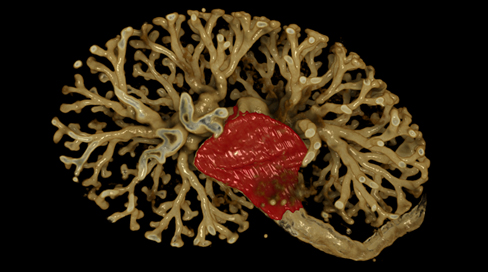
The role of branching morphogenesis in kidney development.
We are interested in understanding how the developmental mechanism known as “branching morphogenesis” is used by the developing kidney to establish the tissue architecture required to facilitate the excretory capacity of the organ. By accurately quantifying how this happens we aim to determine, in an appropriately rigorous manner, how genetic changes and environmental factors can shape organ structure. Without understanding how the kidney “normally” develops, we feel that it is impossible to properly understand and quantify how genetic or environmental changes can disrupt this process.
Understanding how the fetal environment shapes kidney development.
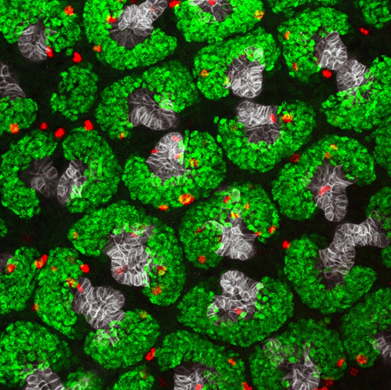
The number of nephrons in a kidney can vary ten-fold between individuals. While this variation does not obviously impact on our health at birth, mounting evidence indicates that it significantly affects our susceptibility to hypertension and chronic kidney disease later in life. The number of nephrons in a kidney is wholly established in utero and our group is studying how differences in maternal diet and behaviour can lead to drastic alterations in kidney “nephron endowment”. In particular, we are studying the molecular and cellular basis by which high fat and low protein maternal diets, and alcohol consumption early in gestation, can impact on nephron number. In undertaking this work we hope to better understand the factors which influence the capacity of nephron progenitor cell populations which give rise to these structures.
Identifying new genes involved in congenital kidney disease.
Kidney disease is one of the most common birth defects, however the genetic cause of many of these conditions are unknown. We are part of the Kidgen Consortium, which aims to provide a genetic diagnosis to Australians affected by inherited kidney disease. The Smyth Laboratory uses CRISPR/Cas9 based approaches to model novel gene variants identified in Kidgen patients, with a view to establishing their causation, understanding how their mutation leads to disease and identifying whether candidate therapies exist to treat these conditions.
Understanding polycystic kidney disease.
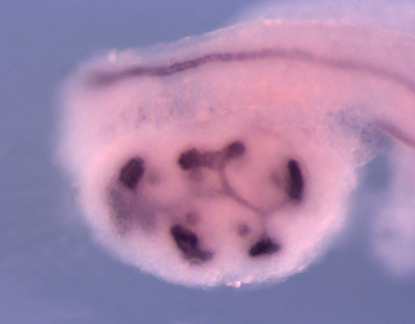
Mutations in a number of genes associated with establishing or maintaining the cell organelle known as the “primary cilia” lead to the development of polycystic kidney disease (PKD). These result in increased proliferation in cells of the renal tubules, forming fluid filled cysts which expand and ablate normal kidney tissue, leading to a progressive and often fatal decrease in renal funding. Autosomal Dominant PKD is the most common potentially fatal inherited disease, affecting ~1/1000 people in Australia. We use model organisms to study the molecular drivers of PKD development with a view to better understanding this disease and identifying new protein targets for therapy development.
Watch this 3D imaging of the kidney, highlighting nephron tree structure
Visit A/Prof Ian Smyth’s Monash research profile to see a full listing of current projects.
Collaborations
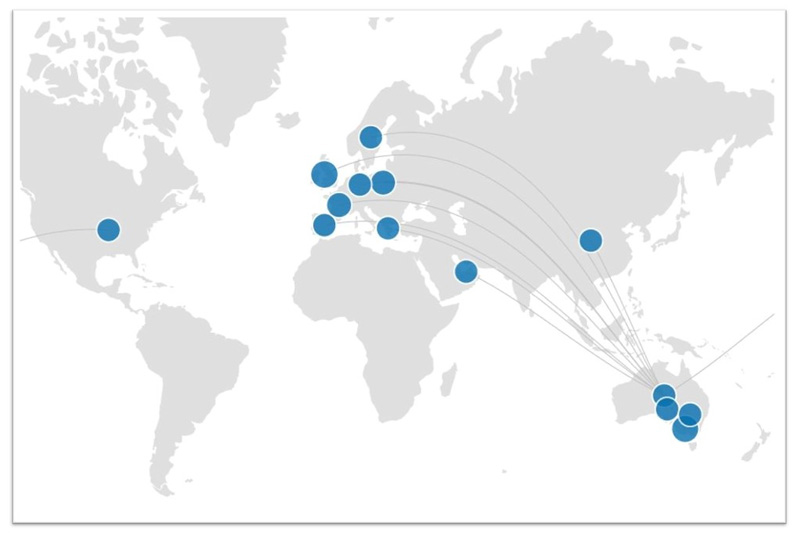
We collaborate with many scientists and research organisations around the world. Click on the map to see the details for each of these collaborators (dive into specific publications and outputs by clicking on the dots).
Student research projects
The Smyth Lab offers a variety of Honours, Masters and PhD projects for students interested in joining our group. There are also a number of short term research opportunities available.
Please visit Supervisor Connect to explore the projects currently available in our Lab.