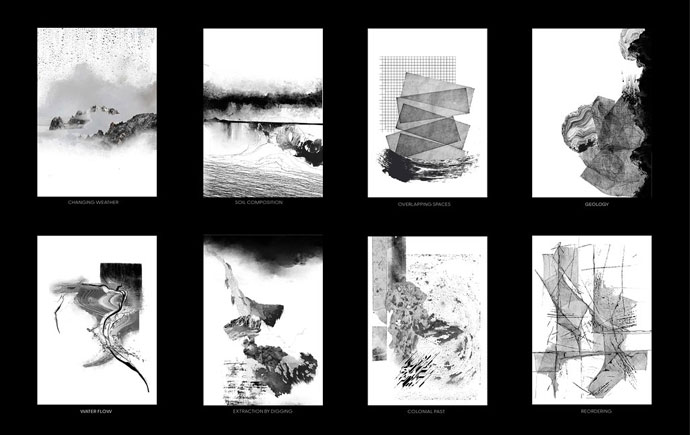
Buckland Addresses explores how architecture can make the process of wine making sustainable amongst the site’s existing environmental conditions following the concept of “vine to glass”. Through an exploration of agroecology and regenerative organic farming, the wine making process will develop following the grapes natural growth. With no added chemicals used throughout the process, this allows for the application of winery ‘wastewater ’ which is high in nutrients to be placed directly back onto the land, acting as fertiliser for the vines. The project acknowledges the Ancient Indigenous farming practices and wisdom passed down through generations from these traditional cultures.
Glass of Wine with a View | Cellar Door + View Out
This render collage displays the connection between the internal and external spaces. Having used an image from our site visit, the background provides a realistic view into what visitors at the cellar door might experience.
Precinct Floor Plan
The buildings have been placed in the centre half way up the site to allow for maximum views whilst also being placed in a space that had a low density of existing trees. A large focus was placed on the pathways around the buildings to connect the spaces have it read as a whole space.
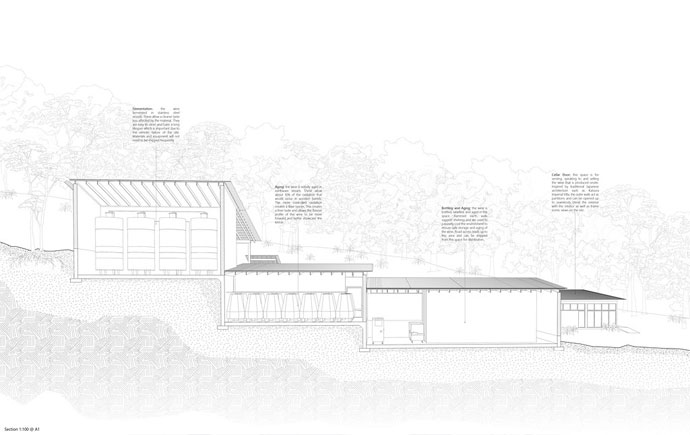
Buildings in Section
In section the topography of the site is most visible. This emphasis not only the sloped terrain but also the extraction of land where the buildings have been place. Once extracted, the clay from the top layer of soil will be used to produce the wine barrels for aging in the wine making space. Rainwater tanks in section show the placement of these in front and underneath the buildings. These rainwater tanks are help to water the surrounding vegetation whilst also acting as a visual display for the space.
Plan Detail of Landscaping
As a part of my final drawing set, a series of plan callouts were produced to show greater detailed insight into the landscaping and buildings structure. This plan detail zooms in to one of the multiple picnic spaces placed within the precinct. Through a process of evening out the land through a small concrete slab, picnic tables and seats have been placed to encourage both visitors and workers to immerse themselves with the outdoor environment. The spaces allow people to enjoy some wine grown on site whilst listening to the wildlife and looking out the the views the site has to offer.
Cellar Door Work Bench
This render captures the internal area of the cellar door. In this space visitors are encouraged to taste the wine grown and produced on site whilst enjoying the landscape. It is intended that the cellar door will have all doors and windows open when possible to allow for an indoor outdoor approach.
Atmospheric View
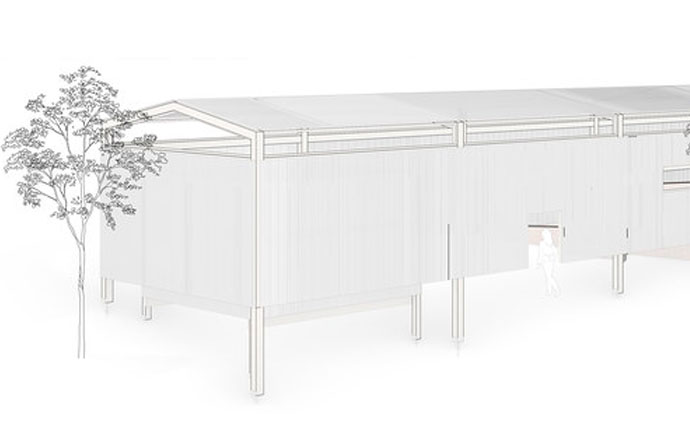
Capturing this view in render intends to hone in on both the materiality of the buildings as well as the spatial connection between the two.
Sofia Zielonka, Glass of Wine with a View | Cellar Door + View Out
In the spirit of reconciliation Monash University acknowledges the Traditional Custodians of country throughout Australia and their connections to land, sea and community. We pay our respect to their elders past and present and extend that respect to all Aboriginal and Torres Strait Islander peoples today.