I am studying a double degree of Business Management and Spatial Design. Having a background of both technical and creative, I have learnt to love the idea of incorporating structure with nature. My goal in the design industry is to be able to be a project manager for large scale design projects.
It is now 2100, as the agricultural industry grows, so do the environmental degradation that it causes. Sulphuric Acid is used in up to half of the world’s fertilisers, yet its corrosive nature makes it extremely dangerous. Scientists develop an organism that absorbs sulphuric acid present in polluted waterways and a self-sufficient system that recycles the by-products of this acid.
SUL-16 island
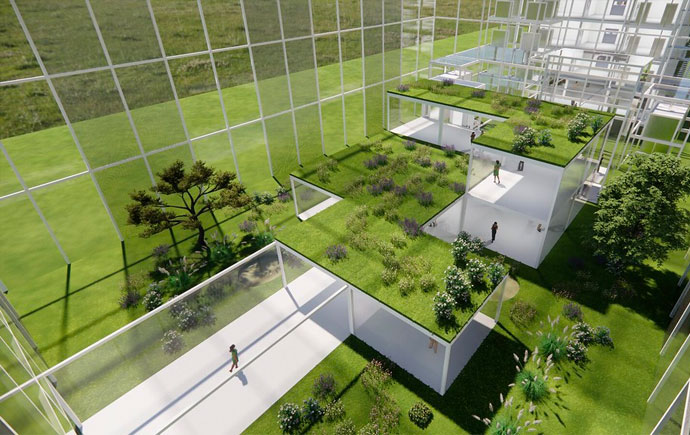
This island oversees the production, release and packaging of the jellyfish and its by-products. With a clear solar panel dome, it is a fully self-sufficient system that utilises its own power to perform its duties.
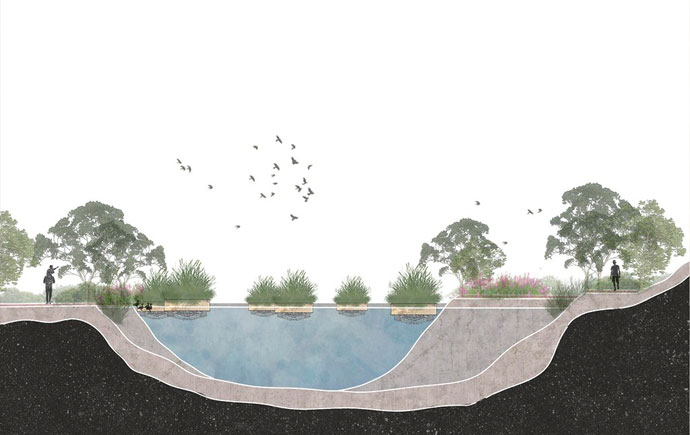
Island section and plan
The island consists of four main buildings that operate. Each building has a different function. One creates the jellyfish and releases it, the other collects it from the shore, another melts the jellyfish to water and sulphur trioxide, and the last one packages the sulphur trioxide, ready to be sent off to those who uses it such as companies and organisations in the agriculture industry. Although Sulphur Trioxide is toxic and dangerous, we cannot expect the agricultural industry to simply stop using this chemical, hence instead of creating more of this acid, we can reuse and minimise overproduction of this chemical.
The jellyfish
The Artificially intelligent Jellyfish is an organism inspired by the biomimicry of actual jellyfish. This move in groups and sweep through areas of the ocean to absorb the sulphuric acid that is present. They communicate with each other via sound waves to ensure that they are not going over the areas that have already been filtered. Multiple groups of jellyfish will be released depending on the area that is needed to be cleaned, the jellyfish can move up to 50km away from the perimeter of the island.
Life of the jellyfish
This series of jellyfish incapsulates the different stages it experiences from beginning to end. As it is first released, it is very small and therefore all the tentacles are overcrowded. However, as it is hydrated with the water, it slowly expands and grows bigger. Once it collects enough acid it will die and be washed to shore.
The Evolution
These series of images document the amount of sulphuric present over the course of 7 weeks after the SUL-16 Island is utilised.
The Final Cycle
This is the final stage of the jellyfish’ lifespan, they have collected their part of the sulphuric acid present in the ocean and have been swept to shore. It turns black and creates a dystopian scene due to the acid oxidising with the oxygen.
In the spirit of reconciliation Monash University acknowledges the Traditional Custodians of country throughout Australia and their connections to land, sea and community. We pay our respect to their elders past and present and extend that respect to all Aboriginal and Torres Strait Islander peoples today.