Monash University logo

Monash Art, Design and Architecture Student Exhibition 2022

Yichang (Ethan) Chen

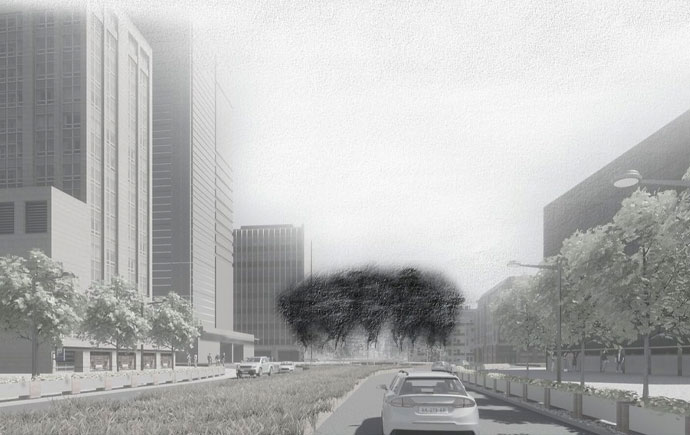
The sea level height near Breakwater Park will rise by one meter in 2070. Based on the original height of the dike, the entire park and the residential area behind will be submerged by seawater.
The New Breakwater Park is a system project, where oyster shells will be used to raise the height of the coast. Oyster shells collected from artificial reefs will provide a constant supply to the ever-expanding oyster coast, oyster meat will become human food, and the sea grass attached to the artificial reef will serve as a sunshade for the tensioned membrane structure. The solid oyster shore can continue to extend and guard people's homes, and bringing them a comfortable park environment.

THE OYSTER COAST

In the future, biomaterials will be an important building material for a low-carbon environment. This image shows an oyster coast. Oysters, combined with advanced construction techniques will be used to raise the shore by two meters, protecting the area from sea levels rising and protecting the residential area behind this coastal park. The oyster shore will significantly reduce the use of concrete compared to traditional concrete dykes, achieving the goal of a low carbon footprint and protecting urban land resources.

OYSTER CULTURE ARTIFICIAL CORAL REEF

The Oyster Coastal Park is a systemic project. The Oyster Culture Artificial Coral Reef will provide a constant supply of oysters for the entire project. At the same time, they will be combined with viewing platforms and trestle bridges to create a stunning maritime landscape. People can rest on the platforms, look at the sea view and stroll on the trestle bridge, creating a space where people, nature and technology are perfectly combined.

PEDESTRIAN WALKWAY

2030.0

THE PLAN VIEW

In this part of the coastal park, in order to give people more areas to move around, I have not only designed the oyster shore but also added resting areas and extensive lawns and trees to the park. The green plants provide fresh air for the park, and their root systems prevent soil erosion. People can picnic on the extensive lawns, play outdoor sports and sit in the resting areas. If visitors want to go on a run, they can go to the coastal walking trail; for an immersive view of the sea, they can cross the trestle bridge to the viewing platform and see the artificial coral reef and oyster farming up close.

THE REST AREA AND ELEVATION

In my design, the resting area will consist of a tensioned membrane structure with awnings and circular resting seats. People can have oyster based food activities. These activities will provide a constant supply of oyster material for the whole project, while providing relief to homeless people, which will enrich the city's welfare system and give people from all walks of life a warm, urban culture. These planar drawings reflect the structure of the seagrass tensioning membrane, which will be sourced from artificial coral reefs and made into a tensioning membrane through Dr Kathryn Larsen's advanced weaving technique, reducing the use of traditional materials and thus the carbon footprint.

THE EXPLODED IMAGE

The Oyster Coastal Park itself is sustainable; the park's artificial reef will provide a constant supply of fresh oysters, the seascape will attract visitors who will taste the oysters, increasing their consumption and providing building materials for the subsequent oyster coast; the artificial reef and oyster farming poles provide a superior living environment for oysters by simulating oyster culture, the oysters filter the seawater and improve marine ecology. The seagrass attached to the reef provides the material for the preparation of the seagrass tensioning membrane. The park will rely on its own sustainable design so that the oyster coast can continue to extend, protecting more areas.

Explore more

View all

Other years

Back to top