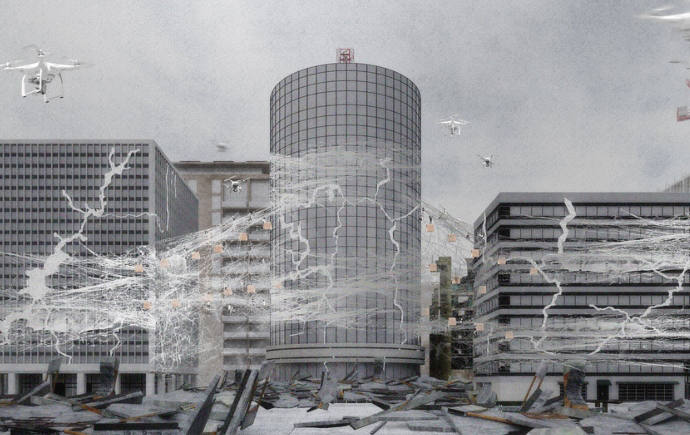
Bio-Recomposition explores the genetic modification of insects to incorporate synthetic waste into the production of organic construction materials. This project utilizes genetically engineered decomposers, specifically the Redworm (Eisenia Fetida), and enlists the assistance of nature's architectural wonders, Termites (Isotopes), to envision a novel housing future. Bio-Recomposition repurposes discarded materials into a living environment for both humans and insects to coexist harmoniously. Driven by her deep appreciation for the natural world, Angel takes great pride in her work for its imaginative nature and her continuous pursuit of innovative thinking.
Best in Studio: Biofutures
Termite Pavilion
Transforming Refuse to Residences. An imaginative proposal explores a future where Termites and humans coexist in structures constructed by these remarkable insects.
How It Works
Bio-Recomposition techniques revolutionize waste management, transforming synthetic waste into valuable construction material. This process involves genetically engineered Redworms, Dung Beetles, and Termites working in harmony.
Process Overview
Bio-Recomposition achieved through genetically modified Redworms, Dung Beetles, and Termites.
Structural Skeleton
Detailed structural framework, replicating the natural design of termite mounds, is constructed for Termites to build upon. This design enhances underground termite mound ventilation and provides a comfortable living environment for humans.
Imagined Scenario
Imagining Bio-Recomposition taking place at a landfill, the project centers around the gradual conversion of waste into construction material. This transformative process eliminates waste piles and optimizes land use for a more sustainable future.
Interior View
Interior intricacies of the termite pavilion, depicted in the midst of construction.
In the spirit of reconciliation Monash University acknowledges the Traditional Custodians of country throughout Australia and their connections to land, sea and community. We pay our respect to their elders past and present and extend that respect to all Aboriginal and Torres Strait Islander peoples today.