Monash University logo

Monash Art, Design and Architecture Graduate Exhibition 2024

Hi, I’m Jia Ning, a junior spatial designer passionate about designing spaces and architectural concepts that harmonise with natural forces and environmental elements. I see design as a bridge between architecture and nature, where structures don’t just coexist with their surroundings but thrive alongside them.
Hive & Harvest, my recent project, explores the synergy between honeybees and crops in a closed farm environment, focusing on balanced conditions for sustainable yields. This design addresses future food scarcity concerns while prioritising biodiversity and co-design with living organisms, creating sustainable spaces that consider both human needs and ecological resilience.

Best in Studio: Biofutures

Exploring Hive & Harvest

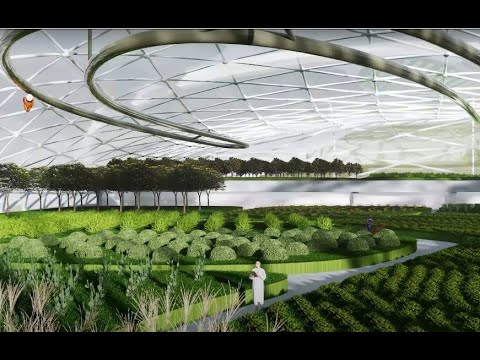
This video provides both exterior and interior views of Hive & Harvest, including human and bee perspectives within the farm. Follow how honeybees enable pollination across crop sections, supported by the farm’s controlled environment for year-round productivity.

[View full video here]

About Crops and Honeybees

This farm is designed to meet essential human nutritional needs through crops pollinated by honeybees, based on the food pyramid. Its scale can support 5,000 people, with added resources from livestock fed on farm-grown crops. The farm’s pollination power comes from honeybees, each colony capable of pollinating 2-3 million flowers daily, enhancing the farm’s productivity and ensuring a sustainable food supply.

Elevation and Sections

Temperature and humidity are essential elements in this farm’s layout. The roof height adjusts according to the temperature needs of different crops: warmer crops are placed on a second level with a lower roof, trapping rising warm air for ideal growth. Cooler crops, needing cooler air, are grown on the ground floor with a higher roof to allow cool air to settle, creating optimal growing conditions. This tiered structure, from shorter to taller heights, allows effective air circulation and environmental control proceed to each plant type across the farm.

Temperature and Honeybee Activity

Temperature affects not only crops but honeybee activity within the farm. Hives move slowly along an overhead track, completing a full circuit within a year. When a hive reaches a winter section—where crops are undergoing their winter break—bee activity naturally slows, resulting in shorter bee paths. In warmer sections, bees are more active, maximising pollination efficiency across seasons.

Plans

The farm’s ground floor has a control room designed to monitor and adjust temperature and humidity across the farm’s sections. This system helps create ideal micro-environments for each crop type, ensuring they receive the precise conditions needed for optimal growth throughout the year.

Interior View in Farm

A honeybee’s perspective of the interior farm landscape.

Explore more


View all


Back to top