Keshia is a third year Spatial Design student who enjoys incorporating textile, pattern and
colours into spaces and at the same time explores sustainability through traditional materials which require simple construction methods.
colours into spaces and at the same time explores sustainability through traditional materials which require simple construction methods.

A Handmade Future
It's the year 2046, people are immersed in a fast paced lifestyle as everything comes easy within a few clicks. Culture is lost and countries start to look similar due to the implementation of repetitive forms of technology. ‘A Handmade Future’ aims to reintroduce the art of craftsmanship through step by step learning for users to build patience and appreciate the little things in life.

Programs of 'A Handmade Future'
This project is designed as a learning space for children to craft ‘Batik’ (traditional Indonesian fabric) and ‘Gerobak’ (traditional Indonesian vehicle to transport goods). In each stage of the program, children would be able to engage their senses with different textures and colors. Instructors would also guide them through the history of Indonesian crafts by means of storytelling to ensure that they understand the outcome of these processes. The image above sections into 3 stages of the program: designing, break area and dyeing Batik.
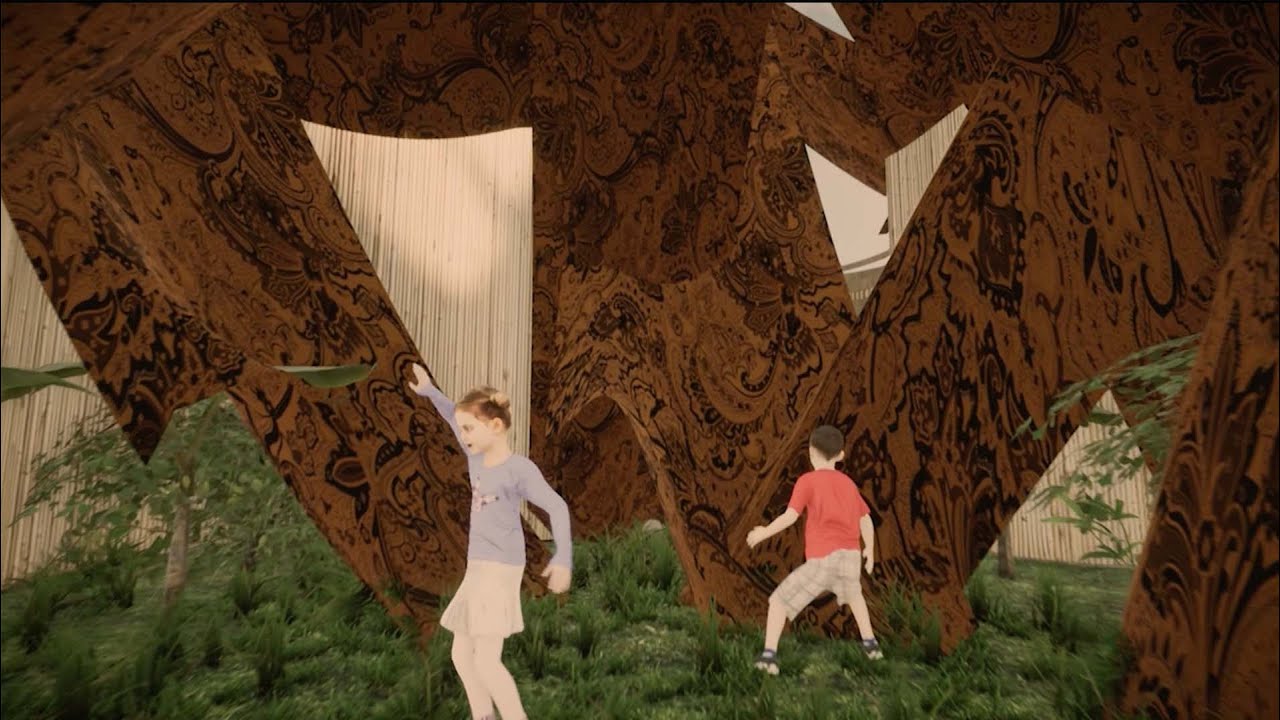

A Handmade Future' video
This video shows the interior and programs run inside the school.

Masking Melbourne
This project aims to raise awareness of face mask production and waste caused by the pandemic through a two week event. It is proposed to be built in Melbourne CBD and designed to give step by step information to the audience as well as giving them a hands-on experience to help the problem. The event involves numerous spaces around the CBD for people to donate unused clothing which would be used throughout the event to fabricate face masks. This would bring purpose to unused clothing and hopefully decrease face mask production.

Section of 'Masking Melbourne'
The structure and programs of the whole exhibition can be seen in this image. As the idea of ‘Masking Melbourne' comes from the overproduction of masks, the structure is designed in a way that represents overflowing fabric.
This section shows the 3 main programs of the event. The first area, on the right hand side of the drawing, exhibits a wearable which critiques the ongoing problem of face mask waste (see timelapse on the right). The next program, projects videos which shows massive face mask production and current ways they are being recycled. Lastly, audiences are able to fabricate their own face masks with the second-hand clothing provided inside the cage-like structures.
This section shows the 3 main programs of the event. The first area, on the right hand side of the drawing, exhibits a wearable which critiques the ongoing problem of face mask waste (see timelapse on the right). The next program, projects videos which shows massive face mask production and current ways they are being recycled. Lastly, audiences are able to fabricate their own face masks with the second-hand clothing provided inside the cage-like structures.

Timelapse of 'Masking Melbourne'
The timelapse above shows the average face mask consumption by an individual living in Melbourne for a month.
Dominique Keshia, A Handmade Future
Dominique Keshia, Programs of 'A Handmade Future'
Dominique Keshia, A Handmade Future' video
Dominique Keshia, Masking Melbourne
Dominique Keshia, Section of 'Masking Melbourne'
Dominique Keshia, Timelapse of 'Masking Melbourne'
