Translational Medicine
Leadership recruitment
Leadership recruitment
Join us in shaping the future of Australia’s rapidly evolving health innovation landscape.
The Faculty of Medicine, Nursing and Health Sciences (MNHS) stands as a powerhouse of education, research and industry collaboration. With students led by award winning educators and clinical leaders embedded in healthcare, industry and research settings, we are building a talent pipeline that sustains long-term growth, drives innovation leadership across the sector and reflects our mission to educate the healthcare workforce of the future
Alongside clinical trial leadership and clinical translation, we lead foundational discovery research, from molecular mechanisms of disease, genomics and bioinformatics to regenerative medicine, population health and AI enabled biosciences. Our discovery platforms create the knowledge, methods and data assets that seed new diagnostics, therapies, models of care, policy and practice.
The Monash University School of Translational Medicine (STM) is MNHS’s leading clinical school for biomedical research and education, offering undergraduate and postgraduate study programs.
Together with our health service and industry partners, we are working to improve the human condition through science, education and innovation.
Professor and Head, School of Translational Medicine
The Head of the School of Translational Medicine at Monash University is a senior academic leadership role responsible for shaping the School’s strategic direction and strengthening its national and international reputation as a world‑class centre for research and education.
Positioned within the Sub-Faculty of Translational Medicine and Public Health, the appointee will lead the development of innovative research programs and high‑quality teaching, fostering a cohesive vision aligned with the priorities of the Sub‑Faculty, Faculty and broader University.
A key focus of the role is driving strategic and operational planning, overseeing academic activities, resource allocation and performance to ensure the School remains among Australia’s top institutions in translational research and training.
The Head will actively engage with government, industry, health services and global partners to advance the School’s profile and build strong strategic alliances. Working closely with the Dean of the Sub‑Faculty and the Head of the School of Public Health & Preventive Medicine, the role supports cross‑faculty collaboration in research, education and commercialisation.
As a Professor, the appointee is expected to provide strong academic leadership and professional engagement, contributing significantly to the School, the University and the wider community. The position reports to the Sub-Faculty Dean and is based at the Monash Alfred Campus, with duties across multiple campuses.
For applicants who meet the relevant clinical requirements, a parallel clinical appointment may be negotiated with Bayside Health (Alfred Hospital).
To learn more about the role, click on the position description below.
At Monash, we have achieved an enviable reputation both locally and internationally. We’re proud to be:
Our motto Ancora Imparo “I am still learning” reminds us that the search for knowledge should never end. We are fired with a restless ambition that pushes us to do things better, to set new benchmarks and break new ground.
As a team, we are driven to achieve the goals set out in Monash Strategic Plan 2020 - 2030, which are to be Excellent, International, Enterprising and Inclusive.
To undertake research and education of the highest international quality that addresses the great challenges of the age.
To build the strength, networks and scale of our international research and education across campuses and faculties to ensure they respond to the issues and opportunities of our region and the world.
To build enduring partnerships with industry, government and other organisations that will enrich our ability to innovate, to infuse our students and staff with enterprising capabilities and provide opportunities to apply our research to make a significant impact for the betterment of our communities.
To seek talented students and staff, irrespective of social or economic circumstances and build a connected community of students and staff in a diverse University that is deeply engaged with the wider community.
Monash is an Equal Opportunity employer that is committed to being fair, equitable and sensitive to the diverse needs of its staff. Within the Faculty, we embrace diversity and welcome all the experiences’ that you’ll bring to the role.
We are the only Group of Eight University to be accredited as an Employer of Choice for Gender Equality from the Workplace Gender Equality Agency. To find out more – Why Work at Monash.
Monash Medicine, Nursing and Health Sciences is a leading global centre for health and biomedical education and research. Across ten schools and a network of renowned institutes and centres, our Faculty brings together world-class expertise, strong industry partnerships and a commitment to innovation to advance health outcomes locally and globally.
Our students are at the centre in everything we do. We educate the health workforce of the future by integrating educational innovation with insights from industry, community and the health sector.
As one of Australia’s largest health and biomedical education providers, we create learning experiences that make our students industry ready. Students engage directly with clinicians, researchers, and industry leaders, gaining hand-on exposure to real-world challenges and emerging technologies. Supported by a global alumni community of 50,000 graduates from across 90 countries, our students develop the confidence, capability and perspective needed to lead with confidence in a transforming global health ecosystem.

Our research strengths focus on the health needs of communities both locally and globally. Working closely with our partners, we develop new and practical solutions to the major health challenges.
Our researchers study disease, chronic illness and the impacts of environmental and social changes, and they develop and test new treatments that can be translated into policy and practice.
Through collaboration and innovation, we deliver high-quality research that leads to real improvements in healthcare, from early concepts through to clinical application.
Our co-location at major health service providers creates the best opportunity for clinical research excellence and translation. We work closely with Monash Health, Bayside Health - encompassing the Alfred Care Group and Peninsula Care Group, Eastern Health, Epworth Healthcare, Cabrini Health and various rural and regional providers.
Monash University’s world-class research infrastructure offers seamless, end-to-end support to industry and collaborative research partners through an open-access model. These platforms provide the capabilities needed to accelerate health innovation and deliver meaningful, measurable impact.

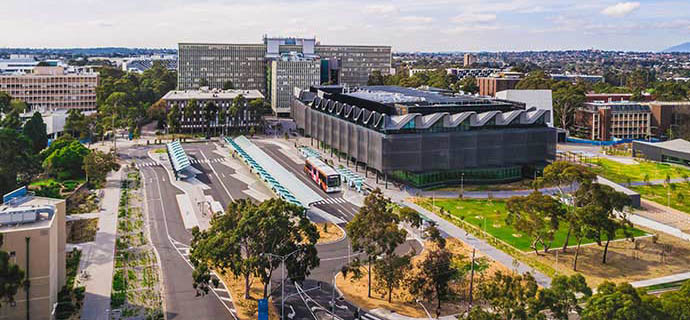
The School of Translational Medicine (STM) is located at the Monash University Alfred Campus, working with Bayside Health, working extensively across both the Alfred Care Group and Peninsula Care Group and Cabrini Precincts.
The School at a glance:
Translational and clinical research in STM covers a great breadth of subject areas, with 17 different departments and centres, including The Departments of Medicine, Immunology & Pathology, Diabetes, Infectious Diseases, Immunology (including Respiratory Medicine @Alfred), Gastroenterology, Neuroscience, Psychiatry, Cancer Medicine, Surgery, Anaesthesiology & Perioperative Medicine (APOM), Medical Education, Medicine Peninsula, Melbourne Sexual Health Clinic, The National Trauma Institute (NTRI), Clinical Haematology / the Australian Centre for Blood Diseases (ACBD) and The Cabrini Institute.
STM encourages multidisciplinary research across discipline areas, with cross disciplinary discovery programs, and attracts elite students, researchers and teachers to its well-equipped research laboratories and facilities. The school partners with industry to put research into practice and contribute to the treatment and cure of several specific diseases and conditions.
Find out more about the School of Translational Medicine, click here.
Australia is progressive, thriving and beautiful. Our cities are urbane and cosmopolitan, and our landscapes range from pristine sandy beaches to perfect snowy mountains.
We're also one of the world's most culturally diverse nations. In the Australian state of Victoria, 45% of people were either born overseas or have a parent who was born overseas.
In Melbourne, the capital city of Victoria, you will hear people speak more than 150 different languages.
Melbourne is safe, well-designed and easy to get around. The city boasts:
Melbourne is home to major sporting events, including the Australian Open (tennis), the Boxing Day Test (cricket) and the Spring Racing Carnival (horse racing). In winter, Melburnians flock to the Australian Football League (the AFL, or just 'the footy') – pick a team and join in.
Melbourne is famous for its coffee, thanks in large part to the influx of southern European migrants that came here in the 1950s. We also love food, enjoy a variety of ethnic cuisines, and celebrate a food and wine festival each March.
Melbourne enjoys a true seasonal climate with sunny summers, mild autumns, crisp winters and warm springs. Don’t be surprised if you experience all four seasons in one day.
In the summer period starting from December - February, temperatures are between 14 - 25.3°C (57.2 - 77.5°F).
In winter time (June - August), average temperatures range from 6.5 - 14.2°C (43.7 - 57.6°F), and snow falls in the north-east of Victoria, known as High Country.
The city is always alive. You’ll find Melburnians unwinding at bars, beaches and restaurants all year round.
Enquiries
For a confidential discussion about the role, please contact Professor Terence O'Brien - terence.obrien@monash.edu
How to apply
Applications should include a full CV and a candidate statement outlining your vision for the role.
Applications close 25 March, 2026 at 11:55PM AEDT.