
How Civil Design Is Building Smarter Asset Inspection for Local Government
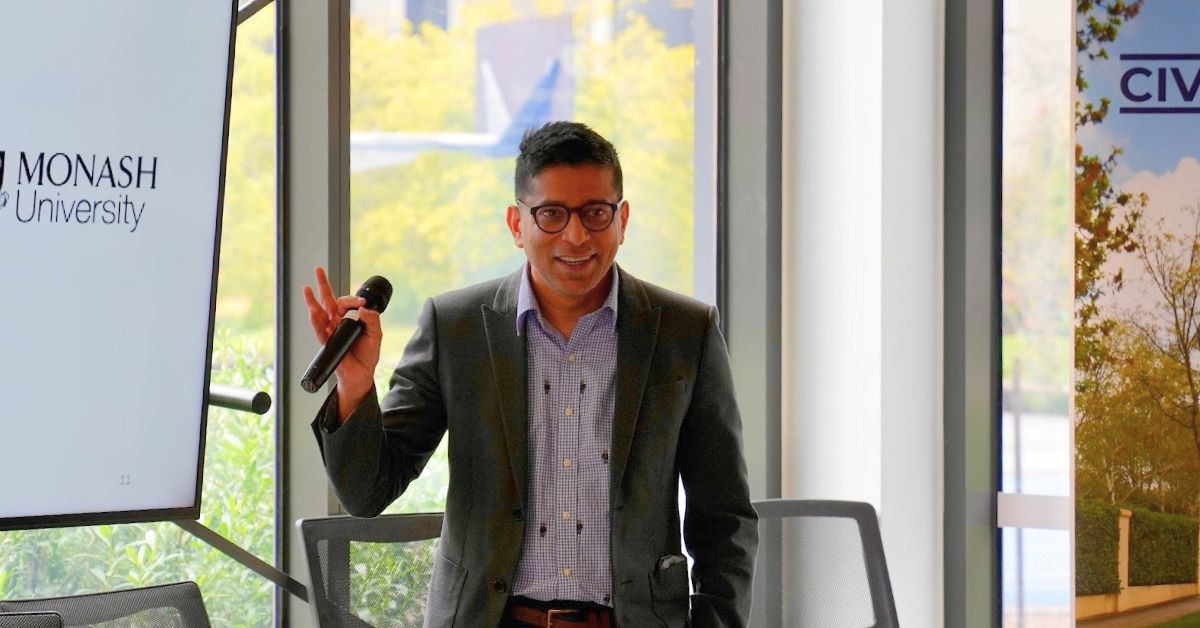
Kanchana Withana presenting to city councils
Kanchana Withana co-founded Civil Design five years ago to provide engineering advice and design services to local and state governments across Victoria. From the outset, he had a broader ambition.
"We like to think of ourselves as problem solvers," he says. "If there isn't an existing solution, we'll find a way to create one."
That mindset has led Civil Design from traditional consultancy work into collaborative R&D, and eventually into a partnership with the team of AI and Machine Vision researchers and students at the Smart Infrastructure Lab at Monash Innovation Labs, in a project that is reshaping how local governments manage public assets.
We sat down with Kanchana Withana, co-founder and director of Civil Design, to hear how a recurring problem in local government became the spark for one of the more practical applications of AI and machine vision to emerge from the Monash precinct.
A Challenge Hidden in Plain Sight
The spark for the project came from a recurring problem in local government: labour-intensive asset protection inspections. When homeowners or developers begin construction, councils assign inspectors to ensure public assets such as footpaths, street trees, and drains are not damaged.
"It's a resource-heavy process," Kanchana explains. "Inspectors often make routine visits that turn up nothing. For one council, it was seven people's worth of work handled by just three and a half staff."
Civil Design saw an opportunity: reduce unnecessary inspections by automatically identifying sites showing signs of damage or non-compliance before a person ever needed to visit.
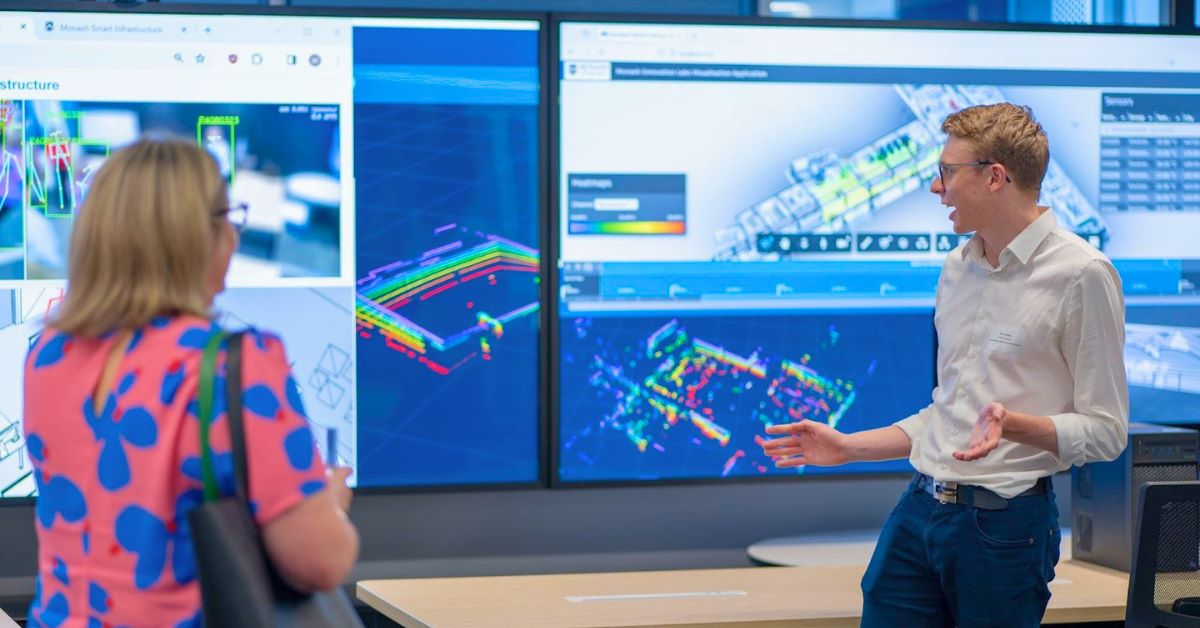
Matthew Willaton, presenting at the Smart Infrastructure Lab
Bringing Machine Vision to the Streets
Working with Professor Hai Vu from Monash's Civil and Environmental Engineering faculty, and Usman Sarwar and Matthew Willaton from the Smart Infrastructure Lab, Civil Design developed a system using vehicle-mounted cameras to automatically monitor work zones and public assets as council vehicles travel their routine routes.
Custom AI models process images in real time at the source, identifying construction-related hazards including: mud on roads, cranes and large machinery, trip hazards, blocked footpaths, overgrowth, non-secure worksites, loose trash, and skip bins. Built-in privacy controls automatically blur faces and number plates. Results are surfaced through a GIS map interface: red markers flag areas needing inspection, green means clear.
"We're not filming for the sake of it," Kanchana says. "We're gathering just what's needed and nothing more. The system is secure, scalable, and focused."
The Smart Infrastructure Lab contributed sensor integration, systems architecture, and applied R&D expertise, translating a practical council challenge into a deployable technical solution.
Testing on Campus
By mid-2025, Usman Sarwar and Matthew Willaton had completed the first rounds of testing using a former autonomous research vehicle fitted with the camera system.
The work culminated in a showcase at Monash Innovation Labs, where council stakeholders saw the system demonstrated for the first time. For many, it was their first encounter with a near-deployable example of AI and machine vision built specifically for council workflows. Executives from ten councils attended, and conversations around potential pilot programs are ongoing.
"This is a pilot," Kanchana says. "But it's more than a one-off use case. Once we've demonstrated it works, this platform can scale to other kinds of infrastructure monitoring."
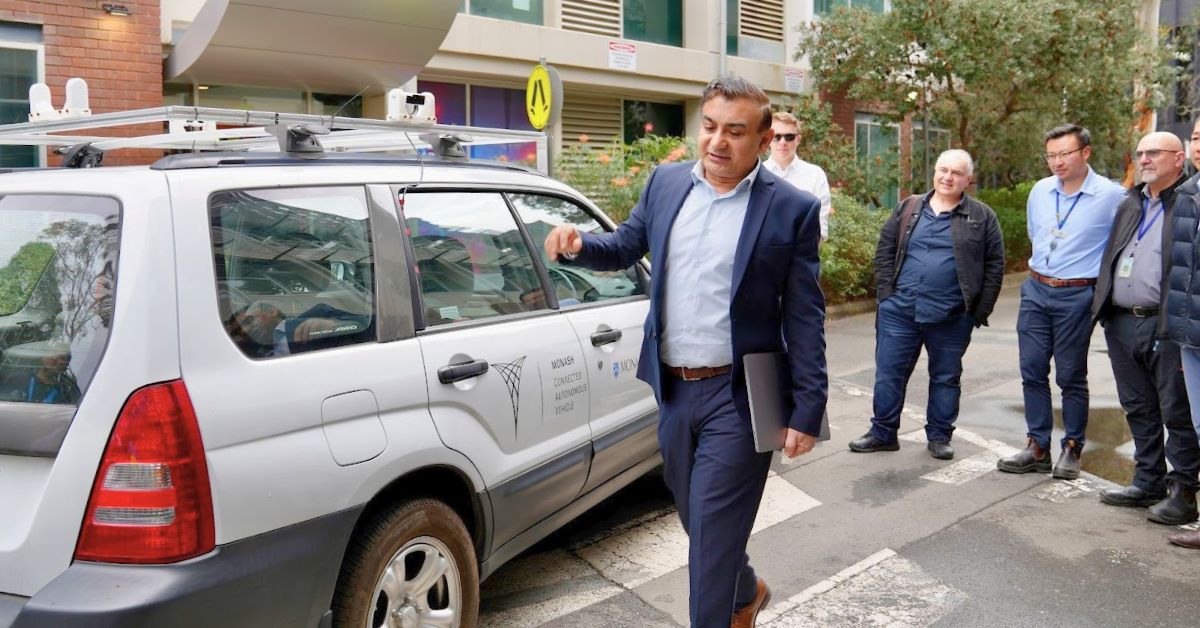
Pilot of sensor systems on a vehicle, presented at an industry demo day
A Platform for Smart Cities
Civil Design's vision extends beyond asset protection. The team is currently developing a dynamic, decision-ready planning platform co-developed with a Monash PhD graduate specialising in web systems and database design.
"The goal is to support each council's unique criteria," says Kanchana. "A metropolitan council will have different priorities than a rural one. Our system will be adaptable to all of them."
From Serendipity to Strategy
The relationship between Civil Design and Monash began informally. A school connection led to a conversation, then a guest lecture, then a federally funded Smart City project, and eventually co-location within Monash Innovation Labs.
Over three years, Civil Design has also supported student final-year projects and recruited graduates through MiLabs. Fresh thinking from design, data science, and communications students has helped the team reframe how they communicate technical solutions to non-technical audiences.
"Being here helps," Kanchana reflects. "I'm not personally leading the tech, but being close means I see the work, I talk to the people, and I can be part of the process. It's the proximity that makes innovation move."
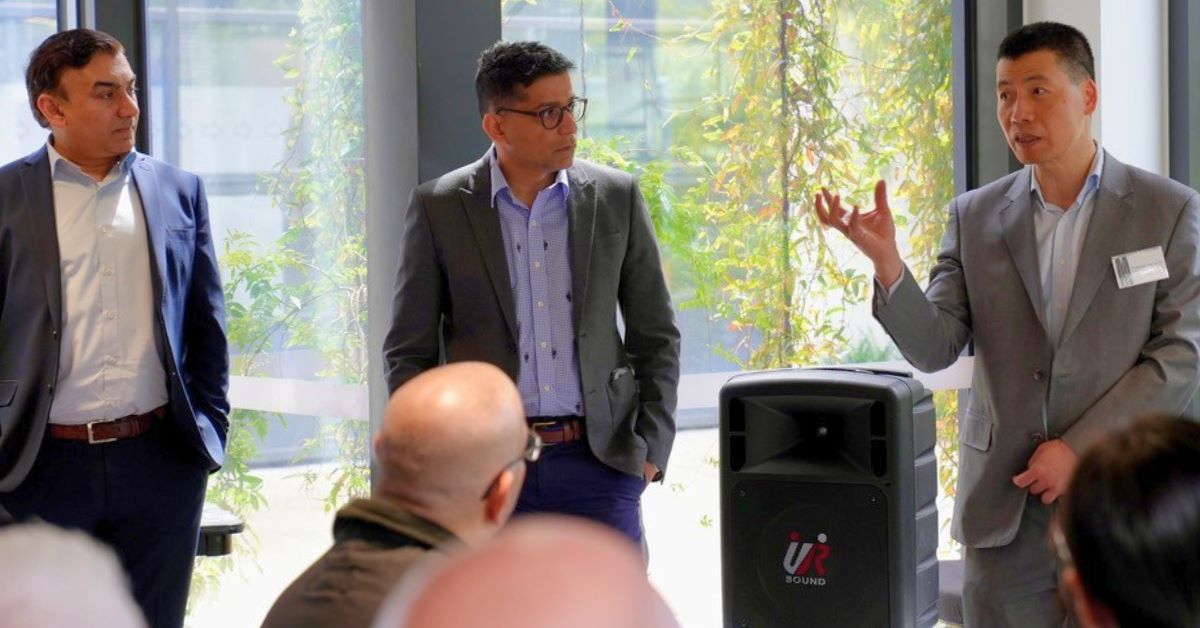
Usman Sarwar, Kanchana Withana and Professor Hai Vu
What's Next
Following the showcase and a nomination for a Public Works Engineering Innovation Award, Civil Design is in active discussions with councils about next steps, and is exploring partnerships with waste management companies and other organisations with vehicle fleets suited to large-scale deployment.
Infrastructure planning tools are also in development, with forecasting capabilities to help councils prepare for the long-term costs of road maintenance, stormwater systems, and civic assets.
"We're not looking to create problems to fix," says Kanchana. "We're listening to the challenges councils already face and offering tools that genuinely help."
Civil Design came to Monash Innovation Labs as a consultancy; the applied R&D partnership with the Smart Infrastructure Lab, combined with proximity to Monash's research community, has since shaped both the company's direction and the ambition of what it is building.
"What we get here isn't just space," Kanchana says. "It's access. Access to people, projects, and possibilities. That's where the real value lies."
Learn more
Smart Infrastructure Lab at Monash Innovation Labs works with industry partners to translate real operational challenges into deployable applied R&D solutions. To find out more about how we work with industry, start a conversation with us.