
How Proton Intelligence Grew at MiLabs
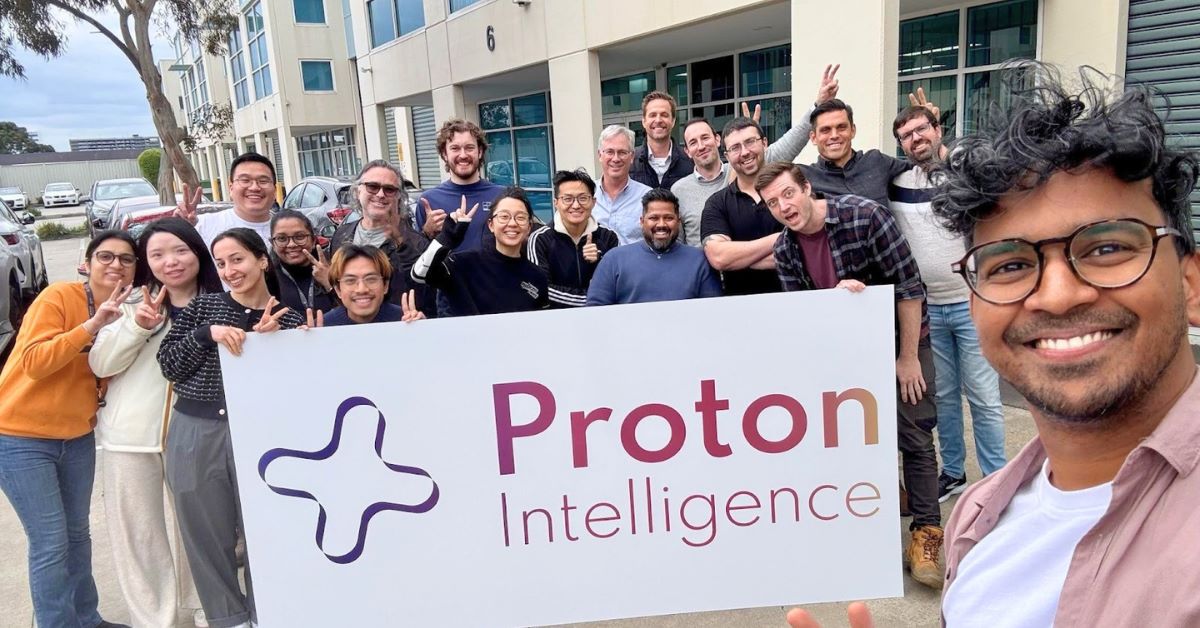
In 2021, in the middle of the pandemic, researcher and founder Sahan Ranamukhaarachchi made a decision that would set the trajectory for one of Australia's most promising deep tech medical ventures. He reached out to long-time collaborator Professor Victor Cardarso, who had recently joined Monash University, with a simple question: "Are you willing to take on this challenge with me?"
The challenge was significant, and it started with a problem hiding in plain sight.
We sat down with Sahan, CEO and Co-Founder of Proton Intelligence, to hear how the company went from a pandemic-era idea to a globally significant clinical milestone and what two years at Monash Innovation Labs made possible.
The Problem Worth Solving
Electrolytes regulate heart rhythm and influence kidney function, changing throughout the day based on what you eat, how you sleep, and how your body is working. Potassium in particular is the key electrolyte that keeps your heart beating. When kidneys begin to fail due to hypertension or diabetes, the body loses its ability to regulate it. The result, too often, is a fatal cardiac event.
Despite this, clinical practice still relies on single blood tests, often taken weeks apart, to guide medical decisions.
"It is almost like getting on a plane with last week's pressure data," Sahan says. "You would not do that. But when it comes to your heart, we sweem to accept it."
Proton Intelligence set out to change that. The company is building the first continuous electrolyte monitoring platform: a wearable device that places a proprietary sensor into the skin and delivers real-time potassium data to clinicians, enabling therapeutic decisions based on what is happening now, not what happened weeks ago.

Sahan Ranamukhaarachchi, CEO & Co-Founder of Proton Intelligence
From Research Bench to Commercial Vision
Before Proton Intelligence existed, Sahan was a researcher working on intradermal drug delivery. His experience revealed a larger opportunity. Continuous biomarker monitoring could transform how clinicians understand and manage chronic disease.
When he and Victor identified a clear use case and a commercial opportunity, they began assembling a small team through Victor's lab at Monash, hiring their first electrochemist during lockdown and working across continents to demonstrate feasibility. By the time the team reached nine people, they had outgrown their space.
"We needed a place that could give us access to Monash's research infrastructure, proximity to clinical partners, and room to grow from 10 to 20 people," Sahan says. "Monash Innovation Labs was the ideal choice."
Proton Intelligence was one of the first residents at MiLabs, with a move in 2022.
Building at MiLabs
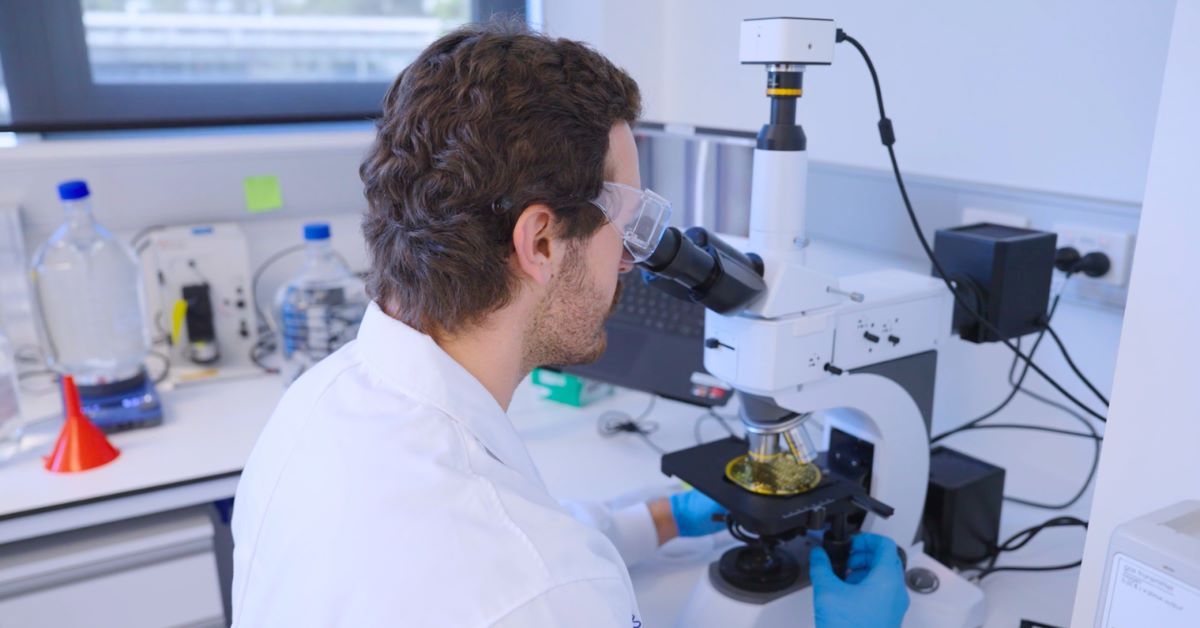
Over the next two years, the team established a chemistry lab and an engineering lab within MiLabs, ran their first clinical trial, and produced all the devices and prototypes that went into it. They raised USD $5 million in pre-seed funding to establish the science, then closed a USD $7 million seed round to fund the first-in-human clinical proof of concept. Both milestones were achieved while resident at MiLabs.
Completing first-in-human testing for continuous potassium monitoring was a globally significant achievement. The company grew from 12 to almost 30 staff during the same period.
"The reason we are here as a company is owing to how we deployed resources while we were part of Monash Innovation Labs," Sahan reflects.
Talent as a Competitive Advantage
Around 70 per cent of Proton's team are Monash graduates. That was not accidental. Sahan describes a deliberate strategy of engaging students early, offering part-time roles to undergraduates, assessing them over time, and converting the best into full-time hires as they completed their degrees.
"Most deep tech jobs are not advertised. They are created," he says. "When students interact early with companies at MiLabs, they learn what these roles look like, and companies can see how they work. Hiring becomes an easy decision."
Of the last ten hires Proton made, almost all came through that kind of early engagement.
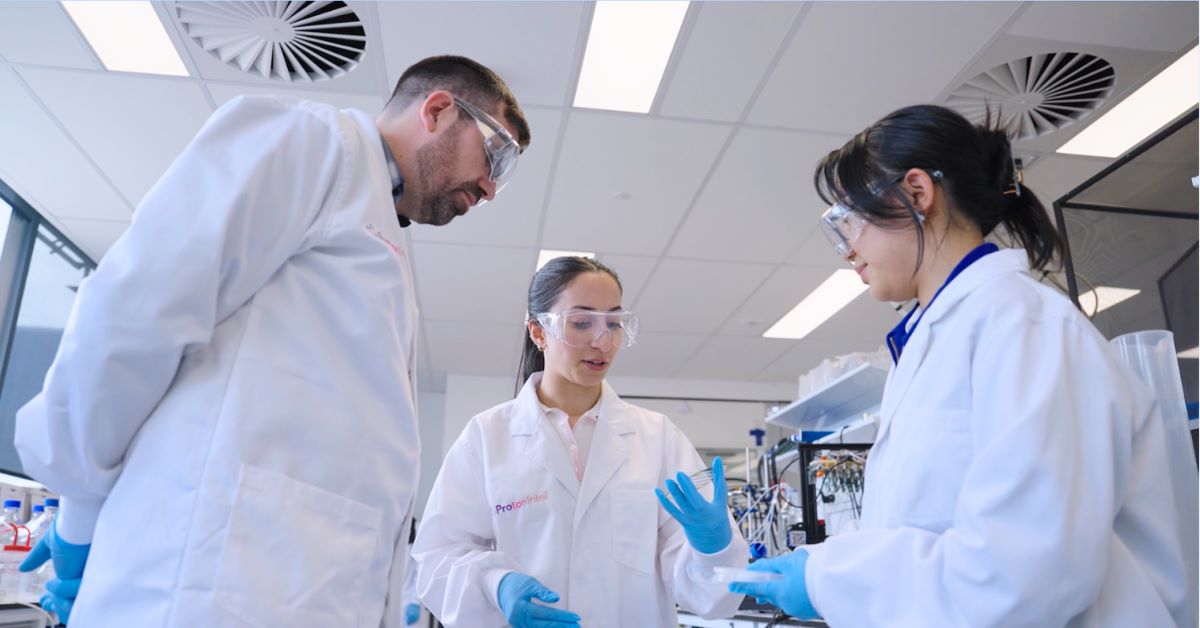
Victor Cadarso, Shireen Parsamanesh, Alicia Li
The Kitchen
Ask Sahan what he will miss most about MiLabs, and the answer is not the facilities.
"My favourite part was the kitchen," he says. "Conversations over lunch with other founders and researchers led to ideas we never would have found on our own."
Entrepreneurship, he says, is a lonely job. Having peers tackling different problems in the same building gave him a sounding board he could not always find within his own team.
"The job of being an entrepreneur is that you are up against the wall all the time. The only thing that really helps is communicating with people going through similar journeys in their own way. That is what MiLabs represented for me."
What Comes Next
Proton Intelligence has now graduated from MiLabs, moving into 1,100 square metres of dedicated space on Wellington Road, a short walk from campus and close to the new Moderna facility and in the heart of the Monash Technology Precinct. The team has grown to 28 people with a Series A is on the horizon.
The move is a graduation, with a new footprint near to Monash being a deliberate decision. The workforce knows the ecosystem, knows where resources are, and can move quickly across chemistry, engineering, mechatronics, clinical testing and manufacturing because everything they need is within reach.
"We want to stay connected to MiLabs, to the companies here, and to the students," Sahan says. "If we can help in any way, we will. It is a special community."
Learn more
Monash Innovation Labs supports deep tech startups from early-stage residency through to scale-up. If you are building something that needs talent, facilities, and a community of people solving hard problems, start a conversation with us.