
Could coal waste power our clean energy future?
From ash to asset: Could coal waste power our clean energy future?
14 May 2026
The key to turning industrial waste into a strategic resource could be closer than expected, and researchers from the Monash Critical Minerals Initiative may hold the answer to unlocking it.
Australia’s coal-fired power stations have produced millions of tonnes of coal fly ash over the decades.
This fine powder, which is a by-product of combustion, is a legacy waste in more than eighty countries that use coal for power and other industry applications, and has long been treated as an environmental liability.
However, researchers from the Monash Critical Minerals Initiative believe this industrial waste could become a critical asset in Australian clean energy and defence supply chains.
A study, led by Professor Sankar Bhattacharya from the Department of Chemical and Biological Engineering, has demonstrated that some coal fly ash contains all 17 rare earth elements.
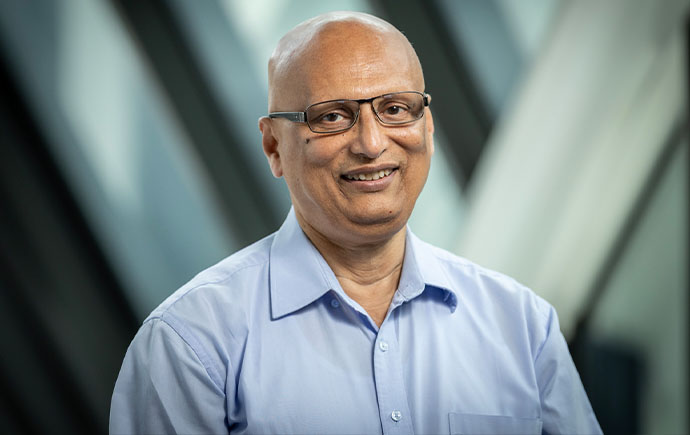
Professor Sankar Bhattacharya.
These metals, including neodymium, dysprosium, and terbium, are integral to the production of electric vehicles, wind turbines, advanced electronics, and military technologies.
Crucially, the team has developed scalable technologies capable of recovering these elements, providing a sustainable alternative to conventional rare earth mining.
“Australia’s reliance on imported rare earth elements (REEs) poses a strategic vulnerability in the global supply chain for critical minerals,” Professor Bhattacharya said.
He said the work positioned Australia as a global leader in urban mining and circular economy solutions in a sustainable manner.
Breakthrough extraction technology
Working with Dr Bennet Thomas, Research Engineer in the department, and industry partners, the team has developed a breakthrough process to extract rare earth elements from coal fly ash.

Dr Bennet Thomas.
The technology is designed for scale, achieving over 90 per cent recovery of all 17 rare earth elements in pilot demonstrations.
The process also reduces landfill use and lowers the carbon footprint.
Professor Bhattacharya said the research demonstrates that coal fly ash can be transformed into a valuable resource, strengthening Australia’s supply chain resilience in critical minerals.
“The significance of this work lies in its dual impact: reducing environmental waste while securing domestic supply of critical minerals,” he said.“
"By transforming fly ash into a valuable resource, the technology supports Australia’s transition to clean energy and strengthens supply chain resilience."
This technology has now been proven to work with multiple kinds of waste, including electronic waste, alumina processing waste, battery waste, and waste from spent electrolysers.
From lab to industry
Pilot demonstrations at 100 litres per hour are underway, supported by patent filings and international presentations.
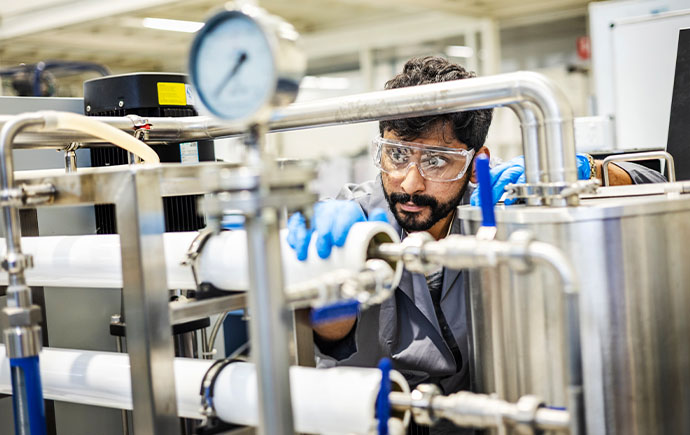
Dr Bennet Thomas extracting elements from
coal fly ash.
Energy utilities, waste management companies, and government agencies have all expressed interest in the initiative.
The research has informed national policy discussions and contributed to Australia’s Critical Minerals Strategy.
“The societal and environmental benefits are substantial: reduced landfill, lower carbon footprint, and enhanced resource security,” Professor Bhattacharya said.
“This work exemplifies Monash’s leadership in sustainable engineering and innovation in critical minerals recovery.”