
How AI is making decarbonisation faster and fairer
Powering net zero: How AI is making decarbonisation faster and fairer
14 May 2026
The race to net zero depends on access to the critical minerals that power it. Our researchers have developed a way to spot supply chain vulnerabilities before they spiral out of control.
Global clean energy ambitions are at the mercy of fragile critical mineral supply chains.
Lithium, nickel, cobalt, graphite and rare earth elements are essential to everything from batteries to wind turbines.
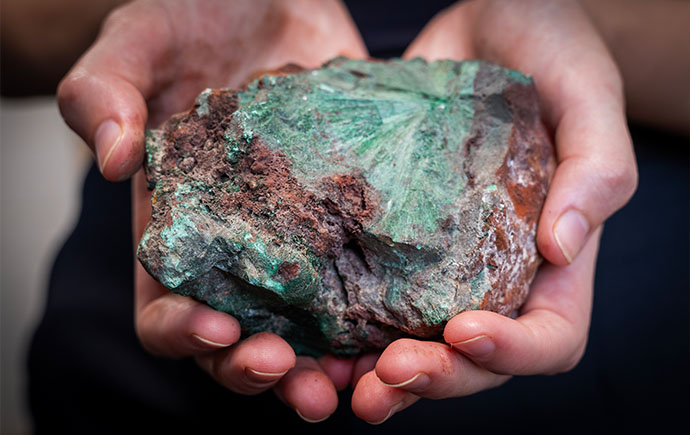
Effective utilisation of critical minerals means stronger supply chain resilience.
Yet these minerals are found in a handful of locations, leaving supply chains exposed to disruption at every turn.
Even relatively small shocks, such as changes to export controls, geopolitical tensions, or transport bottlenecks, can trigger shortages and price spikes that slow clean energy investment.
Traditional monitoring systems only make matters worse, often detecting danger after the damage has been done.
Professors Joaquin Vespignani and Russell Smyth warn that without stronger supply chain resilience, decarbonisation will become slower, costlier, and more inequitable.
“Supply chain resilience is critical because clean energy technologies require large volumes of critical minerals, yet there is a major investment shortfall and long lead times - often around 12.5 years from exploration to production - making supply vulnerable to delays and shocks,” Prof Vespignani said.
AI as an early warning system
To tackle this problem, the pair from the multidisciplinary Monash Critical Mineral Initiative have turned to artificial intelligence.
Their 2024 study integrates AI with macro‑energy and price‑risk data to track how political events, trade disputes and logistical disruptions will translate into market stress.
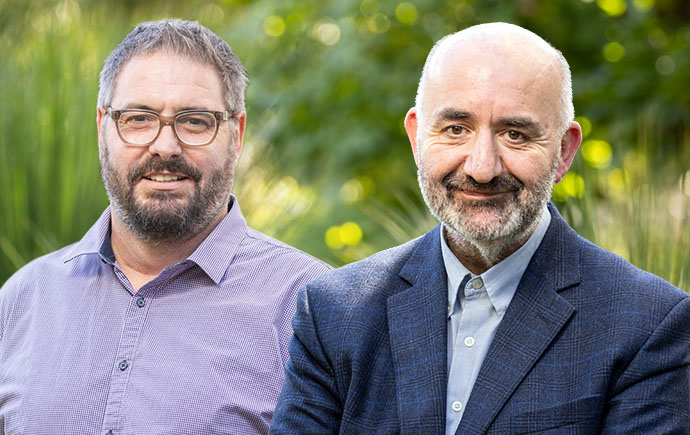
Professor Joaquin Vespignani and Professor
Russell Smyth.
The model spots risk patterns in real time and predicts the likely impact on prices, supply, and stock levels, allowing decision‑makers to stress‑test policy options.
“Rather than tracking prices alone, we model the underlying ‘back-ended risk premium’ - the extra cost of capital created by technical and non-technical barriers that emerge later in project development for minerals like lithium and cobalt,” Prof Vespignani said.
Real-World Impact
Briefings and workshops with the Australian Treasury, and consultations with the Asia Pacific small islands including the Cook Islands Ministry of Finance & Economic Management have already put AI-based risk indicators into strategic planning.
At Monash, the findings are being embedded in courses to train policymakers and industry leaders to navigate uncertainty in global energy markets.
“The policy implication is straightforward: targeted investment in AI for mining - especially in the exploration-to-development stage—can reduce project duration and risk, lowering capital costs and ultimately reducing the overall cost of the energy transition,” Prof Vespignani said.
The work positions Monash as a hub for interdisciplinary research connecting AI, economics, and sustainability policy.
“We see strong scope for partnerships with governments, industry, and development lenders to scale AI applications - prospectivity modelling, mineral mapping, recovery from waste - and build open datasets, which the paper identifies as essential to unlock AI’s full potential in mining,” Prof Smyth said.