
How our research is strengthening global battery supply chains
Recycling or Stockpiling? How Monash Research Is Strengthening Global Battery Supply Chains
14 May 2026
Should countries stockpile critical minerals for future shocks, or invest in recycling instead? New Monash research shows that getting this decision wrong could hinder the clean energy transition and drive up costs for decades.
Global battery supply chains are becoming one of the weakest links in the clean energy transition.
Delays in approvals, political instability, community opposition, and decade-long project timelines are tightening supplies of lithium, nickel, cobalt, graphite, manganese, and copper, driving up costs for governments and industry.
For professors Joaquin Vespignani and Russell Smyth, from the multidisciplinary Monash Critical Minerals Initiative, the problem has become a serious policy risk.

Professor Russell Smyth.
“Managing mineral supply is critical because EVs, grids, and clean manufacturing all rely on a small set of minerals with highly concentrated supply chains, so any disruption quickly becomes an energy-security and national-security problem,” Prof Vespignani said.
One option is to build strategic stockpiles - large reserves that can cushion sudden disruptions.
Another is to invest heavily in recycling, turning old batteries into new sources of supply.
Until recently, there was little robust evidence to guide when each approach works best.
Mapping the pressure points in supply chains
Prof Vespignani, Dr Yitian Wang and Prof Smyth set out to understand how governments should respond when mineral supply becomes unpredictable.
The team developed a new framework to quantify how these non-technical risks affect supply.
They combined global investment data with mineral reserve information to calculate how the expense of financing projects when supply chains appear unstable.
The analysis shows that regulatory delays, political instability and social opposition raise borrowing costs, delay investment decisions and reduce the flow of capital into new mines and processing facilities.
It also shows when policy failures are likely to become long-term supply constraints.
“Our framework maps the full material flow over time - new mining, processing capacity, demand surges, and end-of-life recovery - so bottlenecks and timing mismatches show up early rather than only after prices spike,” Prof Vespignani said.
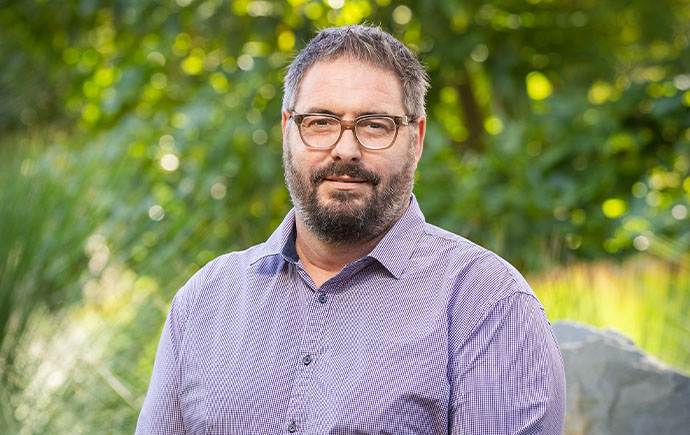
Professor Joaquin Vespignani.
Designing a practical policy toolkit
The research also offers policymakers a practical way to stabilise markets using two key tools:
- Strategic stockpiling: Building reserves to buffer short-term disruptions.
- Recycling: Recovering minerals from end-of-life batteries to create secondary supply.
To compare these options, the researchers developed a ‘distance-to-iso-cost’ model, which weighs the real-world costs of storing minerals against the costs of collecting, transporting, and recycling used batteries.
The model gives policymakers a transparent way to assess which strategy is likely to deliver greater stability in different countries and markets.
The findings reveal clear regional patterns:
- Japan and Korea are better positioned for recycling-led strategies.
- The United States and China gain more from stockpiling.
- Europe sits close to a tipping point, where recycling could soon become more competitive.
Prof Vespignani said these insights help governments tailor policy settings to local conditions rather than relying on one-size-fits-all solutions.
“It depends on where a country sits in the value chain and battery lifecycle: nations with limited upstream access or high import exposure benefit more from stockpiles, while those with large future end-of-life volumes and strong industrial capacity can lean more heavily on recycling,” he said.
Future directions: Adapting as markets evolve
Looking ahead, the researchers plan to refine the model as battery technologies, recycling capacity, and mineral markets evolve, so that governments can continue to adjust their strategies over time.
Prof Vespignani said the framework is designed to remain relevant as technology, geopolitics and market structures shift.
“As a practical decision tool to update policy settings - how much to stockpile, how fast to scale recycling, and where to target investment - as chemistries, technologies, and geopolitical risks change,” he said.
As Monash expands its multidisciplinary Critical Mineral Initiative, and deepens its links with industry and government, the work is helping to position the University as a national centre for evidence-based supply-chain policy.