
Licence to operate: Public trust and our critical minerals future
Licence to operate: Public trust and our critical minerals future
14 May 2026
Research suggests the success of Australia’s energy transition could depend as much on winning support above ground as it does on extracting resources below it.
In the 1990s, a series of environmental disasters exposed the limits of regulatory approval in Australia’s mining sector.
Tailing dam failures and contaminated waterways triggered protests and court action, demonstrating that even with government clearance, community opposition could still delay development.
From this period emerged a now widely used term: social licence to operate.
Professor Libby Lester, Director of the Monash Climate Communication Hub and a contributor to the Monash Critical Minerals Initiative, has spent more than two decades examining how public trust influences outcomes across mining, energy, forestry and agriculture.
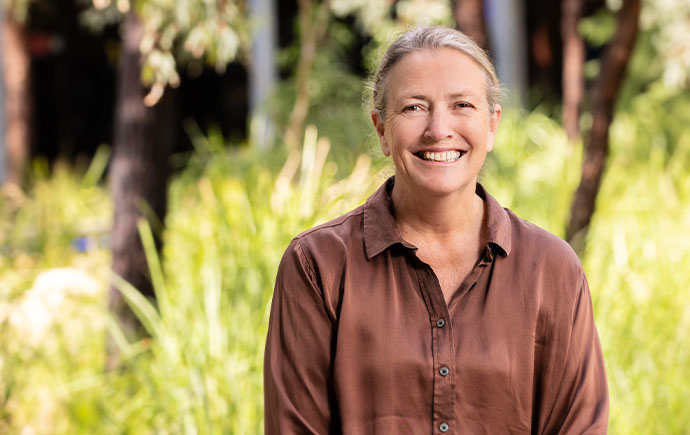
Professor Libby Lester.
Her research frames social licence as both a discourse and a set of practices, showing trust emerges when communities are given a genuine say in land and resource decisions. Without it, projects risk losses of access, reputation and profit.
“The timeframe within which the energy transition is required will only be met if people understand why critical minerals are required and the value proposition between resource sharing and potential losses,” Prof Lester said.
Energy projects face a trust test
In 2025, Prof Lester’s team conducted the National Climate Action Survey in partnership with Griffith University’s Climate Action Beacon.
The survey captured the views of 2,481 Australians on climate, energy, and infrastructure, revealing sharp differences in how technologies are perceived.
Almost 39 per cent of respondents said they would be extremely concerned if a nuclear plant were built within 50 kilometres of their home.
By contrast, around 80 per cent viewed wind and solar energy favourably, with most saying they would not object to nearby developments.
“We found clear evidence that people overestimate the expected level of community opposition to nearby renewables developments, when they themselves are generally supportive,” she said.
“In terms of communication about development proposals, this needs to be understood and managed carefully.”
Politics, identity and land management
Political identity can also influence views on land and resource management.
Prof Lester’s 2025 study of 751 Tasmanian residents examined preferences for fuel reduction methods to lower bushfire risk.
Conservative voters were more likely to support highly controlled, “command and control” approaches, while Greens voters preferred more natural, self-determining methods.
Labor voters generally sat between the two.
Concerns about effectiveness were most important to conservative voters; environmental impact ranked higher for Greens.
“These findings highlighted to us the importance of understanding communities and targeted place-based audiences for any communications around resource use and land management,” she said.
Understanding the audience
Public attitudes are also shaped by where people receive information.
Through the Tuning In project, Prof Lester’s team partners with Southern Cross Austereo, Australia’s largest commercial radio network, reaching 7.7 million listeners.
The project works with content directors and presenters to develop climate and energy content for audiences often described as being the least alarmed about climate change.
Early findings reveal a gap between presenter assumptions and audience interest.
While some broadcasters believe listeners are disengaged, survey data shows many want accessible, practical information.
“Commercial radio, particularly in regional areas, has been largely ignored as a platform for social change, yet we have over and over again that audiences want to hear about and understand the energy transition,” she said.
Lessons from long-running conflict
Prof Lester’s Australian Research Council forestry research project in Tasmania provides a cautionary example.
Despite employing 50,000 Australians and contributing $11.3 billion annually, conflict over conservation and forestry production has persisted for five decades.
Her team is interviewing executives, workers, and community stakeholders to identify the dominant discourses that sustain conflict and those that open pathways to resolution.
“So much of Australian identity is about our places and our work,” she said.
“The forestry conflict has shown that you can’t simply dismiss emotions when trying to resolve disputes over land use.”
Building confidence early
Prof Lester’s research demonstrates that early measurement of public sentiment reduces risk and helps projects gain social licence before conflicts arise.
As Australia positions itself as a reliable supplier of critical minerals, geology and capital will not be the only factors that matter.
“Public confidence may prove just as decisive,” she said.
“This can be earned through fair process, early and clear two-way communication, and genuine inclusion. This is not just about shared resources, but also about shared futures.”