
Monash research unlocking Australia’s lithium boom
Taxing the Transition: How Monash research is unlocking Australia’s lithium boom
14 May 2026
A new study from the Monash Critical Minerals Initiative has revealed how smart tax design could help Australia turn its lithium advantage into billions in new investment.
More than two billion electric vehicles could be on the road by 2035 if governments worldwide meet their Net Zero 2050 targets.
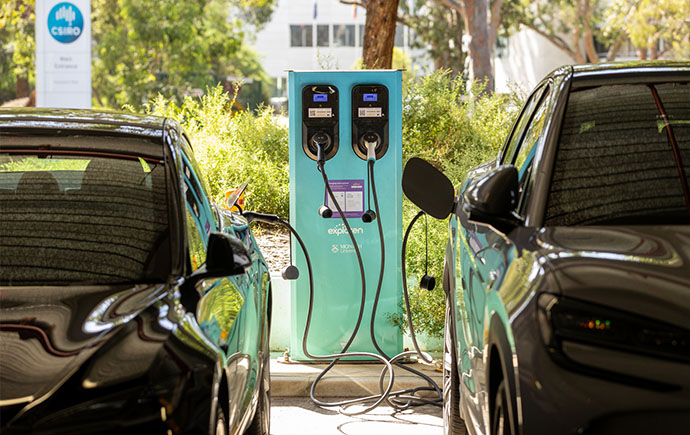
Demand for EVs in Australia will grow exponentially.
Delivering this transition depends on reliable access to lithium - a key ingredient in batteries - and by the early 2020s, analysts were already warning of a looming global shortage.
On paper, Australia - which is responsible for 55 per cent of the world’s production - was well positioned to benefit.
In practice, new investment was stalling.
For professors Joaquin Vespignani and Russell Smyth, both from Monash Business School, whose research is helping fuel the Monash Critical Minerals Initiative, it was a paradox.
How could a country with unmatched mineral reserves struggle to convert them into economic advantage?
They set out to discover what could be done to reverse the trend.
When tax becomes a barrier
For decades, debates about critical minerals focused on geology, infrastructure and global demand. Less attention was paid to fiscal design.
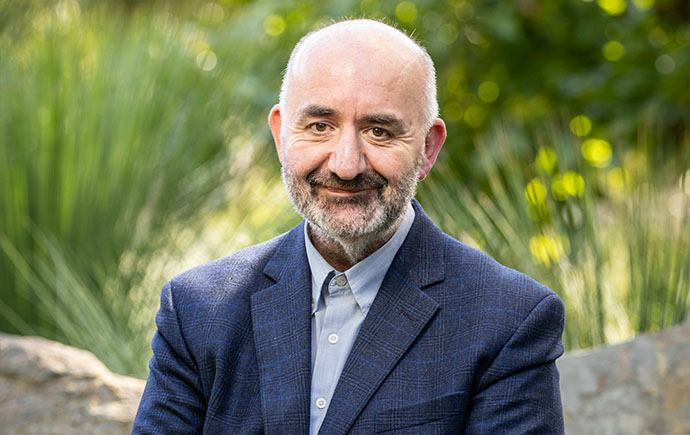
Professor Russell Smyth.
Their 2022 study, Increasing Australian Lithium Production to Meet Electric Vehicles and Net Zero Global Targets: A Decarbonisation Tax Discount?, identified taxation as a central obstacle.
The research revealed Australia’s high effective tax rate of around 51 per cent and regulatory uncertainty were discouraging the long-term capital required for exploration, processing, and decarbonised production.
“Despite Australia’s dominance in lithium extraction, the resource taxation framework was poorly suited to accelerating investment or incentivising downstream refining,” Prof Vespignani said.
“Much of the value - often up to ten times higher than raw ore - remained uncaptured, limiting opportunities to develop domestic battery and clean-energy industries.”
They showed that tax design was actively influencing investment and limiting Australia’s strategic potential.
“The logic was intuitive: If fossil fuels face higher taxes because they generate carbon emissions, then critical minerals that enable decarbonisation should receive a tax discount that reflects the positive externalities they create.”
The decarbonisation discount
In their analysis, the team proposed a new policy mechanism: the Decarbonisation Tax Discount (DTD).
Instead of offering blanket subsidies, the framework encouraged governments to reduce effective tax rates for critical-mineral producers meeting production and decarbonisation targets.
Under their DTD framework:
- Tax incentives are directly linked to clean-production outcomes.
- Discounts scale with investment and emissions reduction.
- Public revenue is protected through calibrated design.
Prof Vespignani said the model showed reducing effective tax rates in targeted ways would incentivise investment, accelerate clean-energy mineral supply, strengthen national security, and support Australia’s Net Zero 2050.
Shaping national policy
The DTD framework entered policy discussions at a critical moment, as governments scrambled to secure supply chains and attract capital in an increasingly competitive global market.

Professor Joaquin Vespignani.
By 2023, its core principles were being used by the Department of Industry, Science and Resources (DISR) and the Australian Treasury in critical minerals modelling.
Treasury assessments indicated that the incentives could mobilise up to AUD $4 billion in private investment between 2025 and 2030.
“It was extremely rewarding to see academic research translate directly into national policy,” Prof Vespignani said.
“Our framework contributed to the Critical Minerals Production Tax Incentive, which provides a 10 per cent refundable, uncapped tax offset on eligible processing and refining expenditure from 1 July 2027 to 30 June 2040.”
The pair say the research is only the beginning.
Their next phase of work will examine how fiscal policy can support mineral processing, recycling and advanced manufacturing, and ensure more value is retained onshore.
“We are examining how revenues from critical minerals could be channelled through a Sovereign Resources Fund to support long-term economic resilience and intergenerational equity,” Prof Vespignani said.
For Prof Smyth, the impact reflects Monash’s expanding role in shaping how critical minerals research informs national policy.
“Rigorous evidence has to sit at the centre of how Australia competes in a strategically vital sector,” he said.