
Tracking the movement of critical minerals in water systems
Hidden flows: Tracking the movement of critical minerals in water systems
14 May 2026
A new Monash Critical Minerals Initiative project is focusing on the hidden systems that govern the accumulation of critical minerals and how they can be extracted with greater precision.
Deep under the Earth’s surface, the critical minerals we need for a carbon-neutral future are constantly on the move, dissolving into fluids, travelling through rock, and re-forming.
Those same processes make them difficult to locate, predict and extract efficiently.
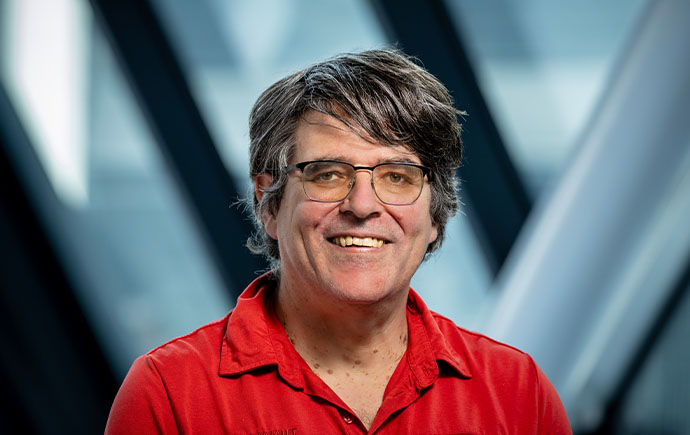
Professor Joël Brugger.
Now, new research led by Professor Joël Brugger at the Monash Critical Mineral Initiative is examining how and where these elements accumulate, and how they behave under different geological conditions.
The research, recently awarded funding through the Australian Research Council Discovery Project, will generate new data and models to better predict their distribution and enable more targeted extraction.
Prof Brugger said understanding how minerals move through water systems is critical to securing future supply.
“Right now, we lack the fundamental data and models needed to predict this behaviour for many critical minerals,” he said.
“Improving this understanding allows us to discover new resources faster, extract them more efficiently, and minimise environmental impacts, making it central to both economic security and the global energy transition.”
Buried complexity, untapped opportunity
Professor Brugger’s team is focusing on the Earth’s “nooks and crannies” - mineral–water systems where metals dissolve, migrate and re-form.
These systems play a key role in concentrating minerals, but are difficult to study.
“Mineral–water systems operate at the intersection of geology, chemistry and engineering, and many of the key processes happen at scales we can’t easily observe,” Prof Brugger said.
“Small changes in temperature or fluid composition can completely change how minerals dissolve, grow, or release metals.”
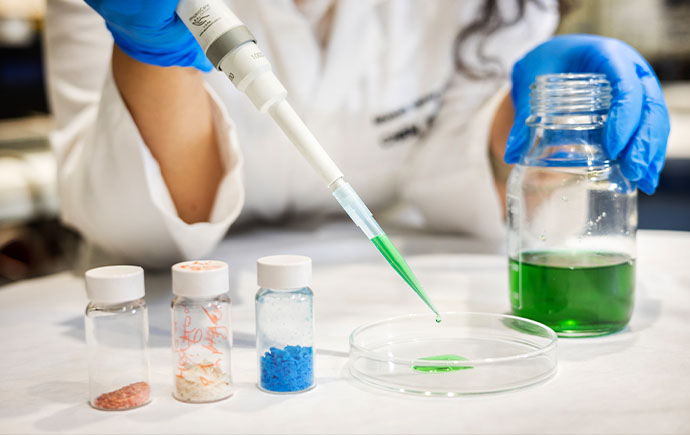
Minerals being dissolved in a lab environment.
He said progress is constrained by three key factors: many critical minerals are effectively ‘hidden’ in minor amounts within host minerals, their chemistry is highly sensitive to changing conditions, and there is a lack of reliable data on how they behave.
While common metals have been studied for centuries, comparable data for critical minerals is still emerging.
“Together, these challenges mean we cannot yet reliably predict how critical minerals move from rocks into fluids and back again,” he said.
“This makes it a key scientific frontier with direct implications for discovery, extraction and environmental management.”
From discovery to extraction
Beyond exploration, the project will also tackle a second challenge: how to extract these minerals more efficiently once they are found.
Current processing methods can be resource-intensive, generating waste and environmental impacts.
The team will develop thermochemical models that simulate how critical metals behave not only underground, but also in processing plants.
Developed with industry and government partners, the models aim to reduce unnecessary processing, lower reagent use, and improve recovery rates.
“Being able to accurately predict how critical minerals move between rocks and fluids can transform how we extract and process them,” Prof Brugger said.
“This means smarter, cleaner and more efficient extraction, helping secure the critical minerals needed for the energy transition.”
A strategic edge for Australia
Global supply chains remain vulnerable to geopolitical tensions and concentrated production in a handful of regions.
Professor Brugger said the research would strengthen Australia’s ability to identify, assess and process critical minerals more efficiently.
The team hopes its thermochemical models will be integrated into tools such as CSIRO’s mineral systems analysis platform and Geoscience Australia’s national resource assessments to guide exploration strategies and inform policy.
Mining companies could also use the project’s predictive deportment data to refine processing flowsheets, reducing reagent use and improving recovery rates.
“Australia has abundant resources, but many critical minerals are hard to find and extract efficiently,” he said.
“This research improves our ability to predict where they occur and how to recover them, helping unlock new deposits and extract more value from existing ones.”
He said the work positions Australia to play a more sophisticated role in global supply chains.
“Enabling more efficient, sustainable discovery and production strengthens Australia’s role not just as a resource provider, but as a leader in critical mineral innovation and processing.”