Adibi Lab research
Collaborations | Student research projects | Publications
About Dr Mehdi Adibi
Mehdi is an ARC DECRA research fellow in the Department of Physiology and the Biomedicine Discovery Institute at Monash University. He has previously held an NHMRC CJ Martin Early Career Fellowship at UNSW and SISSA, Italy. He was awarded his PhD in Neuroscience in 2014 from UNSW, MSc in Telecommunications Engineering in 2008 from Iran University of Science and Technology, and BSc in Electrical Engineering (Communications) from the Isfahan University of Technology, Iran.
Our research
Current projects
Fundamental brain functions such as perception, memory and learning are the result of recruitment of big populations of neurons across a wide range of brain areas. Understanding these operations requires deciphering the activity of neuronal populations not only at cellular level, but also at circuit and cognitive levels across a wide spatial scale and multiple brain regions. Our aim is to identify the mechanisms by which neural microcircuits, cortical layers and heterogenous neuronal cell types interact to shape various dynamics of network activity, and in turn, generate fundamental brain functions such as the perception and behaviour.
At Neurodigit Lab, we combine behavioural, computational and theoretical approaches with cutting-edge methods of observation and manipulation of neuronal activity to understand the neuronal basis of sensorimotor processing and perception. Our focus is on the sense of touch and tactile perception. The sense of touch is one of the oldest senses in the animal kingdom. Our most intimate experiences are tactile. The model systems of our interest are:
1) Rodent whisker-mediated touch system
2) Human fingertips and digits
3) Rodent digits and forepaw
Visit Dr Adibi's Monash research profile to see a full listing of current projects.
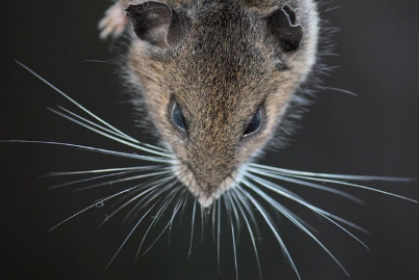 Whisker-touch system
As nocturnal animals, rats and mice extensively use their whisker-mediated touch system to collect information about their surrounding environment. This system represents a well-studied circuitry with an elegant structural organization (Adibi 2019). The acuity of this system is comparable to human fingertips. Our laboratory investigates the neuronal basis and its behavioural correlates of whisker-mediated tactile system in rats and mice., as an ideal model system to study how brain functions. Find out more.

Human fingertips
Fingertips have one of the highest density of touch receptors in the human body. We actively interact with our environment through our fingertips and digits. Daily tasks such as holding up a cup are the result of fine coordination of hand and digits which would not be impossible without sense of touch at our fingertips. Human psychophysics and electrophysiology experiments in Neurodigit lab involve application of vibration or flutter tactile stimuli to multiple digits. The spatiotemporal patterns of the vibrations create reliable complex tactile perceptions such as motion. One of our aims is to apply these patterns for aid devices, touch-screen tablets and smart devices.
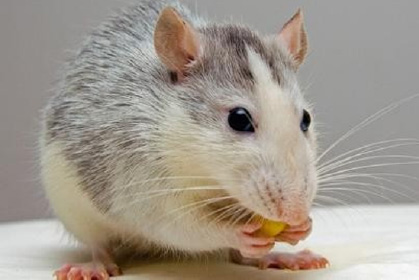
Rodent digit and forepaw
Similar to humans, rodents (including rats and mice) are one of the few species among mammalians that exhibit a variety of grip and digit postures for handling food, grooming, climbing and catching prey insects. The existence of these core patterns of forepaw and digit use in rodents suggests that these skilled movement patterns likely originate from the common ancestor to rodent and primate lineages. In Neurodigit lab, we run parallel humans and rodent experiments in order to identify the neuronal substrates of paw and digit-mediated touch, and the rich and highly coordinated limb, paw and digit movements.
-
Other models
We are also interested in other models. This includes visual system in avians to understand the neuronal computations underlying the extraordinary ability of small bird to fly among obstacles such as branches, multisensory integration and cue combination, collaborative coordinated body movement in Tango, and neuronal substrates of congregating behaviour in zebrafish shoals.
Techniques/expertise
We use a set of complementary techniques and methodologies including:
- Animal psychophysics/behavioural experimentation
- Human psychophysics and electrophysiology
- Extracellular array electrophysiology (chronic and acute)
- Optogenetics and imaging
- Computational modelling and theory
- Whisker, forepaw and digit movement tracking
Collaborations
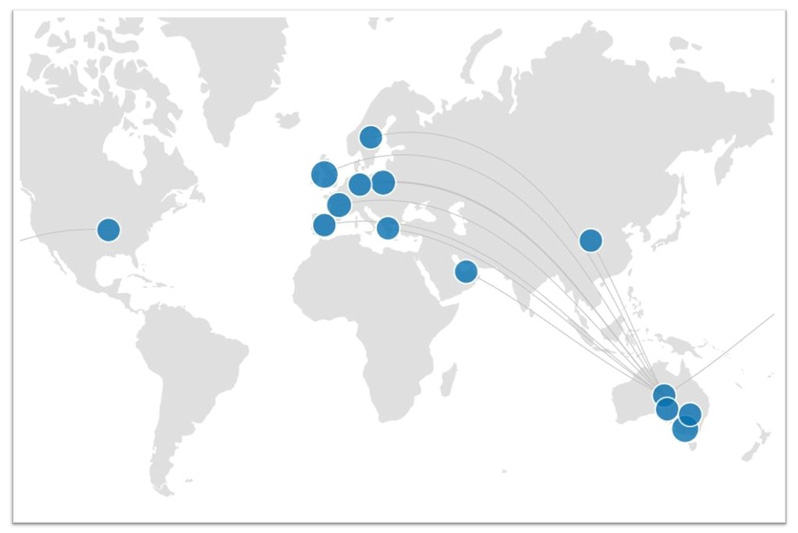
We collaborate with many scientists and research organisations around the world. Some of our more significant national and international collaborators are listed below. Click on the map to see the details for each of these collaborators (dive into specific publications and outputs by clicking on the dots).
Prof Matteo Caleo, University of Padova, Italy
Dr Claudia Alia, Scuola Normale Superiore & CNR, Pisa, Italy
Student research projects
The lab currently has projects suitable for all levels of student, including Honours, Masters and PhD.
Enquiries from potential students and postdocs are always welcome. Experience in electrophysiology, electronics, computer science, psychophysics, programming (preferably Python or Matlab) is desirable, however, we value motivation and enthusiasm more important than experience. Below is a list of some of the projects in the laboratory.
If you are interested in undertaking a research period in Neurodigit lab, please contact the head of the lab, Mehdi Adibi.
 Context matters: from sensory processing to decision making
Contextual modulation refers to prominent changes in the processing of information in brain and perception caused by interactions across space and time. Over the past two decades, an enormous amount of work has shown that temporal contextual effects occur throughout the sensory processing hierarchy. However, there has been little work examining how temporal and spatial context effects affect tactile information processing and operate for high-level attributes of stimuli. The project aims to fill this gap to further understand the nature and mechanisms of temporal and spatial contextual modulation on somatosensory information processing, tactile perception, and corresponding judgements and decision making at cellular, circuit and cognitive levels using parallel experiments in human and rodents. A PhD scholarship is available for this project.
-

Spatiotemporal patterns of micro- and mesoscale activity in cortex
Spontaneous synchronization is a common phenomenon occurring in diverse contexts, from a group of glowing fireflies and chirping crickets in a field to a network of coupled neurons in the brain. The study of synchronization helps to understand how uniform behaviours emerge in populations of heterogeneous neurons. To better understand the link between the macroscopic patterns of synchrony in cortex and the microscopic circuitry, we investigate the spatiotemporal patterns of spontaneous and evoked synchrony at the spiking level and intermediate mesoscopic level in the cortex. We have electrophysiology data available for interested data scientists who would like to join the laboratory for a period of research or study. Also, simulation and computational projects are available for postdocs and doctoral students.
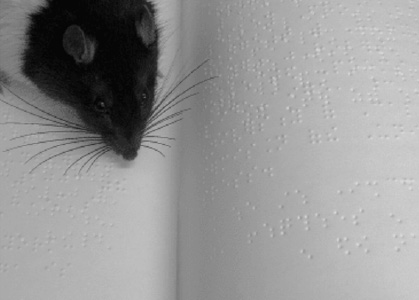 Cognitive Capacities of Rodents
Over the past decade, the increasingly powerful array of experimental approaches such as optogenetics and two-photon imaging has become available in non-primate models, particularly in rodents, and in turn, has spurred a renewed interest for the use of rodents in neuroscience research. Thus, it becomes progressively crucial to know the cognitive capacities of rodents (particularly laboratory rats and mice) for better use of rodents in systems neuroscience research.
We have small behavioural projects to identify the extents and boundaries of rodent’s cognitive capacities (such as transitive inference, pattern recognition and numerical cognition) and their neuronal substrates. These projects are suitable for honours, masters and PhD students.
-
The role of thalamus in the spatiotemporal dynamics of population activity in the somatosensory cortex
This project aims to identify the role of thalamic input in the spatiotemporal dynamics of population activity in the somatosensory cortex. The project employs new extracellular array electrophysiology technologies using Neuropixels probes and ECoG grid arrays in rodent model in vivo. A part of this project is in collaboration with Prof. Vassanelli (Neurochip lab, Padova University,Italy). A postdoctoral fellowship and PhD scholarship are available for this project.
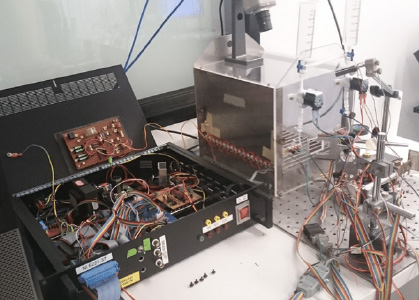 Automated behavioural apparatus to study rodents
The aim of this multidisciplinary project is to develop techniques and solutions for cost-efficient, automated behavioural study in rodents. Systems and cognitive neuroscience employ a range of sensorimotor decision-making behavioural tasks to understand the underlying computations and neuronal mechanisms of information processing in the mammalian brain. Training animals to perform such tasks is usually manual and time-consuming. Thus, the need for an autonomous apparatus for automated training and testing the animals is fundamental to increase efficiency and decrease human error. This project includes implementing methods of detection and monitoring different behavioural measures such as head position, ultrasonic vocalisations, forepaw and digit gesture and movement tracking and whisker tracking during behavioural tasks. We have scholarships available for this project. Basic knowledge of machine learning, programming and electronics is recommended.
-
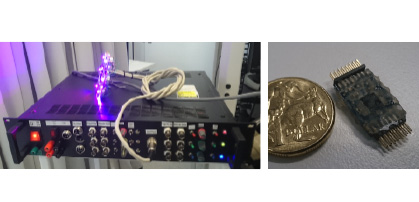 New cost-efficient techniques for wide-field observation and photo-stimulation of cortical circuits
We have a range of cool technical projects with significant applications in stimulation and observation of neuronal populations with high special and temporal precision. To learn more r to contribute, contact the lab head, Dr Mehdi Adibi.
-
Please visit Supervisor Connect to explore the projects currently available in our Lab.