Adibi Laboratory (Neurodigit)
From neurons to networks: principles of tactile perception
From neurons to networks: principles of tactile perception
The Adibi Laboratory (Neurodigit Lab) investigates the neural computations and neuronal substrates underlying sensory processing and perception, with a primary focus on the sense of touch (tactile system). Our research aims to understand how sensory signals are encoded, transformed, and accumulated across neural circuits to support perception and perceptual decision-making.
We're part of the Monash Biomedicine Discovery Institute, and a member of the Neuroscience Program within the Department of Physiology. We are also embedded within the broader Psychology research environment at the Turner Institute for Brain and Mental Health, and work closely with Professor Mark Bellgrove's Group.
My global research connections, partners and funding can be viewed on my Monash Research Profile.
If you are a student interested in doing research in our lab, visit Supervisor Connect.
Click the links below to connect with me on Twitter, ORCID, Google Scholar, LinkedIn and Scopus.





Fundamental brain functions such as perception, memory, behaviour and learning are the result of recruitment of big populations of neurons across a wide range of brain areas. At Neurodigit Lab, we combine behavioural, computational and theoretical approaches with cutting-edge methods of observation and manipulation of neuronal activity to understand the neuronal basis of sensorimotor processing and perception. Our focus is on the sense of touch and tactile perception. The sense of touch is one of the oldest senses in the animal kingdom. Our most intimate experiences are tactile.
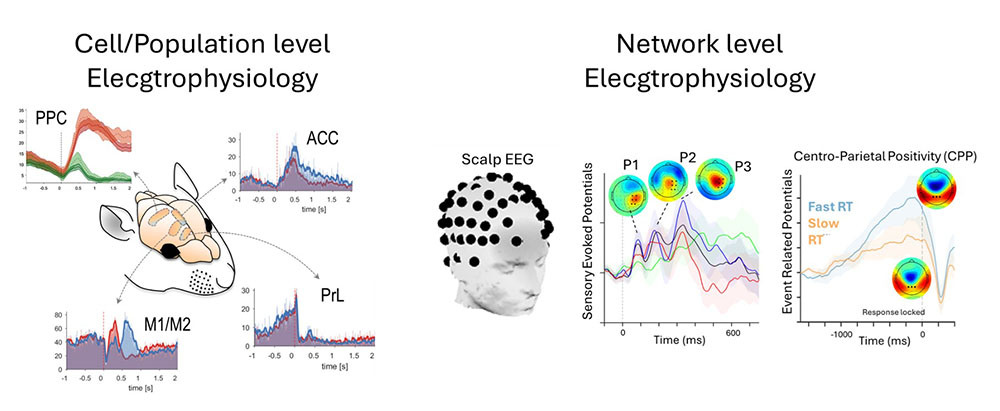
We adopt a multi-scale, multidisciplinary approach, combining methods that span from cellular-resolution recordings and circuit-level analysis to large-scale brain signals. Our experimental and analytical toolkit includes behavioural experiments and psychophysics, genetic and circuit-level manipulations, multi-scale electrophysiology (from extracellular array electrophysiology to non-invasive EEG in humans), and computational and theoretical modelling. This integrative framework allows us to link neural mechanisms across levels of organisation, from single neurons and neural circuits to behaviour and perception.
The model systems of our interest are:
As nocturnal animals, rats and mice extensively use their whisker-mediated touch system to collect information about their surrounding environment.
Fingertips have one of the highest density of touch receptors in the human body. We actively interact with our environment through our fingertips and digits.
Similar to humans, rodents (including rats and mice) are one of the few species among mammalians that exhibit a variety of grip and digit postures for handling food, grooming, climbing and catching prey insects.
We are committed to excellence in research.
We're always interested in collaborating with bright and motivated researchers, clinicians and industry. Whether you want to research, study or partner with us to accelerate our discoveries, find out about the work we do.