Han Group research
Collaborations | Student research projects | Publications
About Dr Meiling Han
Dr Meiling Han is a group leader and an Australian Research Council (ARC) DECRA fellow at Monash Biomedicine Discovery Institute, Monash University. She obtained her PhD in pharmacology and pharmaceutical science from the Monash Institute of Pharmaceutical Science in 2018 and followed by a postdoctoral training at the Department of Microbiology, Monash BDI. Dr Han's research focuses on addressing the urgent issue of antimicrobial resistance, which poses a significant threat to the global public health. Currently, she leads an independent research team dedicated to unravelling the mechanisms by which bacteria adapt to confer antibiotic resistance, with the goal of identifying new drug targets for the development of much-needed novel antimicrobial therapeutics.
Dr Han’s research has yielded significant achievements, as evidenced by over 60 peer-reviewed publications in prestigious journals such as Nature Communication, Nature Microbiology, Cell Reports and Advanced Science. She has also secured numerous research grants, including the ARC DECRA Fellowship, ARC Discovery Project, NHMRC Ideas Grants and the NHMRC e-ASIA Joint Research Program, totalling over $2 million.
Our research
Current projects
- Deciphering the dynamic bacterial membrane remodelling and the interaction with membrane-targeting peptides
- Targeting bacterial metabolic pathways and lipid biogenesis to combat antimicrobial resistance
- Elucidating the mechanisms of antibiotic activity and resistance through systems pharmacology
- Unravelling the complex metabolic interplay between bacteria and host microenvironment in response to last-line antibiotics
Visit Dr Han’s Monash research profile to see a full listing of current projects.
Research activities
1. Deciphering the dynamic bacterial membrane remodelling and the interaction with membrane-targeting peptides
The cell envelope of Gram-negative bacteria plays a crucial role in protecting the cell against noxious antimicrobials and host innate immune defences. Integral to this functionality is the presence of the lipid A moiety of lipopolysaccharide (LPS) in the outer membrane (OM) which densely pack the outer layer and form a critical permeability barrier. Because LPS is a major component of the Gram-negative cell surface, it is an important target for host recognition of Gram-negative infection. Worryingly, bacteria may alter their lipid A molecules with chemical moieties to evade immune recognition and survive within a host. Notably, recent studies have shown that some bacteria including Acinetobacter baumannii are able to survive without LPS, potentially leaving the host immune system unfunctional. This unique phenotype is selected when bacteria are exposed to high concentrations of antimicrobial peptides although the mechanism involved has remained largely unknown. Our present study discovered a unique scenario of polymyxin dependence (i.e., nonculturable on agar without polymyxins) in A. baumannii. Our correlative multi-omics analyses show a significantly remodelled cell envelope and remarkably abundant phosphatidylglycerol in the outer membrane. Molecular dynamics simulations reveal that polymyxins bind to the phosphatidylglycerol-rich OM and strengthen the membrane integrity.
Access to publication: https://doi.org/10.1002/advs.202000704
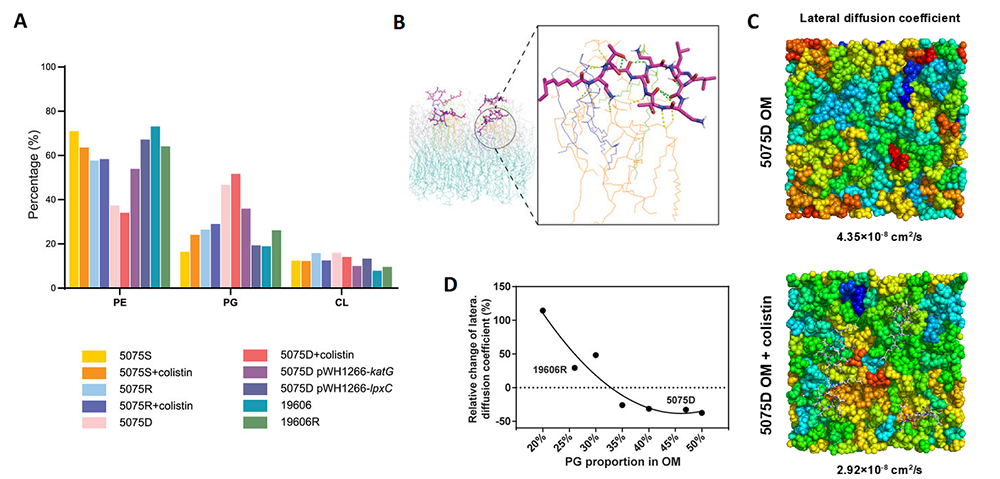
Fig 1. LPS loss induced polymyxin dependence was associated with OM lipid remodeling
2. Targeting bacterial metabolic pathways and lipid biogenesis to combat antimicrobial resistance
Multidrug-resistant Acinetobacter baumannii is a top-priority ‘Critical’ pathogen identified by the World Health Organization, and polymyxins are often the only effective antibiotics available. Worryingly, highly polymyxin-resistant A. baumannii displaying dependence to polymyxins has emerged in the clinic, leading to diagnosis and treatment failures in patients. Here, we report that arginine metabolism is essential to polymyxin-dependent A. baumannii. Specifically, the arginine degradation pathway was significantly altered in polymyxin-dependent strains compared to wild-type strains, with critical metabolites (e.g., L-arginine and L-glutamate) severely depleted and expression of the astABCDE operon significantly increased. Supplementation of arginine increased bacterial metabolic activity and suppressed polymyxin dependence. Deletion of astA, the first gene in the arginine degradation pathway, decreased the proportion of phosphatidylglycerol and increased the proportion of phosphatidylethanolamine in the outer membrane, thereby decreasing the interaction with polymyxins. Overall, this study elucidates the molecular mechanism by which arginine metabolism impacts polymyxin dependence in A. baumannii. Importantly, our findings underscore the key role of arginine metabolism in improving the diagnosis and successful treatment of life-threatening infections caused by ‘undetectable’ polymyxin-dependent A. baumannii.
Access to publication: https://doi.org/10.1016/j.celrep.2024.114410
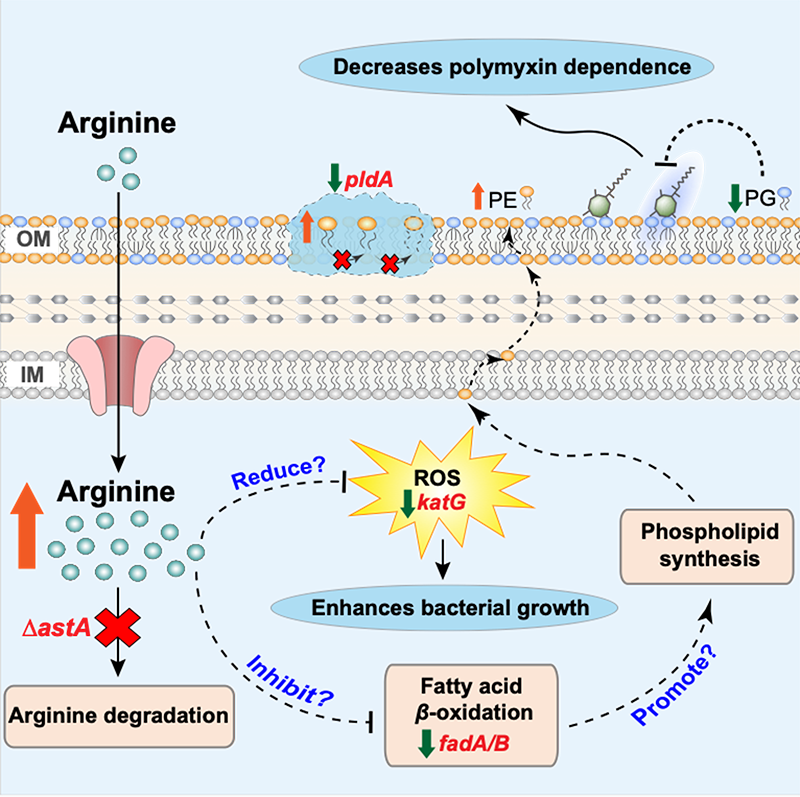
Fig 2. Arginine catabolism plays a crucial role in high-level polymyxin-dependent resistance
3. Elucidating the mechanisms of antibiotic activity and resistance through systems pharmacology
The global threat from antimicrobial resistance (AMR) was highlighted by the World Health Organization in its first-ever priority pathogen list of antibiotic-resistant bacteria. Indeed, AMR will cause an estimated 10 million deaths per year with a cumulative U$100 trillion economic impact by 2050, implying an urgent medical need for novel therapeutical options. Without new antibiotics, the old-class polymyxins including colistin and polymyxin B were reconsidered as a last-line therapy against multi-drug resistant (MDR) Gram-negative pathogens. Polymyxins target the lipid A component of lipopolysaccharide (LPS) and destabilise the Gram-negative outer membrane, following by the rupture and leakage of cytoplasmic contents; however, the precise mechanism of polymyxin killing remains unknown. Resistance to polymyxins is predominantly associated with the covalent modifications of lipid A with positively charged moieties, such as phosphoethanolamine (PEtN) and/or 4-amino-4-deoxy-L-arabinose (L-Ara4N), where are mediated by the respective transferases, EptA and ArnT. Notably, the recent emergence of plasmid-borne mcr-1 gene indicates that polymyxin resistance may readily spread. Therefore, it is crucial to understand the exact mechanism of polymyxin resistance in order to combat the growing threat of polymyxin-resistant ‘superbugs’. This research project integrates molecular biology, quantitative metabolomics and lipidomics (incl, stable isotope labelling), and metabolic modelling to study the metabolic pathways and lipid biogenesis responsible for polymyxin resistance, and how essential metabolites and lipids potentiate polymyxin killing against MDR bacterial isolates.
Access to publication: https://doi.org/10.1128/msystems.00149-18
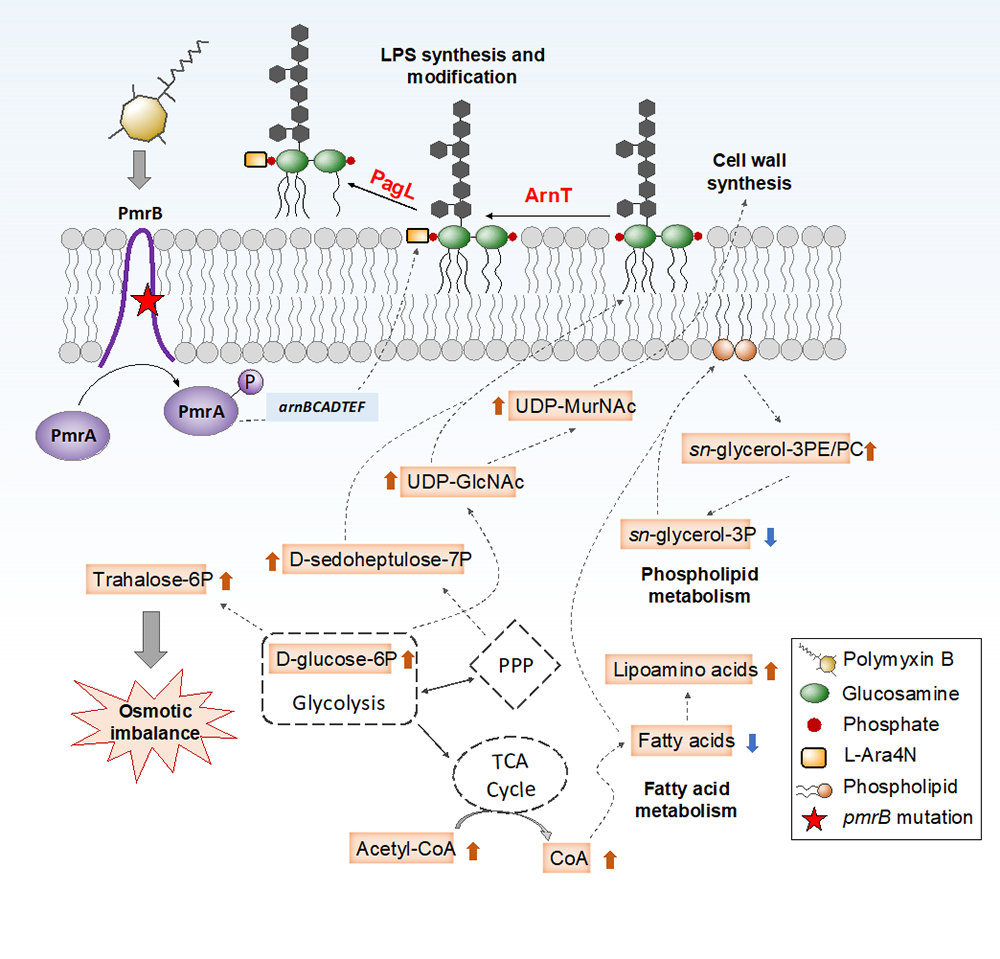
Fig 3. Metabolic and transcriptomic responses of the polymyxin-resistant P. aeruginosa strain to polymyxins
4. Unravelling the complex metabolic interplay between bacteria and host microenvironment in response to last-line antibiotics
Pseudomonas aeruginosa is a prominent opportunistic pathogen that can cause chronic lung infections in cystic fibrosis patients, as well as serious acute infections in immunocompromised and injured individuals. However, due to its highly intrinsic and adaptive resistance to a wide range of antibiotics, infections caused by this organism are often very difficult to treat. For this reason, the use of polymyxins (i.e., polymyxin B and colistin) has resurged as a last-line therapeutic option over the last decade. It is known that bacterial response towards polymyxin treatment is sensitive to the surrounding environment; however, how the host immune microenvironment affects the response of P. aeruginosa to polymyxins remains largely unknown. In this project, we employ our in vitro host-pathogen-antibiotic (HPA) tripartite model which was well established in our laboratory for another Gram-negative opportunistic pathogen Acinetobacter baumannii to examine the complex molecular interplay from both bacteria and immune cells perspectives, mimicking the physiological infection-treatment condition. This project employs cutting-edge techniques, including quantitative systems pharmacology, stable isotope labelling and MALDI-MS imaging, etc.
Access to publication: https://doi.org/10.1371/journal.ppat.1010308
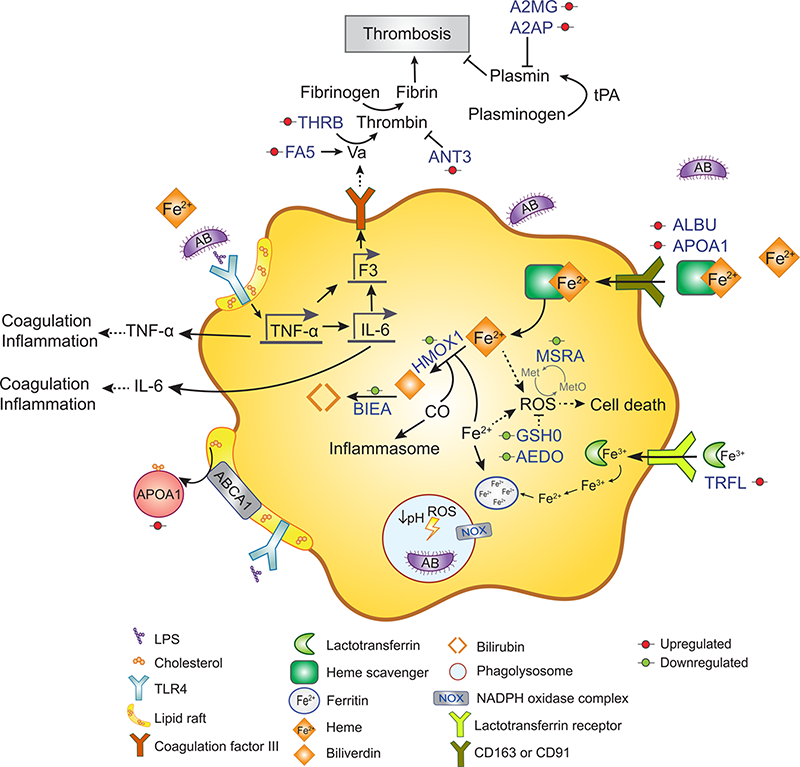
Fig 4. A. baumannii induces the activation of coagulation cascade in infected THP-1-dMs
Techniques/expertise
- Membrane lipidomics to investigate bacterial membrane lipids
- Quantitative metabolomics to investigate bacterial metabolic responses to antimicrobial peptides
- Metabolic network analysis using stable isotope labeling and metabolic fluxomics
- MALDI-MS Imaging to study host-pathogen-drug tripartite interaction
- Biophysical and computational approaches (neutron reflectometry, AFM and molecular dynamic simulations) to study the interaction between antimicrobial peptides and bacterial membranes
Collaborations
We collaborate with many scientists and research organisations around the world. Some of our more significant national and international collaborators are listed below. Click on the map to see the details for each of these collaborators (dive into specific publications and outputs by clicking on the dots).
- Prof Jian Li, BDI, Monash University
- Prof Darren Creek, MIPS, Monash University
- Prof Tony Velkov, BDI, Monash University
- Prof Trevor Lithgow, BDI, Monash University
- Prof John Boyce, BDI, Monash University
- Dr Yue Qu, BDI, Monash University
- A/Prof Hsin-Hui Shen, Department of Materials Science and Engineering, Monash University
- Dr David Rudd, MIPS, Monash University
- Dr Christopher Barlow, BDI, Monash University
- Prof Yan Zhu, Tianjin Institute of Industrial Biotechnology, Chinese Academy of Science, China
- A/Prof Xukai Jiang, Shandong University, China
- Prof Yi Li, Shanghai Institute of Materia Medica, Chinese Academy of Science, China
- Prof Jing Zhang, Fudan University, China
- Prof Xiaohui Zhao, Zhejiang University, China
- Prof Hua Zhang, Jinan University, China
- Prof Michael Barrett, Glasgow University, UK
- Prof Jeremy Lakey, Newcastle University, UK
- Dr Henrik Strahl von Schulten, Newcastle University, UK
- Dr Chien-Yi Chang, Newcastle University, UK
- Dr Christopher Nile, Newcastle University, UK
- Dr Anton Le Brun, Australian Nuclear Science and Technology Organisation
- Prof Samuel Moskowitz, Harvard Medical School, US
Student research projects
The Han Group offers a variety of Honours, Masters and PhD projects for students interested in joining our group. There are also a number of short term research opportunities available.
Please visit Supervisor Connect to explore the projects currently available in our Group.