Harrison and Walton Lab research
Collaborations | Student research projects | Publications
About Professor Craig Harrison
After completing his PhD at the University of New South Wales in 1999, Professor Harrison joined Prince Henry’s Institute in Melbourne. His postdoctoral training was at the Salk Institute for Biological Sciences (La Jolla, California) in the laboratory of Professor Wylie Vale as a NHMRC CJ Martin Training Fellow. On returning to Australia, he established the Growth Factor Signalling Laboratory at Prince Henry’s Institute (later the Hudson Institute). In 2016, Dr Harrison moved his lab to the Department of Physiology, Monash University.
Professor Harrison’s research focuses on the mechanisms underlying the synthesis and activation of TGF-β proteins, and the roles these growth factors play in skeletal muscle and the female reproductive system.
About Dr Kelly Walton
Dr Walton commenced her post-doctoral research career in TGFβ biology in 2008, following the award of her PhD by Swinburne University. In her initial studies at Prince Henry’s Institute (2008-2016), Dr Walton discovered the regulatory mechanisms underpinning TGFβ ligand biosynthesis. These studies enabled the generation of specific antagonists and agonists for TGFβ target proteins. Significantly, Dr Walton's team has now proved that these approaches can effectively block TGFβ-induced pathologies in mice. In 2016, Dr Walton moved to Monash University where she now co-heads the Growth Factor Therapeutics Laboratory (alongside Professor Craig Harrison). Dr Walton has two patents covering her TGFβ based therapies, one at international stage, and currently manages a research project funded by Paranta Biosciences.
Since her university graduation in 2008, Dr Walton has published 39 scientific papers, and successfully attained research funding from the NHMRC, CASS Foundation, Victorian Cancer Agency, Rebecca Cooper Foundation, and Endocrine Society of Australia to support her program. In the last five years, Dr Walton’s contributions to the Endocrinology field have been commended in three News & Views feature articles.
Dr Walton strives to support junior scientists, and has mentored many university graduates over the past ten years. Notably, nine out ten of Dr Walton’s honours graduates have been awarded H1 honours. Dr Walton has supervised three PhD students to completion.
Our research
Current projects
1. Defining the physiology and therapeutic potential of inhibin
Every ageing woman faces potentially debilitating physical symptoms following the cessation of ovarian function at menopause. Crucially, many of these symptoms, including bone, cardiovascular and metabolic disease, persist for decades. Although oestrogen is an effective therapy for menopausal complications, its long-term use is contraindicated in a growing number of women. Thus, there is a need to develop new therapies to alleviate menopausal symptoms, particularly those that persist for more than a third of a woman’s life. To this end, our research has focused on the ovarian hormones, inhibin A and inhibin B, which, like oestrogen, decline precipitously at menopause. Using a unique model of inhibin insufficiency, we are setting out to prove that decreased circulating inhibin levels disrupt homeostasis in both reproductive and non-reproductive tissues. Additionally, we hope to demonstrate that our patented inhibin replacement therapy can effectively treat female reproductive disorders, and also postmenopausal conditions, such as osteoporosis and metabolic disease.
 2. Targeting activin to counter life-threatening cancer cachexia
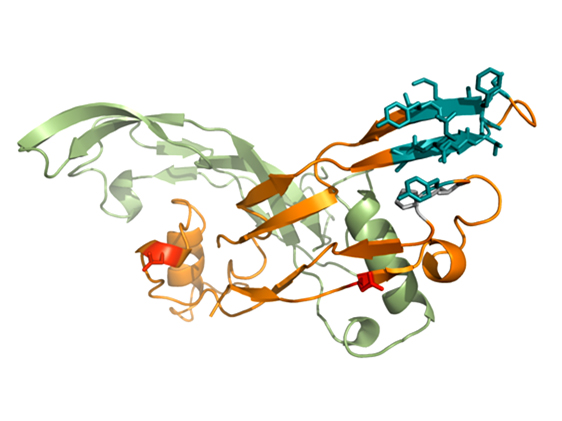
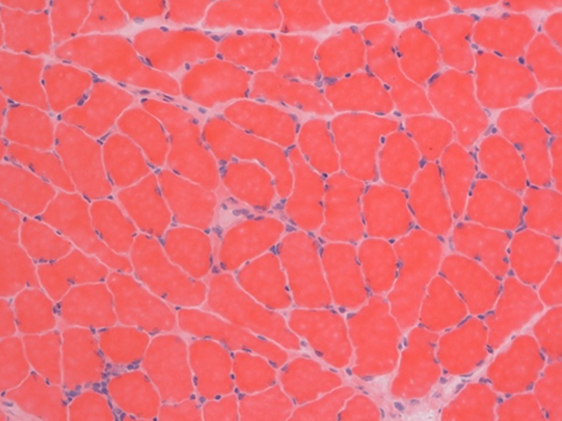
Cancer cachexia is a state of pronounced weight loss, frailty and fatigue, characterised by loss of striated muscle and fat mass, insulin resistance and anaemia. It is a syndrome caused by abnormal metabolism and catabolism, ostensibly induced by tumour- and host-derived factors. Up to 80% of patients with advanced cancers exhibit cachectic symptoms and, remarkably, 25% of cancer-related mortalities (2 million people globally in 2012) derive from cachexia rather than direct tumour burden. Despite this, treatment options for cachexia are lacking and patients generally receive little more than palliative care. Thus, there is a pressing need to identify the mediators of cancer cachexia and develop therapies to treat this insidious condition. In collaboration with Associate Professor Paul Gregorevic (University of Melbourne), we have developed a world-first platform to identify the causes of cachexia in a tumour-free mouse model. Our initial studies have identified activin A and activin B as central mediators of the complex catabolic defects of cachexia. To support these studies, we have developed specific activin inhibitors, which can attenuate muscle wasting in mouse models of cancer-cachexia.
3. Therapeutic potential of TGF-β proteins for the treatment of female infertility
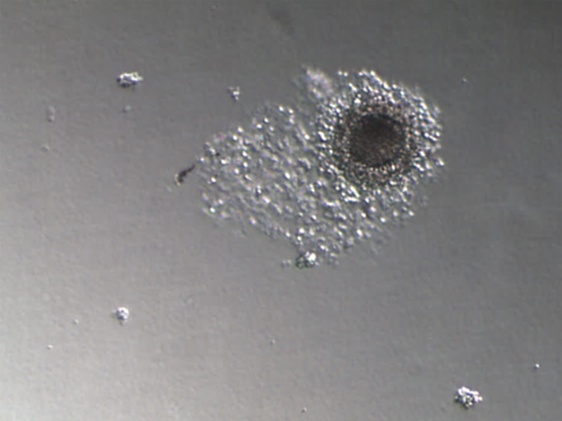
The oocyte-secreted factors, bone morphogenetic protein 15 (BMP15) and growth differentiation factor 9 (GDF9), are essential for the acquisition of oocyte developmental competence during folliculogenesis. As such, these growth factors may provide both the means to predict and promote oocyte quality. Together with Professor Robert Gilchrist (UNSW), we have helped pioneer the BMP15 and GDF9 field for over a decade and are poised to exploit their utility as biomarkers of oocyte quality. Furthermore, we recently established that individual subunits of BMP15 and GDF9 form a heterodimer with dramatically (>1000-fold) enhanced activity towards granulosa/cumulus cells, which surround the developing oocyte. We are one of only two labs in the world to have produced this new molecule, which we have called cumulin.Although the physiology of cumulin requires further study, we have already demonstrated its remarkable therapeutic potential to increase porcine and human oocyte quality and embryo yield from IVM.
Visit Professor Craig Harrison's and Dr Kelly Walton's Monash research profiles to see a full listing of current projects.
Techniques/expertise
DNA and Protein engineering
Molecular Biology
TGF-β ligand assaysrotein production
Tissue Culture
Gene expression analysis by Real-Time PCR
Protein production
Protein purification and characterisation
In vitro bioassays
Genetically modified mice
Adeno-associated viral delivery
Collaborations
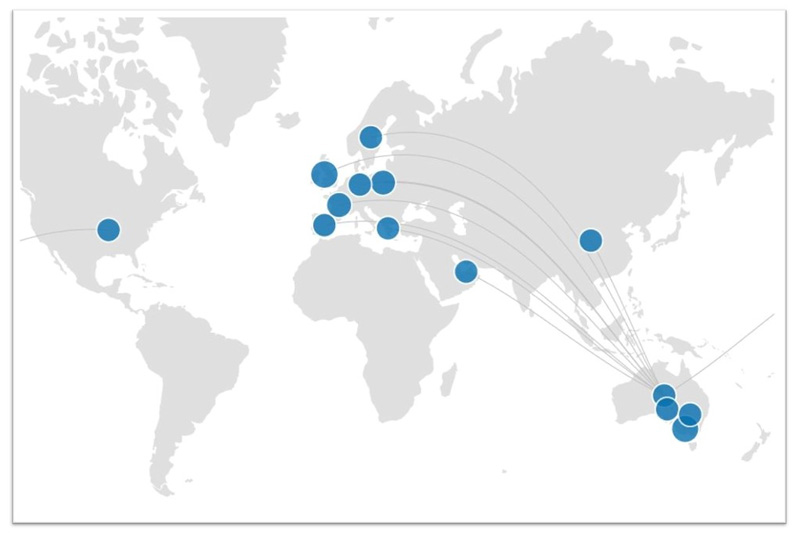
We collaborate with many scientists and research organisations around the world. Some of our more significant national and international collaborators are listed below. Click on the Professor Craig Harrison map and the Dr Kelly Walton map to see the details for each of these collaborators (dive into specific publications and outputs by clicking on the dots).
Dr Karla Hutt and Dr Amy Winship
Student research projects
The Harrison-Walton Lab offers a variety of Honours, Masters and PhD projects for students interested in joining our group. There are also a number of short term research opportunities available. Please visit Professor Craig Harrison’s and Dr Kelly Walton’s Supervisor Connect entries to explore the projects currently available in our Lab.