Mitchell Lab research
Collaborations | Student research projects | Publications
About Professor Christina Mitchell AO
Professor Christina Mitchell is currently Dean of the Faculty of Medicine, Nursing & Health Sciences, Monash University. She is a physician scientist (MB. BS., FRACP, FRCPA, PhD, DM Sc.). Professor Mitchell’s research delivers impact in discovery science, together with her leadership in building research capacity and excellence at Monash University. Formerly Head of the Department of Biochemistry and Molecular Biology (1999-2006) and Head of the School of Biomedical Sciences (2006-2011), and the first woman appointed Dean of Medicine at an Australian GO8 university (2011- ongoing). She was also instrumental in developing one of Australia’s leading bioscience precincts, the Monash Biomedicine Discovery Institute with 24 world-class research infrastructure platforms.
Professor Mitchell leads one of the foremost phosphoinositide research groups worldwide. She was instrumental in pioneering the phosphoinositide phosphatase field, discovering and characterising many enzymes that control phosphoinositide signalling. This field influences all aspects of cell biology, and plays a prominent role in human development and the prevention of serious human disease. This has resulted in a research area that now stretches beyond 185,000 publications and Professor Mitchell has contributed more than 170 publications. She has played a major role in training the next generation of scientists, directly supervising more than 40 PhD students to completion.
Her awards include:
- Election to the Australian Academy of Science (2025)
- Office of the Order of Australia for distinguished service to medicine in the field of haematology, to medical education and research, and to academic leadership (2019).
- Wesfarmer’s Harry Perkins Oration and Medal (2017).
- Victorian Honor Roll of Women (2016).
- Doctor of Medicine Honoris Causa, University of Melbourne (2016).
- Lemberg medal (ASBMB) for excellence in Biochemistry (2015).
- Fellow, Australian Academy Health & Medical Sciences (2015).
- Carl De Gruchy Medal, St Vincent’s (2015.)
- Sir John Monash Distinguished Professorship at Monash University (2010, 2022).
Our research
Research activities
Visit Professor Mitchell's Monash research profile to see a full listing of current projects.
Cancer
Phosphoinositide signalling in estrogen receptor positive (ER+) breast cancer.
Estrogen receptor positive (ER+) breast cancers account for ~70% of all breast cancer cases and over 50% of deaths from the disease. While relapse rarely occurs after 5 years for other cancers, the risk of late relapse >5 years after diagnosis increases for ER+ breast cancers and presents a significant clinical challenge due to the lack of effective therapies. The PI3K signalling pathway is frequently hyperactivated in ER+ breast cancer. Our research has identified roles for critical regulators of this pathway in promoting tumour growth and progression. Our vision is to dissect phosphoinositide signalling to identify novel therapeutic targets for ER+ breast cancer.
1. Dissecting how phosphoinositide signalling contributes to ER+ breast cancer progression and therapy resistance.
Our recent discoveries revealed regulators of PI3K signalling activate crosstalk with other oncogenic pathways to promote ER+ breast cancer growth and metastasis. Delineating these major oncogenic signalling pathways is essential for developing targeted combination therapies to improve ER+ breast cancer patient outcomes.
2. Understanding how ER+ breast cancers evade the immune system.
Immunotherapies have reshaped the treatment landscape for some cancers. However, ER+ breast cancers evade the immune system by unknown mechanisms, making immunotherapies ineffective. Understanding how phosphoinositide signalling pathways affect immune surveillance is critical for developing more effective treatment strategies for relapsed ER+ breast cancer.

Figure 1: Deletion of the phosphoinositide-regulatory gene Pipp promotes tumour initiation and PI3K signalling in a mouse model of breast cancer (Ooms et al, Cancer Cell 2015, 28(2):155-69).
Muscle Disease and Metabolism
Skeletal muscle is the largest tissue by mass in the human body. It facilitates mobility, breathing through the actions of the diaphragm, supports the skeleton and regulates exercise capacity and whole-body metabolism. Despite its fundamental importance, there are few pharmacological interventions to treat diseased muscle. Mutations in genes essential for skeletal muscle health cause severe inherited disorders called muscular dystrophies and myopathies, which can be fatal in the first years of life. Through an integrated approach that combines use of matched iPSC-derived patient cell lines, tissue and mouse models, together with the latest advances in microscopy, muscle and metabolic phenotyping, we aim to discover how the dysregulation of phosphoinositide signalling contributes to disease pathogenesis. Here we focus also on phosphoinositide regulation of autophagy, a process integral to muscle health and metabolic function.

Figure 2: Defective phosphoinositide-dependent lysosome reformation causes skeletal muscle disease (McGrath et al., Journal of Clinical Investigation, 2021, 131(1):e135124).
Embryonic Development
1. Angiogenesis
Angiogenesis is the process of developing new vascular growth, which is essential for the maintenance of a functional vascular system. It is required during embryonic development, and for postnatal inflammatory responses and tissue regeneration. Dysregulation of angiogenesis can lead to pathological neovascularisation, which can promote human disease such as diabetic retinopathy, age-related macular degeneration and cancer.
Regulation of phosphoinositide signals is crucial to maintain effective angiogenesis. Using cell-based and mouse models, our primary objective is to discover the molecular mechanisms that control phosphoinositide signalling in angiogenesis and its impact on embryonic development and human disease.
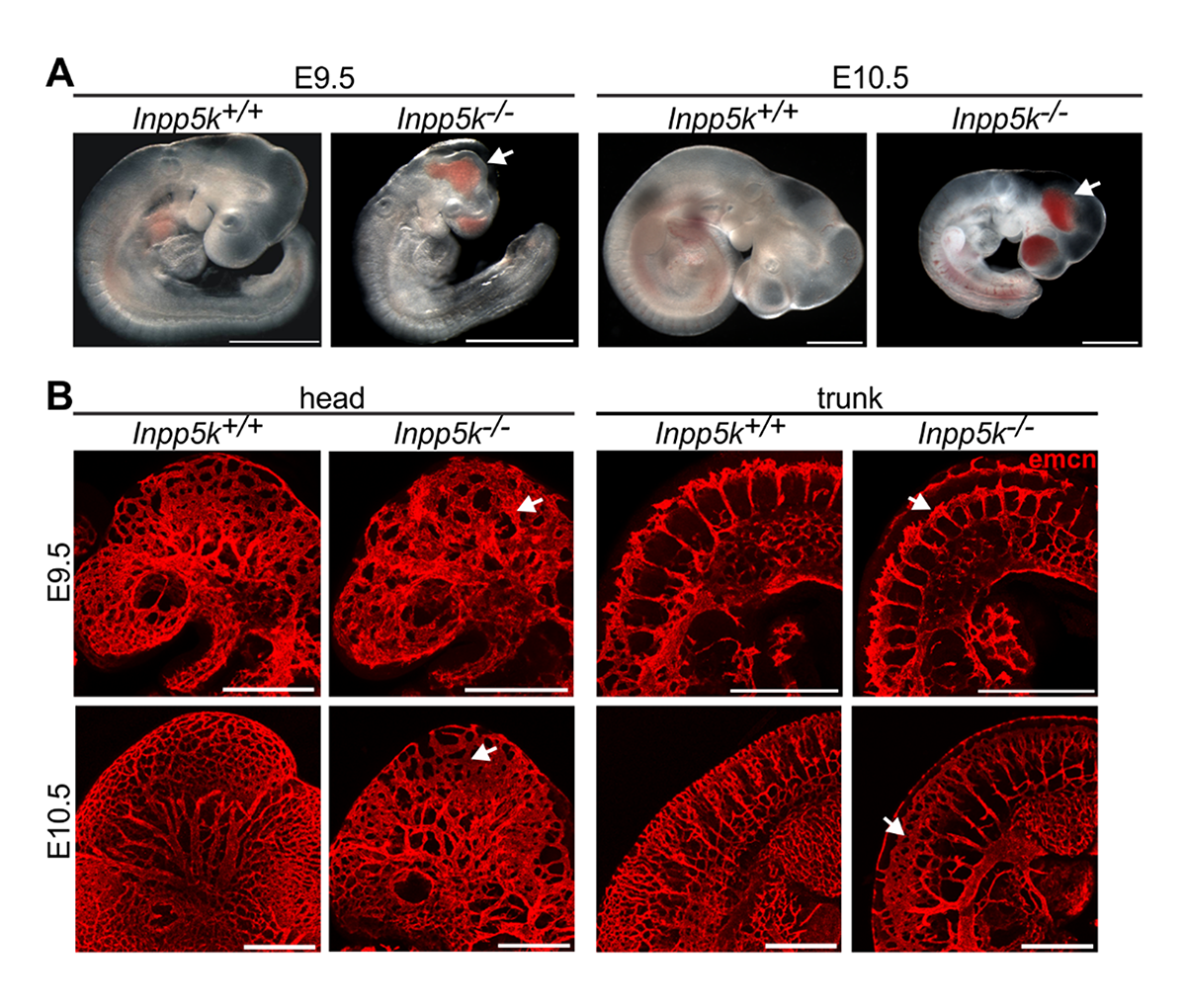
Figure 3: Deletion of the phosphoinositide-regulatory gene Inpp5k results in growth retardation, increased haemorrhage and impaired angiogenesis, and mid-gestation embryonic lethality (Davies et al., Science Advances, 2023, 9(13):eadd6911).
2. Ciliopathies
Cilia are evolutionarily conserved, microtubule-based subcellular organelles that are essential for directing the embryonic development of organs and body structures. More than 10% of the genome encodes cilia-resident receptors and signalling network effectors, revealing that cilia are essential signalling centres which direct numerous cell processes. Disruption of cilia signalling pathways leads to severe developmental diseases known as “Ciliopathies”.
Phosphoinositide regulation within cilia is critical to its function. Our overall objective is to discover how phosphoinositide regulation enables this organelle to coordinate cell signalling during embryonic development using our unique genetic models, integrating super-resolution microscopy and advanced proteomics.
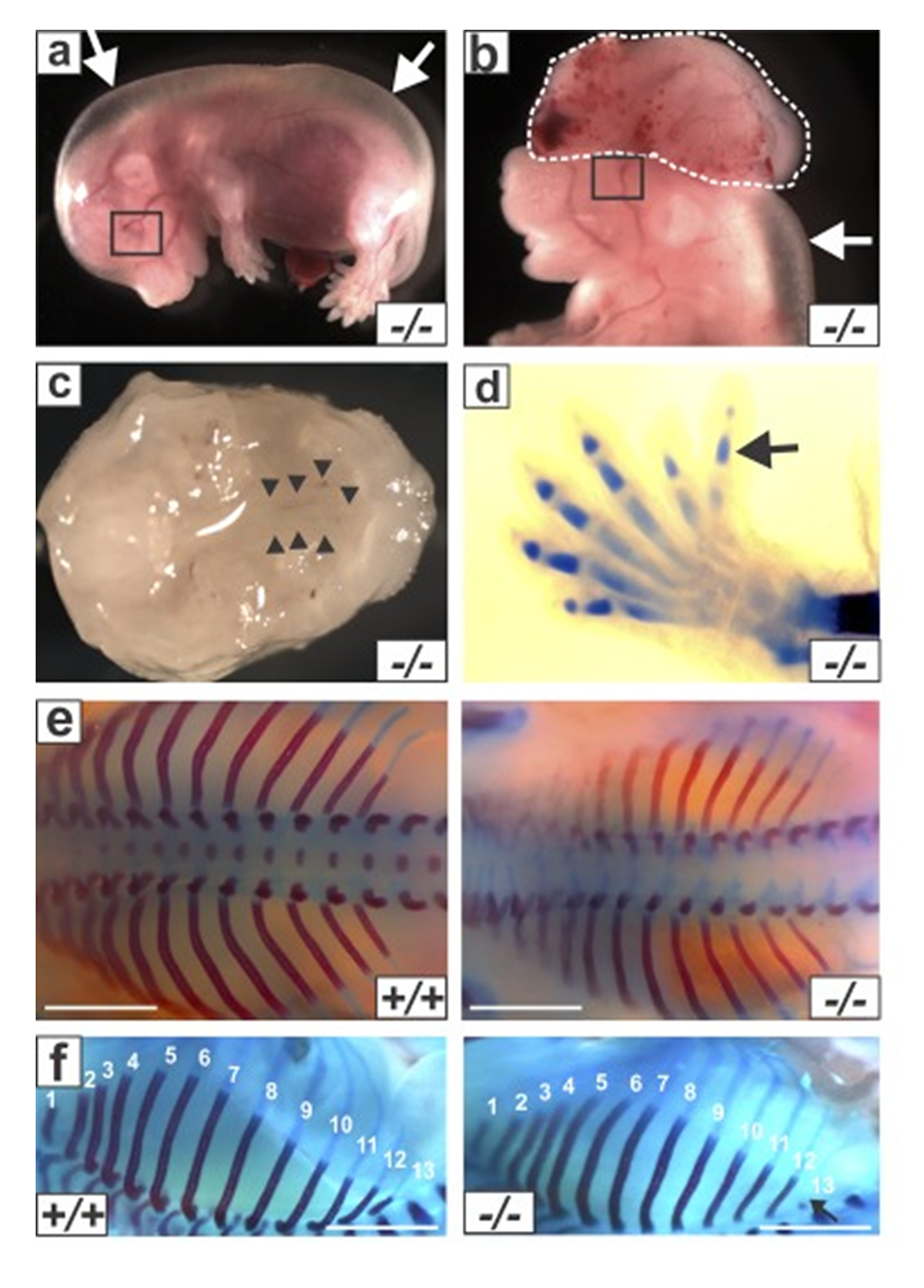
Figure 4: Deletion of the phosphoinositide-regulatory gene Inpp5e in mice results in developmental abnormalities including (a) absence of eye; (b) exencephaly; (c) unfused palatal shelves; (d) polydactyly; (e–f) reduced ossification. (Dyson et al., Journal of Cell Biology, 2017, 216(1):247-263).
Techniques/expertise
- Cell Culture – 2D, 3D including organoids
- Advanced fluorescence microscopy
- Electron Microscopy
- Phosphoinositide detection and biosensors
- CRISPR
- Conditional knockout mice and mutant knock-in disease models
- Cell Signalling
- Muscle and Metabolic Phenotyping
- Proteomics and Transcriptomics

Figure 5: Mitchell Lab Research Overview.
Collaborations
We collaborate with many scientists and research organisations around the world. Click on the map to see the details for each of these collaborators (dive into specific publications and outputs by clicking on the dots).
Student research projects
The Mitchell Lab offers a variety of Honours, Masters and PhD projects for students interested in joining our group. There are also a number of short-term research opportunities available. You are encouraged to contact Professor Christina Mitchell regarding potential projects that align with the presented research themes.