News
Professor Huanting Wang elected as a Fellow of Australian Acaedemy of Technology and Engineering (10/2019)
Professor Huanting Wang is internationally recognised for his achievements in the development of advanced membranes for clean water and sustainable separation technologies. He has been a highly successful leader in building university-industry linkages and translating research discoveries into industry practice. ''I'm very happy to be elected as a Fellow of the Academy,'' said Professor Wang. ''It's a wonderful recognition of my team and collaborators and the research work we've undertaken together. I'd like to particularly thank Monash University and the Faculty of Engineering for their strong support of my research. I'm honoured to be recognised, and looking forward to contributing to the important mission of the Academy.'' Reported by Monash Univeristy and Australian Academy of Technology and Engineering. |  |
|---|
Professor Huanting Wang honoured with prestigious industrial chemistry award (10/2019)
Professor Huanting Wang has been awarded the 2019 R.K Murphy Medal by the Royal Australian Chemical Institute (RACI) at the Chemeca 2019 Awards of Excellence in Sydney. Professor Wang was honoured by the Institute's Industrial Chemistry Division for his outstanding career achievements in chemical engineering, with his nomination agreed upon unanimously by the selection committee. |  |
|---|
Most Accessed Papers on Advanced Functional Materials (09/2015)
Most Accessed 09/2015
http://onlinelibrary.wiley.com/journal/10.1002/(ISSN)1616-3028/homepage/2126_mostaccessed.html
- Hongpo Liu, Tingzhuo Liu, Lei Zhang, Lu Han, Chuanbo Gao, Yadong Yin
Etching-Free Epitaxial Growth of Gold on Silver Nanostructures for High Chemical Stability and Plasmonic Activity[Full Paper]
Adv. Funct. Mater. 2015, vol. 25, p. 5435 - Michael D. Slater, Donghan Kim, Eungje Lee, Christopher S. Johnson
Sodium-Ion Batteries [Feature Article]
Adv. Funct. Mater. 2013, vol. 23, p. 947 - Jing Wei, Yaoxin Hu, Yan Liang, Biao Kong, Jin Zhang, Jingchao Song, George P. Simon, San Ping Jiang, Huanting Wang
Nitrogen-Doped Nanoporous Carbon/Graphene Nano-Sandwiches: Synthesis and Application for Efficient Oxygen Reduction [Full Paper]
Adv. Funct. Mater. 2015, vol. 25, p. 5768 - Giles E. Eperon, Victor M. Burlakov, Pablo Docampo, Alain Goriely, Henry J. Snaith
Morphological Control for High Performance, Solution-Processed Planar Heterojunction Perovskite Solar Cells[Full Paper]
Adv. Funct. Mater. 2014, vol. 24, p. 151 - Xiaoming Li, Muchen Rui, Jizhong Song, Zihan Shen, Haibo Zeng
Carbon and Graphene Quantum Dots for Optoelectronic and Energy Devices: A Review [Feature Article]
Adv. Funct. Mater. 2015, 10.1002/adfm.201501250
Wei et al pubished a paper on Adv Funct Mater (Back cover)
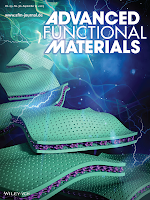
Electrocatalysts: Nitrogen-Doped Nanoporous Carbon/Graphene Nano-Sandwiches: Synthesis and Application for Efficient Oxygen Reduction (Adv. Funct. Mater. 36/2015)
On page 5768, Huanting Wang and co-workers report the synthesis of zeolitic-imidazolate-framework (ZIF)/graphene oxide (GO) sandwich-like composites with ultrasmall ZIF nanocrystals (≈20 nm in size) that fully cover the GO via a homogenous nucleation followed by uniform deposition and confined growth process. The ZIF/GO composites are further converted to N-doped nanoporous carbon/graphene nano-sandwiches, which act as non-precious metal catalysts with excellent performance for electrochemical oxygen reduction reaction.
https://onlinelibrary.wiley.com/doi/abs/10.1002/adfm.201570242
Wei et al published a paper on J Mater Chem A
A graphene-directed assembly route to hierarchically porous Co–Nx/C catalysts for high-performance oxygen reduction
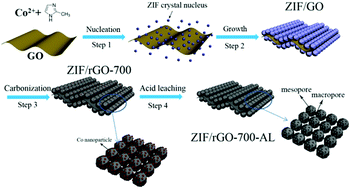
The development of non-precious metal catalysts for efficient oxygen reduction is of significance for many advanced electrochemical devices such as fuel cells and metal–air batteries. Herein, we develop a graphene-directed assembly route to synthesize hierarchically nanoporous Co–N x /C materials with a macro/meso/microporous structure, high specific surface area (i.e. 512 m 2 g −1 ) and excellent conductivity using graphene oxide (GO) supported zeolitic imidazolate framework nanocrystal arrays as a catalyst precursor, followed by the carbonization and acid leaching process. In this route, GO acts as a structure-directing agent to construct ZIF nanocrystal arrays supported on GO nanosheets. During the carbonization process, the resulting reduced graphene oxide functions as a binder and electrical conductor to connect individual ZIF-derived carbon nanoparticles into the macroporous structure and increase the overall conductivity. ZIF nanocrystals themselves are also converted into meso/microporous carbon nanoparticles without using any other template. The hierarchically porous Co–N x /C materials exhibit high ORR catalytic activity, superior stability and good methanol tolerance under both alkaline and acidic conditions.
http://pubs.rsc.org/en/content/articlelanding/2015/ta/c5ta04330a#!divAbstract
Yu et al published a paper on J Mater Chem A
Precisely tailoring ZIF-67 nanostructures from cobalt carbonate hydroxide nanowire arrays: toward high-performance battery-type electrodes
The controllable synthesis of metal–organic frameworks with diverse morphologies is highly desirable for many potential applications, but it still remains a big challenge. In this study, we for the first time report a facile and green route to the synthesis of ZIF-67 at room temperature by transformation of water-insoluble cobalt carbonate hydroxide nanowires in the presence of 2-methylimidazole. When cobalt carbonate hydroxide nanowires were grown onto a Ni foam substrate, four different kinds of ZIF-67 nanocrystal morphologies were synthesized. In particular, a ZIF-67-based nanotube array was used as an example for synthesis of a mesoporous Co 3 O 4 nanotube array, which showed greatly enhanced performance as a battery-type electrode in comparison to the directly converted Co 3 O 4 nanowire array from cobalt carbonate hydroxide. Our study provides a new insight into the preparation of metal–organic frameworks with tunable morphologies; in addition, the as-synthesized ZIF-67-based nanostructures are promising materials for other applications.
http://pubs.rsc.org/en/content/articlelanding/2015/ta/c5ta04509f#!divAbstract

Zhong et al published a paper on J Mater Chem A
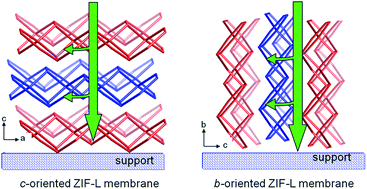
A two-dimensional zeolitic imidazolate framework (ZIF), ZIF-L, with a unique anisotropic pore system makes it an excellent material for investigating ZIF membranes with crystallographically preferred orientation and their effects on gas separation properties. A b-oriented ZIF-Lmembrane was successfully prepared from a randomly oriented seed layer. In contrast, a c-oriented ZIF-L crystal layer was attached to a support through vacuum filtration in the presence of polyethyleneimine. After a short-time secondary growth, the oriented layer grew into a continuous membrane with a high degree of c-out-of-plane orientation. Gas separation studies demonstrated the orientation-dependent separation behavior. In single gas permeation experiments, the c-oriented ZIF-L membrane has higher ideal selectivities of 8.1 for H 2 /N 2 and 24.3 for H 2 /CO 2 compared to the corresponding values of 3.9 and 5.5 for the b-oriented ZIF-Lmembrane. The results of binary gas permeation showed decreased separation factors of the c-oriented membrane, but were still much higher than those of the b-oriented membrane. This work provides new insights into controlling ZIF membrane orientation for achieving desirable gas separation performance.
http://pubs.rsc.org/en/content/articlelanding/2015/ta/c5ta03707g#!divAbstract
Yi et al published a paper on J Mater Chem A
In this study, the electrochemical performance of hollow Zn2GeO4 nanoparticles as an anode material of lithium-ion batteries (LIBs) has for the first time been investigated and compared to other morphology-type Zn2GeO4 materials with solid nanorod structure. Results show that the lithium-storage performance is morphology-dependent and the presence of hollow voids is beneficial to enhance the charge/discharge capacity at different current densities. Specifically, the capacity of hollow Zn2GeO4 nanoparticles is approximately 200 mAh g-1 higher than that of Zn2GeO4 solid nanorods after 60 discharge-charge cycles at a current density of 200 mAh g-1 and such high performance (ca. 1200 mAh g-1) is in the front rank of current anode materials and three times as high as that of commercial graphite-based anode (372 mAh g-1). Moreover, the hollow Zn2GeO4 nanoparticles show better rate capacity and the specific capacity is approximately 300 mAh g-1 higher at a current density of 2000 mAh g-1 in comparison with the Zn2GeO4 nanorods. The hollow voids not only lower the charge transfer resistance by facilitating the lithium-ion diffusion, but also effectively buffer against the local volume changes. Therefore, considering the ease and environmental-friendly synthesis and the high performance (high reversible capacity and good rate capacity), such hollow Zn2GeO4 nanoparticles are a very promising candidate as high-performance anode material for LIBs.
Ezzatollah et al published a paper on Chem Common
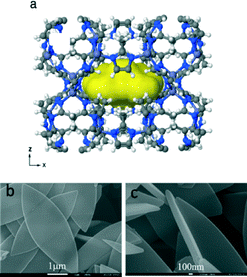
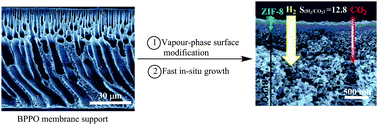
Ultrathin ZIF-8 membranes with a thickness of around 200 nm were prepared by chemical vapour modification of surface chemistry and nanopores of an asymmetric bromomethylated poly(2,6-dimethyl-1,4-phenylene oxide) (BPPO) substrate. The resulting ZIF-8 membranes exhibited exceptional H 2 permeance as high as 2.05 × 10 −6 mol m −2 s −1 Pa −1 with high H 2 /N 2 and H 2 /CO 2 selectivities (9.7 and 12.8, respectively).
A new review paper published by Yao et al
Yao J, He M, Wang H, Strategies for controlling crystal structure and reducing usage of organic ligand and solvents in the synthesis of zeolitic imidazolate frameworks, CrystEngComm, 2015, DOI: 10.1039/C5CE00663E.
Zeolitic imidazolate frameworks (ZIFs) have attracted considerable attention for many potential applications because they have a unique porous structure and excellent thermal and chemical stabilities. In recent years, significant efforts have been made to develop different methods for the controllable synthesis of ZIFs with desirable crystal structure and morphologies, and for decreasing the excessive amounts of organic ligands and solvents used in the synthesis process to reduce the costs and environmental impacts. This paper highlights the strategies recently reported, including the controllable synthesis of ZIFs with desirable morphologies and pore structure using a surfactant and a template in aqueous solution, the synthesis of ZIF particles and nanocrystals in base solution, and the dry gel and mechanochemical syntheses of ZIFs with minimal solvent usage.
Link: http://pubs.rsc.org/en/content/articlelanding/2015/ce/c5ce00663e#!divAbstract