
"Disasters are story-telling time": Queensland’s Indigenous Disaster Resilience Policy Roundtable offers fresh insights into disasters

By Dr Emma McNicol, Research Fellow, National Indigenous Disaster Resilience
Over the next 18 months, Monash University’s National Indigenous Disaster Resilience (NIDR) team will be running an Indigenous Disaster Resilience Policy Roundtable in every Australian state and territory. The team hosted the inaugural South Australia Policy Roundtable on Kaurna Country in Tarndanya-Adelaide in April and were proud to recently host the first Queensland Policy Roundtable on Yuggera and Turrbal Country at QUT in Meanjin-Brisbane.
At this special gathering, Aboriginal and Torres Strait Islander leaders came together with representatives from Queensland’s emergency management and disaster resilience agencies to meet, listen and learn, and to identify opportunities to embed Aboriginal and Torres Strait Islander leadership in emergency management and longer-term recovery and resilience efforts.
Delegates were welcomed to QUT’s leafy city campus, which is in the heart of Meanjin-Brisbane on Yuggera and Turrbal Country. As the most disaster-prone state in Australia, and the state/territory with the second highest population of Aboriginal and Torres Strait Islander people, the event was an important milestone to enhance the resilience of Australian Aboriginal and Torres Strait Islander communities.
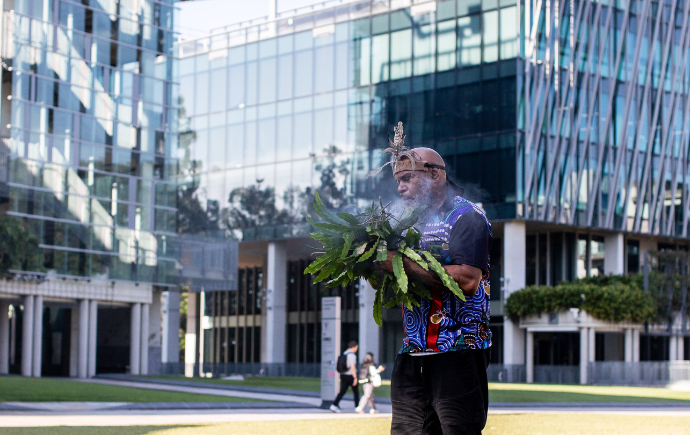
After a cleansing smoking ceremony and Welcome to Country, delegates each set goals for the day. While Indigenous leaders expressed wanting their own communities' lived experiences to be heard, the non-Indigenous stakeholders sahred wanting to learn how to better support Indigenous communities during, before and after disasters. Virtually all delegates shared a common goal to make connections that would and could specifically “make a difference”.
 Delegates reflected on, and collaboratively workshopped, what the term ‘disaster’ means to them, their families and communities. The group examined how and why disasters might look and feel different from an Aboriginal and Torres Strait Islander perspective. There was a general consensus across the room that “disasters are not just natural hazards” and that colonial violence and climate crisis constitute compounding, cascading and complex challenges for community and culture.
To us [mob], a disaster is insecurity and displacement from places. Disasters include the impacts of sorry business, deaths in custody and all broader issues our communities face.
Dr Jennifer Leigh Campbell
Aboriginal delegates framed disasters as a unique time for story-telling, where Elders would share stories of past events, and wider meanings inscribed within natural phenomena. As one Aboriginal leader shared:
Disasters are a time to sit with the candle and kerosene lights and share stories about what happened on previous occasions.
Delegates heard from a range of Aboriginal and Torres Strait Islander speakers reflecting on previous disaster events and how they have self-organised to respond to emergencies.
Ned David from Gur A Baradharaw Kod (GBK) explained how disasters are managed in the Torres Strait and spoke about the immediate impact of climate crisis on their communities:
We see it first-hand. We have been talking about this for years before people started assuming it [climate crisis] is real. We've seen changes in weather patterns. We know that where there used to be houses, it’s now eroded. Some of the beaches, some of our most idyllic spots, are gone.
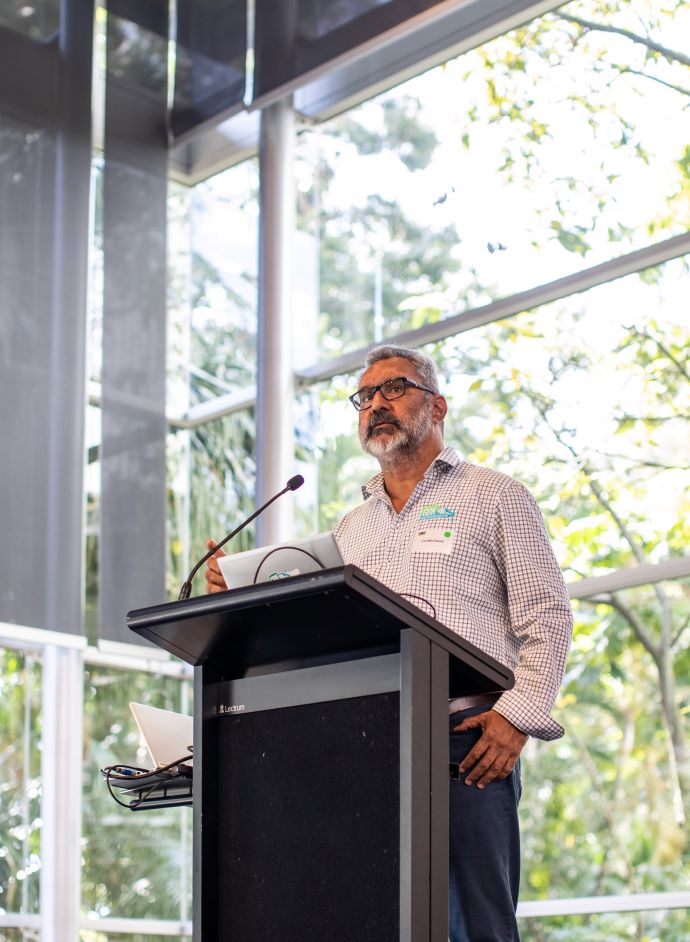
Chris Hippi and Jeremy Hall from Bigambul Native Title Aboriginal Corporation spoke about Bigambul’s innovation and leadership in cultural land management and disaster resilience, sharing, for instance, how Bigambul’s Fire Crews were deployed interstate into northern NSW to provide relief to Aboriginal communities cut-off from flooding.
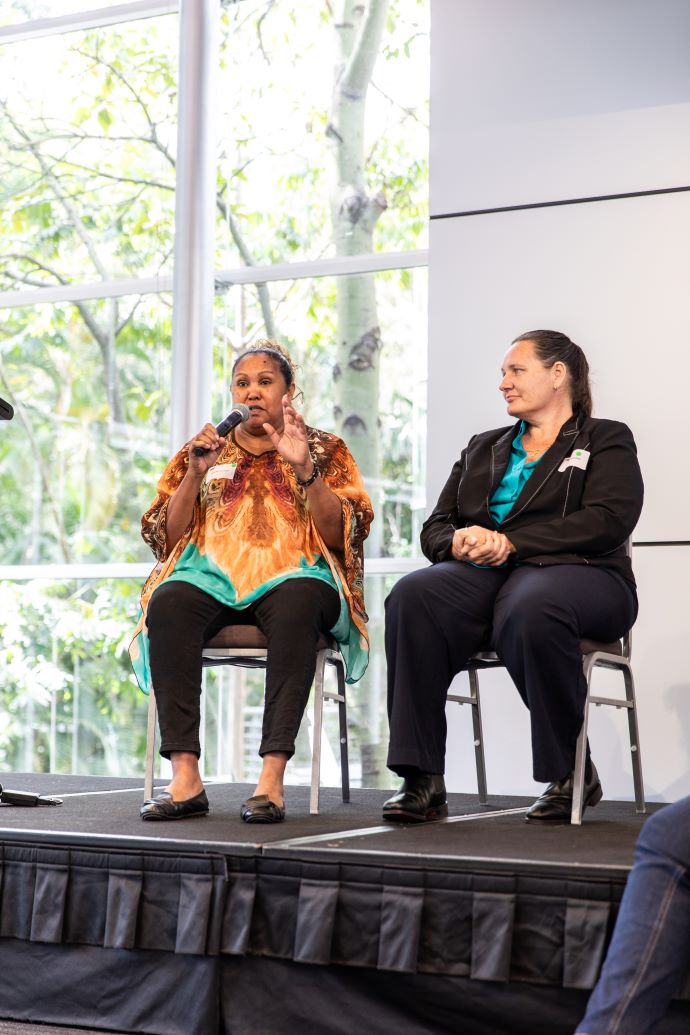
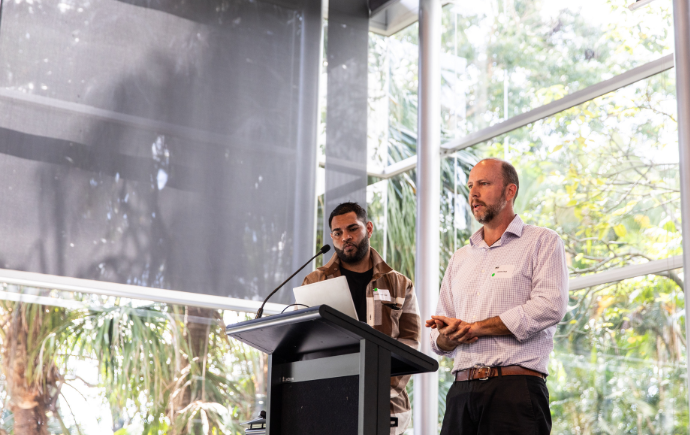 Kiley Hanslow from Wujal Wujal Aboriginal Shire Council and Audrey Deemal from Cape York Partnership also led a panel discussion reflecting on the experience of flooding, evacuation and displacement of Wujal Wujal Aboriginal community:
The recovery effort was about supporting the community. This meant that it wasn’t about our agendas going in, it [was about identifying] what the community needs and how we can achieve that. […] it’s about community and what community needs and how we can support that.
 Delegates then heard from Queensland’s Police Service; Reconstruction Authority; and Department of Treaty, Aboriginal and Torres Strait Islander Partnerships, Communities and the Arts, as they presented on how emergencies and disaster recovery processes are managed in Queensland. Representatives shared how their agencies are responsible for different aspects of disaster management, providing insights into how communities and organisations can exercise self-determination within pre-existing frameworks of emergency response and disaster recovery.
The Policy Roundtable concluded with a networking function where delegates explored opportunities to work together and partner to enhance the resilience of their communities, and support wider efforts to promote resilience throughout Queensland.
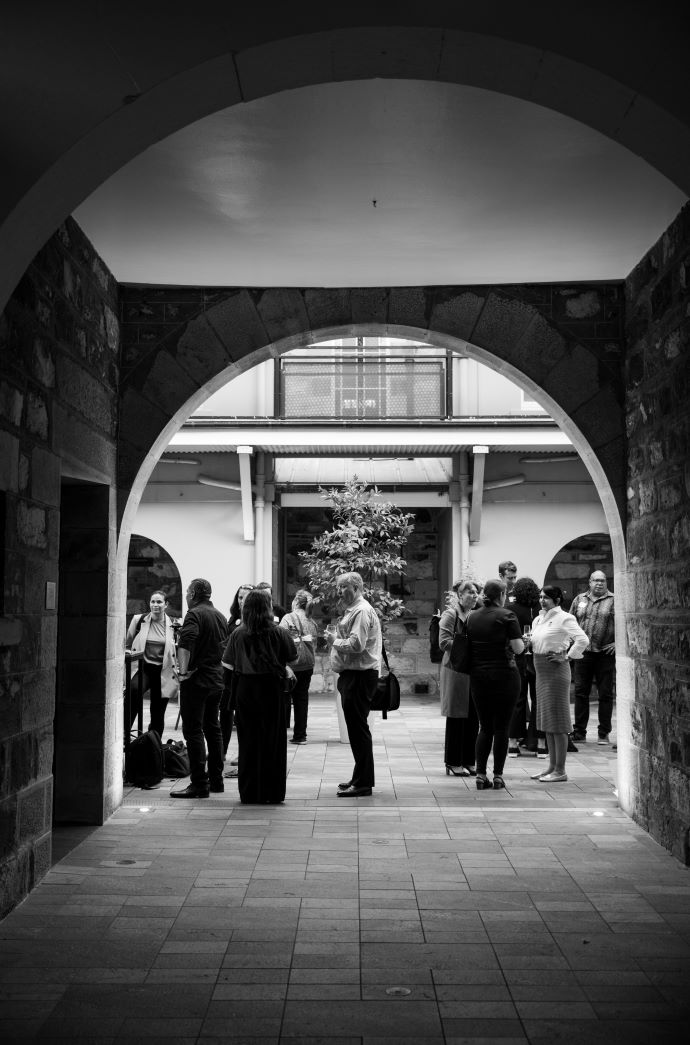 The NIDR team wishes to thank all the speakers, as well as this diverse, generous and interesting ensemble of experts and industry leaders, for attending the event.
NIDR is a research program that is creating an authoritative knowledge base and championing systems change within the Australian emergency management and disaster resilience/recovery sectors. For updates on the NIDR program progress and information on upcoming events, follow NIDR on LinkedIn or subscribe to our monthly newsletter.
Images courtesy of Gabrielle Connole Photography