PhD Projects
PhD Projects
Monash IT is currently offering a number of graduate research projects and scholarship opportunities. Applications from high calibre, eligible candidates are welcome at any time.
PhD opportunities
We have opportunities available for PhD research in the areas of Data Science, Data Mining, Machine Learning and Deep Neural Networks, among others. Our students are supported by a range of scholarships and top-ups and receive travel support during their study.
For more general information, read about the Graduate Research Program and Scholarships.
Learn more about PhD project opportunities How to apply
Our PhD community is socially and professionally active, regularly coming together for lunch-time meetings as well as focussed reading groups and an annual retreat.
Current featured PhD students
 | Connor Cooper Connor's research is focused on efficient and flexible learning of classifiers for categorical data. In particular, he works on novel methods for smoothing of parameter estimates, which is important for problems where the underlying model is complex or the data is sparse. |
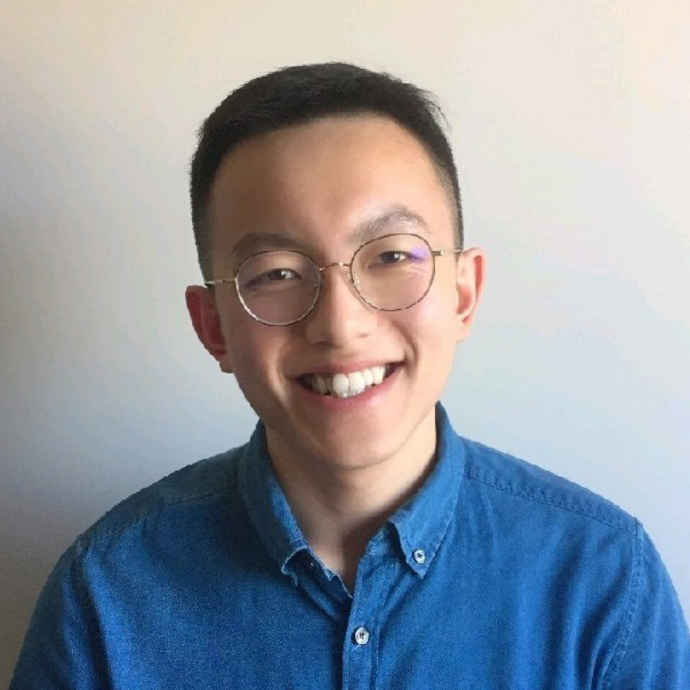
| Huan Koh Huan is working on AI-driven drug discovery. His research focuses on developing AI methods to eliminate costly bottlenecks and accelerate the drug discovery process. His work has been published in Nature Machine Intelligence. |

| Tahsina Hashem Tahsina’s PhD research focuses on generating faithful and salient text from mixed-modal data. Her research work has been published in INLG, ACMDEV, WALCOM, and Computational Geometry Journal. |
 | Vidushani Vidushani's research broadly focuses on Brain Imaging and Predicting Neuropharmacological Effects via EEG. This project leverages statistical and Machine Learning methods to be applied on multi-channel EEG data to characterise underlying brain dynamics of altered states of consciousness induced by drugs including anaesthetic and psychedelic drugs. The overall aim is to enhance our understanding of drug-induced brain states measurable via EEG. |

| Vy Vo Vy's main research interest is in Statistical Machine Learning and Causal Inference. Her current projects focus on applying causality theories to modern AI challenges, which involves investigating how AI models can effectively acquire and utilize causal knowledge from data to enhance reasoning and generation processes. |
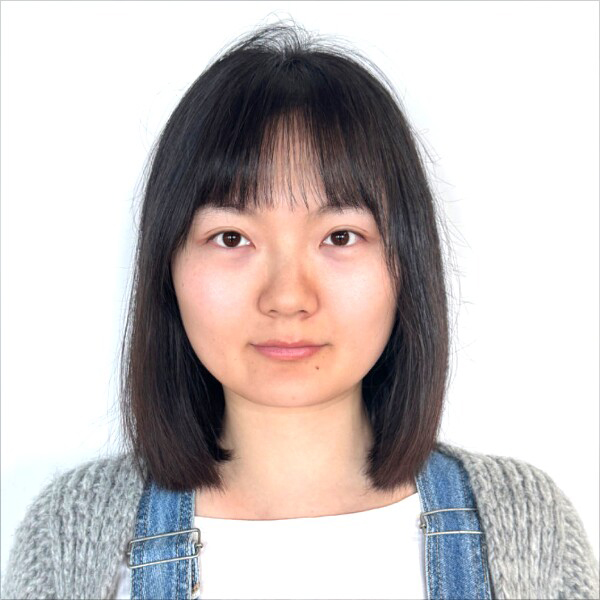
| Xin Zhou Xin focuses on high-dimensional time series forecasting, a crucial tool for predicting future values of interconnected variables across diverse fields. Her research tackles the challenges posed by large-scale data, aiming to improve forecasting accuracy, computational efficiency, and the application to multimodal data. Xin is advancing more robust and scalable forecasting techniques and expanding the possibilities within this field. |
Former PhD students
| Caitlin's research translates state-of-the-art machine learning (ML) techniques into suitable methods for use in real-world studies. Supervised by Prof Wray Buntine and A/Prof Henry Linger, her applied work addresses the need for new ways to mine public opinion via social media analysis. Caitlin's hybrid methodologies integrate topic modelling and qualitative analysis. They have been used for the study of low-carbon energy, the US General election, EU data privacy policies, and measures to combat COVID-19. Additionally, Caitlin's research adopts a critical perspective to identify the contextual elements needed to integrating ML into contacting arrangements for defence platform sustainment. DSTG |
| Maurice Ntahobari Maurice Ntahobari's project focuses on applying machine learning techniques for epileptic seizure prediction. He is mainly looking at the best features in both short and long-time scale using long term human iEEG recordings. He aims in developing an efficient, low computational model that is applicable on implantable/wearable devices. His works are under supervision of Dr. Levin Kuhlmann, Dr Mario Boley and Dr Zhinoos Razavi Hesabi. Maurice has a Masters in Network Centric Computing and bachelor in computer science and systems. |
| William Schmidt Cerebral Palsy typically affects motor control areas of a child's brain but is also associated with cognitive, behavioural and communication disorders. An absence of fidgety movement is highly correlated with Cerebral Palsy. William's project is developing an AI based methodology to examine videos of children, 12 to 14 weeks post birth, and classify them as containing either Normal or Not Normal Fidgety Movements. |
| Yun Zhao Yun Zhao studies computational neuroscience, brain imaging and machine learning under the supervision of Dr Levin Kuhlmann and Dr Mario Boley. He aims to find an efficient mathematical approach to estimate human brain parameters based on clinical data and develop an automatic and universal toolbox for the medical community. Beyond that, he will apply the update rule of neural models to RNN, LSTM studies and try to boost the network training performance. |
 | Bhagya works on hospital readmission risk prediction for patients with chronic disease conditions under the supervision of Prof. Wray Buntine and Dr. Yuan-Fang Li. Her research interests include data mining, machine learning, medical risk prediction and representation learning. |
| Marzie Ghorbani Marzie works on modelling and predicting key properties of next generation Magnesium alloys under the joint supervision of Prof Nick Birbilis (ANU), A/Prof Philip Nakashima (Monash, Faculty of Engineering), and Dr Mario Boley (Monash, FIT, Machine Learning). She is interested in statistical modelling techniques as well as deep learning methods. |