
Projects
Our work. Our impact.
Explore our award-winning research.

Reasoning under Uncertainty with Natural Language
Lead: Dr Yuan-Fang Li
DST Australia (2019-2022)
This project investigates and leverages state-of-the-art methods in artificial intelligence, machine learning and natural language processing toward the automated construction of knowledge graphs for a domain of interest from natural language. Our particular interests include the application of advanced techniques that address the bottleneck of unavailability of annotated data, such as weak and distant supervision, thereby enabling large-scale learning and the facilitation of cross-domain applications.
Exploiting Context in Multilingual Understanding and Generation
Lead: Associate Professor Reza Haffari
Future Fellowship (2020-2024)
Google Faculty Award winner (2018-2019 and 2019-2020)
Amazon Research Award (2019-2020)
eBay Research Award winner (2020-2021)
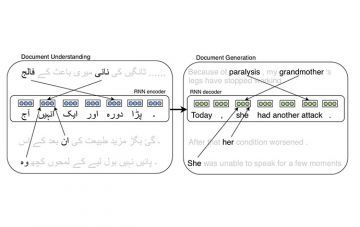
Automatic translation technologies produce incoherent and incorrect outputs in critical areas, such as health, finance and law. This is due to translating sentences independently, with no regard to the global extra-sentential context and rich linguistic structures inherent in the wider document context. This project aims to exploit global linguistic structures, capitalising on recent advances in deep neural networks, to generate coherent and faithful text. An expected outcome is next-generation computational technologies for language understanding and generation. This should enhance document-based language technologies and increase their applications in a range of cultural, industrial, and health settings.

Learning to Learn and Adapt with Less Labels
Defense Advanced Research Projects Agency (DARPA; 2019-2022)
We provide a unified treatment of learning from less labels which is based on learning to learn (L2L) and addresses fundamental shortcomings of previous approaches to this framework. L2L aims to learn inductive biases from a collection of tasks to apply these in learning new tasks more effectively. Current approaches do not allow for fully autonomous agents, which may encounter new problems and tasks ongoing, while operating in a dynamic and unpredictable environment not foreseen by the agents’ designers. The goal of this project is to allow autonomous agents to learn effectively with minimal supervision, using small amounts of labeled data.
Explaining the outcomes of complex computational models
Lead: Professor Ingrid Zukerman
ARC Discovery Project (2019-2022)
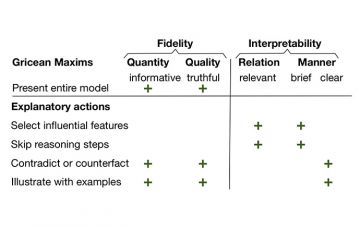
This project aims to develop new algorithms that automatically generate explanations for the results produced by complex computational models. In recent times, these models have become increasingly accurate, and hence pervasive. However, the reasoning of Deep Neural Networks, Bayesian Networks, complex Regression models and Decision Trees, is often unclear, impairing effective decision-making by practitioners who use the results of these models. Expected outcomes include a theoretical framework for the automatic generation of explanations, and implemented algorithms for explaining different types of models. Significant benefits will be demonstrated through our evaluations with practitioners in healthcare and energy.
Learning Deep Semantics for Automatic Translation between Human Languages
Lead: Associate Professor Reza Haffari
ARC Discovery Project (2016-2019)
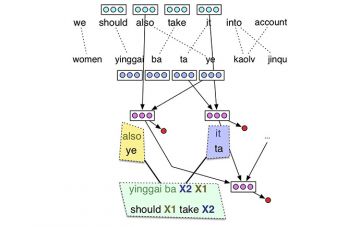
The modern world is growing more reliant on the automatic translation of human languages to deal with billions of documents. Current translation systems struggle with complex texts and often produce misleading or incoherent outputs. They also translate sentences independently and ignore their overall document-wide context. This project seeks to address these issues by developing a new approach using semantics – the underlying meaning of the text – to drive translation both as discrete structures and continuous representations learned via deep learning. This will enhance translation quality and lead international research and industry efforts in translation, thereby improving automatic translations for end-users.
Towards Data-Efficient Future Action Prediction in the Wild
Lead: Dr Xiaojun Chang
ARC DECRA Fellowship (2019-2021)
This project aims to build state-of-the-art deep learning models to predict future actions in videos with a handful of labelled examples. We expect this to drive machine intelligence into a new realm – giving it the power to explore a handful of labelled examples to better understand, interpret and infer human actions. This project will lay theoretical foundations for learning future action prediction in wild scenarios and build the next generation of intelligent systems that need minimal supervision. These will benefit science, society and the national economy through applications on autonomous vehicles, sensor technologies, and cybersecurity.

User modeling projects
Lead: Prof Ingrid Zukerman
AOARD, ARC
This suite of projects encompasses various user modeling applications that focus on the interaction between people and devices: (1) modeling phishing susceptibility as a function of environmental stress and disposition, (2) trust and influence of an advisor agent in a care-taking scenario, and (3) using unintrusive sensors to detect adverse events in elderly populations.
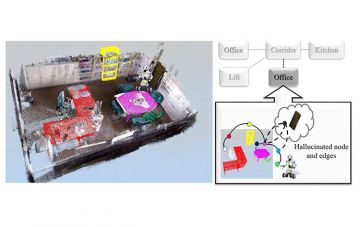
Active Visual Navigation in an Unexplored Environment
Lead: Dr Hamid Rezatofighi & Prof. Ian Reid (University of Adelaide)
ARC Discovery Project (2020-2023)
This project will develop a new method for robotic navigation in which goals can be specified at a much higher level of abstraction than has previously been possible. This will be achieved using deep learning to make informed predictions about a scene layout, and navigating as an active observer in which the predictions inform actions. The outcome will be robotic agents capable of effective and efficient navigation and operation in previously unseen environments, and the ability to control such agents with more human-like instructions. Such capabilities are desirable, and in some cases essential, for autonomous robots in a variety of important application areas including automated warehousing and high-level control of autonomous vehicles.
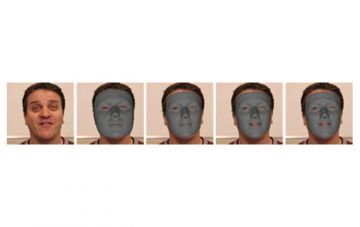
Advanced 3D visual computing for social good
Lead: Prof. Jianfei Cai
Sensetime Funding (2020-2025)
The objective of this project is to investigate the fundamentals of 3D data. We are particularly interested in how to reconstruct 3D information, how to define, discover, detect and identify primitive geometry shapes in 3D data, and how to make use of them for 3D data processing and understanding, how to do multi-modal 3D data fusion and how to deal with resolution and complexity issues in 3D data processing as well as how to preserve privacy in 3D visual computing.