
Bali Digital Heritage Initiative (BADHI)
The BADHI project empowers Balinese communities to document their cultural heritage, particularly temples, for future generations. Documenting Balinese temples is challenging because of the scale (there are 5,000+ temples), variation (from small family temples to a large temple complex), and the sacred values embedded into the temple. We believe a participatory approach — data by people for people — is the best way to achieve documentation that is scalable, sustainable and culturally safe.
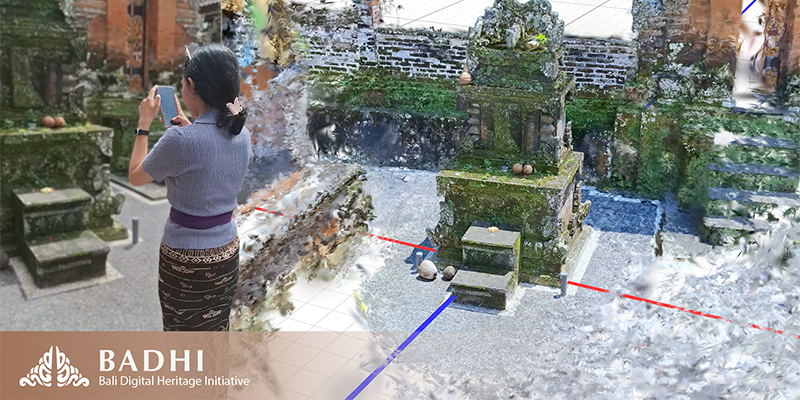
Balinese temples have undergone cycles of destruction and reconstruction for hundreds of years. With each recreation, we have lost the authenticity of past architecture and values, and before 2024, there had been no serious effort to create records of the temples for future generations. We aim to create a record for generations over the next 50 years, 100 years and beyond.
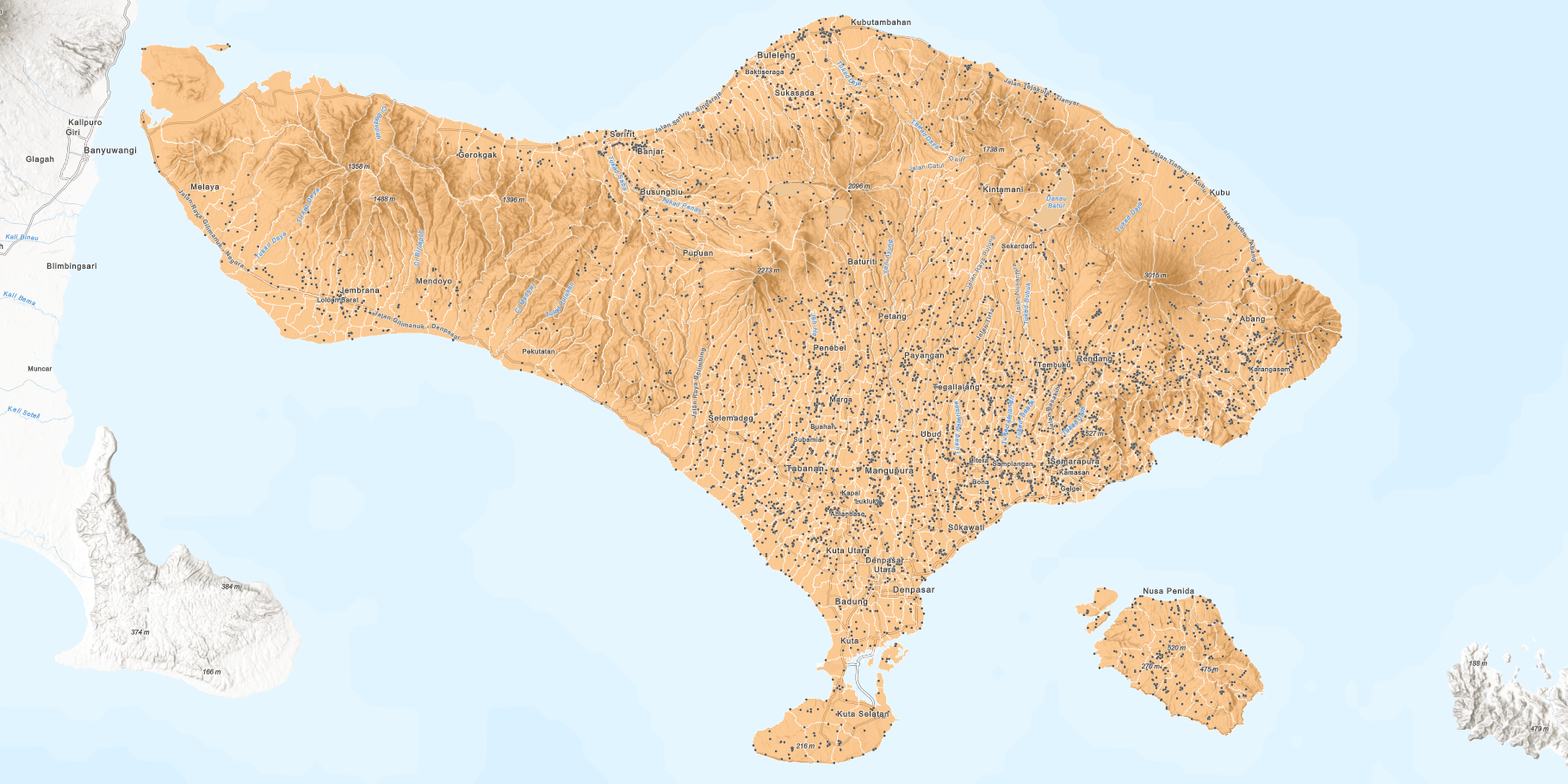
Our approach is centred around community participation. Local communities contribute videos of temples and temple parts in their areas. We then use these videos to create high-quality 3D records of the temples. The videos, 3D models and metadata of the temples are all looped back to the communities. We envision the data collection campaign that runs every 5 years where, for a number of months, everyone in Bali contributes video records.
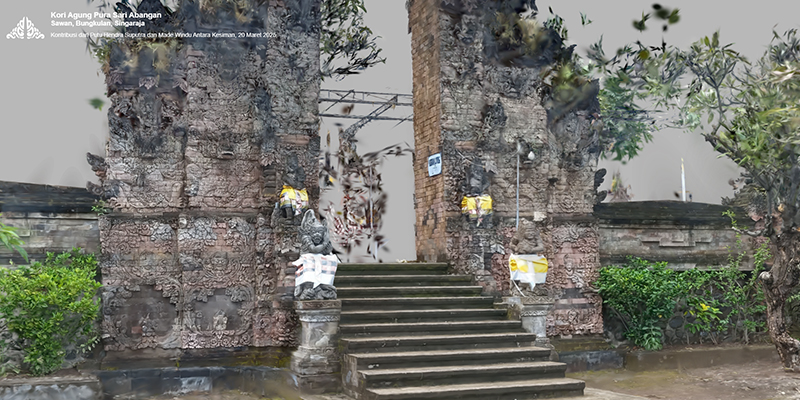
BADHI is a collaborative effort between the Embodied Visualisation Research Group (EmVis) at Monash University and the Virtual Vision, Image, and Pattern Research Group (VVIP) at the Universitas Pendidikan Ganesha. In the early stage of our project, we also collaborated with recordkeeping experts at the Digital Transformation Research Group (Monash University) and action research experts at the Action Lab (Monash University).
Related projects
- Cultural reconnection through immersive visualisations. I Gede Mahendra Darmawiguna. 2025 - present. PhD Project.
- Apple Vision Pro immersive temple viewer. MNET student project led by Neharika Shimpiger. 2025 - present.
- WebXR temple viewer. Jaylen Navurunnage. FIT3144 project. 2025.
- Gaussian Splatting Pipeline exploration. Anthony Wilson. FIT3161. 2024.
Dissemination
- 3D Gaussian Splatting for Archival of Balinese Temples from Community-Sourced Videos. 2025. Anthony Wilson, Arnadi Murtiyoso, Bernhard Jenny, I Gede Mahendra Darmawiguna, Putu Hendra Suputra, Thomas Chandler, Made Windu Antara Kesiman, Kadek Ananta Satriadi. Published at IEEE International Conference on Imaging Systems and Techniques. Strasbourg, France. https://doi.org/10.1109/IST66504.2025.11268436. [ Research paper ]
- ‘3D Gaussian Splatting’: Teknologi inovatif untuk membuat arsip digital 3 dimensi seluruh pura di Bali. 2025. Kadek Ananta Satriadi, I Gede Mahendra Darmawiguna, Made Windu Antara Kesiman, Thomas Chandler, Bernhard Jenny, Putu Hendra Suputra. Published at The Conversation Indonesia. [ Online article ]
- Satriadi, K. A. (2025, March 21). Participatory Digital Archiving of Balinese Temples. Fakultas Ilmu Budaya (FIB) DigiTalk, Online. Zenodo. https://doi.org/10.5281/zenodo.15770772. [ Online presentation ]
- Darmawiguna, I.G.M, (2025, January 14th). Pemanfaatan Gaussian Splatting Untuk Digitalisasi 3D dan Preservasi Pura Bali Dalam Project BADHI. Webinar Undiksha Berbagi. Online. https://www.youtube.com/watch?v=LnJALbu6-ow&t=3074s
Researchers
-

Dr Kadek Satriadi
Discipline Group Coordinator, Embodied Visualisation
-

Dr Made Windu Antara Kesiman
Universitas Pendidikan Ganesha
-

Associate Professor Bernie Jenny
Director, Graduate Research (HCC)
-
Dr Putu Hendra Saputra
Universitas Pendidikan Ganesha
-

Associate Professor Tom Chandler
Director, Work Integrated Learning
-

Ir I Gede Mahendra Darmawiguna
PhD Candidate
-

Dr Viviane Frings
Co-Director, Information Empowered Communities Lab
-
Joshua Seguin
Senior Research Fellow
-

Anthony Wilson
Research Assistant
-
Ir Kadek Teguh Dermawan
Universitas Pendidikan Ganesha
-
I Putu Bayu Ananta Surya
Universitas Pendidikan Ganesha
-
Lanang Surya Darma
Universitas Pendidikan Ganesha
-
I Kadek Dwi Angga Sathya Nanda
Universitas Pendidikan Ganesha
-
I Gede Danan Aria Satwika Punia
Universitas Pendidikan Ganesha
-
Dr Ir I Made Gede Sunarya
Universitas Pendidikan Ganesha