
Projects
Enhancing cities. Empowering populations.
Our work involves the creation, acquisition, integration and analysis of big data gathered about air quality, energy consumption, traffic congestion and other aspects of urban spaces.
We leverage innovative, unobtrusive and ubiquitous sensing technologies, advanced data management and analytic models, and novel visualisation techniques to address the biggest challenges that cities face. Here are some of our key projects.

Smart Charging Strategies for Electric Vehicles in Smart Grids
The rapid global adoption of electric vehicles (EVs) has created opportunities for grid integration through flexible charging and vehicle to grid. We’re developing solutions that will help EV owners and fleet managers with smart charging and discharging decisions, and aggregation of EV resources to support the energy market and the transition. Expected outcomes include efficient charging and discharging scheduling algorithms, and an aggregator system to harness resources.
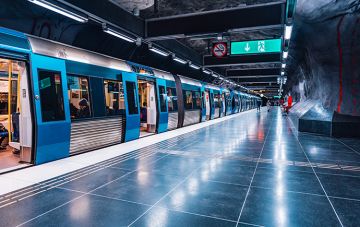
Personalised Public Transport
To address the rise in urban congestion and its associated financial and environmental costs, the project aims to generate new knowledge in scalable optimisation to design an urban trip advisory system to be used by both human drivers and automated vehicles.
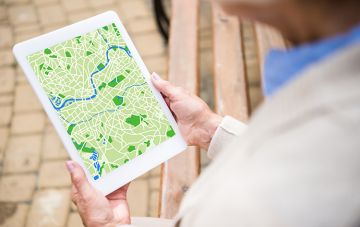
A ubiquitous system for indoor-location-based services
A large part of modern life is lived indoors, however most existing location-based services have been designed only for outdoor spaces. We are designing state-of-the-art indoor data management techniques enabling location-based services for indoor venues, such as indoor navigation, emergency services, assisted healthcare systems, indoor asset tracking, event planning and more.

Future home-demand: Anticipating energy and everyday life trends across three Victoria networks
The project will provide integral knowledge for three energy distributors on the future expectations and anticipated practices of their customers – and the associated impacts for energy demand and forecasting.
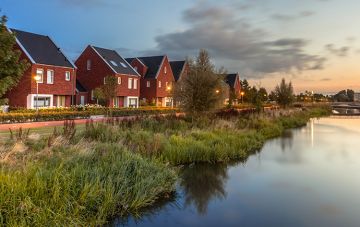
Net Zero Precincts: An interdisciplinary approach to decarbonising cities
With estimates that 70% of the world’s population will live in cities by 2050, our vision is to create net zero carbon cities that are resilient to climate change and support diverse communities.
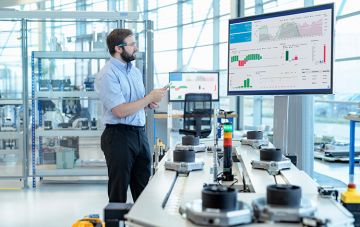
Workers in transition through automation digitalisation and robotisation of work
AUTOWORK will generate new knowledge and solutions to societal challenges arising from the automation, digitalisation and robotisation of work-life, in relation to inclusion and meaningfulness.